How to prevent and control rice leaf tip blight? Detailed explanation of control measures
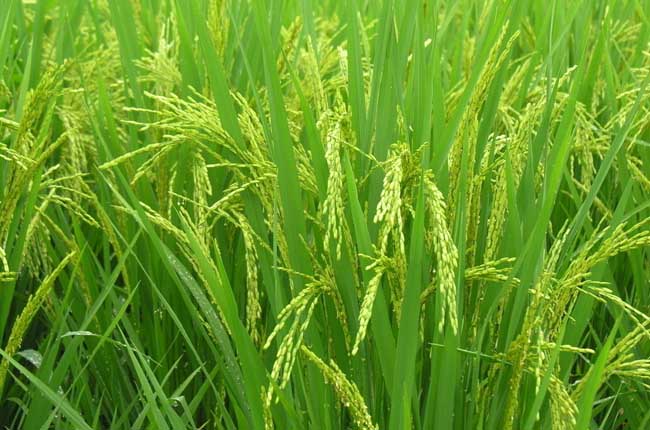
Rice leaf tip blight is also known as rice leaf tip white blight. It mainly damages the leaves. The disease begins at the leaf tip or leaf margin, then spreads downward along the leaf margin or from the middle, forming streaks. The lesion is initially dark green, gradually turning grayish brown, and finally withered white. There are brown stripes at the boundary between the diseased and healthy tissue, and the diseased part tends to split longitudinally and break apart. In severe cases, it can cause the leaves to die. When it damages the rice grain, dark brown spots form on the glumes, and the center then becomes a grayish brown lesion, and the affected grains are shriveled and lean.
Pathogen
Phoma oryzicola, a fungus belonging to the subphylum Deuteromycotina. The pycnidia are initially embedded under the rice leaf epidermis, later slightly exposed, dark brown. The conidiogenous cells are single-celled, unbranched, and the conidiogenesis mode is holoblastic with single annellations. The conidia are ovoid, single-celled, colorless, and the conidia have 1-2 oil droplets. The sexual state is Mycosphaerella oryzae, a fungus belonging to the subphylum Ascomycotina.
Transmission routes and disease occurrence conditions
The pathogen overwinters as pycnidia in diseased leaves and diseased glumes. The pathogen has more than 10 species of gramineous weeds as hosts, so carrier weeds can also transmit it. The overwintering pycnidia release conidia under suitable conditions, which spread to rice leaves by wind and rain, and invade through wounds on the leaves, leaf margins, or the center of the leaf. Obvious disease centers form from the jointing stage to the booting stage, and a second disease peak appears at the early filling stage. During this period, low temperature, abundant rain, and frequent typhoons favor disease occurrence. After storms, a large number of wounds are caused on rice leaves, and the disease is prone to severe outbreaks. Excessive or late nitrogen application leads to severe disease, while increased application of silicon fertilizer leads to mild disease. If the field is not drained in time at the late tillering stage of rice, with excessive water accumulation, the disease is severe. High field density leads to severe disease. The optimal temperature for disease occurrence is 25-28°C, the temperature range for mycelial growth is 10-35°C, with the optimum at 22-25°C, the temperature range for conidial formation is 15-30°C, with the optimum at 25°C, and the temperature range for spore germination is 10-35°C, with the optimum at 30°C.
Control methods
1. Strengthen seed quarantine to prevent introduction into disease-free areas.
2. Select disease-resistant varieties; japonica rice is more resistant than indica rice. Tall-statured varieties and varieties with long, drooping leaves are more susceptible. Among indica rice, Yangdao 3, Yangdao 4, 3037, Nannong 3005, and Xingxian 1 are relatively resistant.
3. Apply sufficient organic fertilizer, and increase the application of phosphorus, potassium, and silicon fertilizers. At the tillering stage, drain the field in a timely and moderate manner, and keep the field alternately dry and wet in the late growth stage. Do not plant too densely, and reduce field humidity.
4. Chemical control. For seed treatment, soaking seeds in 250-500 times dilution of 50% carbendazim or 50% thiophanate-methyl wettable powder for 24-48 hours, or in 250 times dilution of 40% Hekuling wettable ultrafine powder for 24 hours, gives good results. From the booting stage to the flowering stage of rice, after discovering central diseased plants, choose 40 ml of 40% carbendazim suspension concentrate or 60-75 g of 40% Hekuling wettable powder. Spray with 60 L of water per 667 sq m. 40% Hekuling can also concurrently control fungal diseases such as rice false smut, cloud-shaped disease, sheath rot, and purple stem disease.