Detailed Explanation of Key Field Management Techniques for Wheat
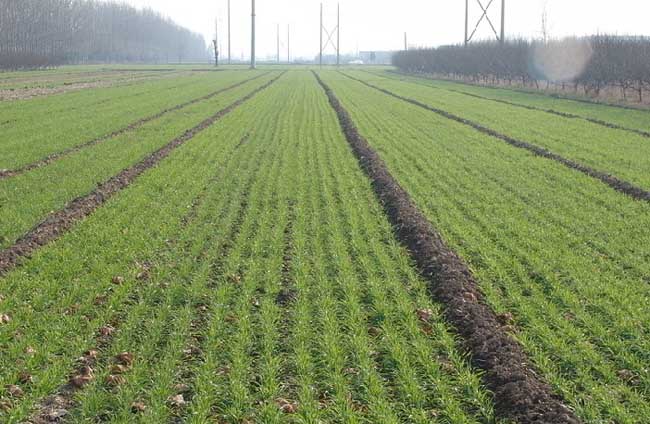
Emergence and Tillering Stage
1. Growth Characteristics
The emergence and tillering stage runs from sowing and emergence to jointing.
① Spring wheat: from emergence to jointing, 4 leaves enter the young ear elongation stage.
② Semi-winter wheat: from emergence to jointing, 5 leaves enter the young ear elongation stage.
③ Winter wheat: from emergence to jointing, 7-8 leaves enter the young ear elongation stage.
2. Cultivation Characteristics
① Ensure uniform and strong seedlings.
② Aim for early tillering and early root development.
③ Achieve strong seedlings for overwintering.
④ Accumulate more nutrients, which helps safe overwintering and lays the foundation for increased yield.
3. Management Measures
① Seedling fertilizer: After full emergence, apply a quick-acting fertilizer once to promote seedling growth and early tillering, generally 5-8 jin of urea per mu.
② Tillering fertilizer: The amount of tillering fertilizer should not be excessive, to prevent excessive growth before winter and reduce cold resistance; generally 8-10 jin of urea per mu.
③ Winter fertilizer: After the Winter Solstice, generally apply 2000 jin of organic fertilizer to consolidate pre-winter tillering and promote young ear differentiation.
④ Chemical weeding: From after sowing to before emergence, use 25% chlorotoluron wettable powder 200-300 g mixed with 120 jin of water for spraying; spraying during rain is best.
⑤ Rolling wheat: Rolling wheat is generally carried out during the overwintering period, pressing strong and vigorous seedlings to control above-ground growth and promote below-ground growth, shortening the length of the first and second internodes at the stem base, increasing thickness, and improving lodging resistance.
⑥ Defending against freeze damage: The main measures to defend against freeze damage include selecting varieties with strong cold resistance, sowing at the right time, cultivating strong seedlings, and watering before a cold wave arrives to reduce freeze damage.
Jointing and Booting Stage
1. Growth Characteristics
The jointing and booting stage includes the jointing, booting, and heading growth periods, and belongs to the period when vegetative growth and reproductive growth proceed together. When early spring temperatures rise above 10°C, wheat begins jointing; tillers formed after jointing are generally ineffective tillers. After booting is the period when floret differentiation occurs and partial degeneration takes place. During the jointing stage, stem and leaf growth predominates; during the booting stage, stem and ear growth predominates.
2. Topdressing
① Jointing stage: Generally apply about 15 jin of urea per mu to increase grain number and grain weight and prevent premature senescence.
② Booting stage: Generally apply 5-6 jin of urea per mu to increase nutrient supply to the ear and promote reproductive organ development.
3. Clearing Ditches and Draining Waterlogging
From late February to early March, wheat begins jointing. In March, rainfall gradually increases, causing various wheat diseases. Wheat fields should be checked for ditch clearing and drainage to lower the water level and reduce disease.
4. Preventing Lodging
① Use short-stalk varieties.
② Apply fertilizer and water reasonably.
③ Control excessive growth; when wheat grows excessively, chlormequat can be used for control.
Heading and Maturity Stage
1. Growth Characteristics
This stage refers to the reproductive growth period after wheat heading. Wheat in the middle and lower reaches of the Yangtze River heads around mid-April, and the heading period lasts about 40 days. This stage is the period of wheat grain formation and is also the key period determining wheat grain number.
2. Reasonable Irrigation and Drainage
After wheat heading, physiological water demand increases, and this is the peak water demand in the entire life of wheat. Generally, a soil moisture content of about 70% of field maximum water-holding capacity is suitable. In the south, April and May are rainy, so attention should be paid to clearing ditches and draining water, ensuring that surface water can be drained and subsurface water can be filtered.
3. Controlling Diseases and Pests: In the late growth stage of wheat, there are armyworms, aphids, and damage from fusarium head blight, powdery mildew, and rust.
① Pests: Insecticide pesticides can be used for control.
② Diseases: First, the control of fusarium head blight. A mixed preparation of carbendazim and trichlorfon can be used. It also controls powdery mildew. Second, the control of rust. Sodium rustate or rust acid can be used, diluted 200 times, with 2 liang of washing powder added for control.