Boron Fertilizer Application Techniques in Rapeseed Cultivation
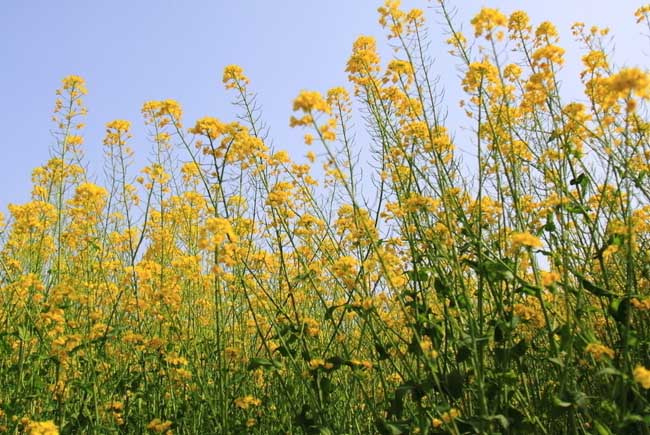
Background of Rapeseed Cultivation and Production
In recent years, the rapeseed planting area across Sichuan has shown a growing trend, including Luzhou, where the rapeseed planting area has also been rising year by year, but the overall area is still very small. The main reasons are low rapeseed yield, poor quality, inadequate production management techniques, geographical limitations, and low market economic benefits of rapeseed and its processed products, among others. Here, only the issues of low rapeseed yield and poor quality will be briefly discussed and analyzed.
Use of Boron Fertilizer in Agricultural Production
In traditional agricultural production, our concept of fertilization is often limited to emphasizing the use of the major elements nitrogen, phosphorus, and potassium, while neglecting the application of trace elements (boron, iron, copper, zinc, manganese, molybdenum, chlorine). However, these trace elements are essential for crop growth and development. If any one trace element is completely absent, crops cannot survive; if one or several of them are deficient, crops cannot grow normally - in mild cases affecting yield and quality, and in severe cases possibly resulting in total crop failure.
Besides being related to cultivated varieties and management levels, the yield and quality of rapeseed are also importantly affected by the rational application of the trace element boron fertilizer. Rapeseed is a crop highly sensitive to boron fertilizer. Once boron is deficient, the typical “flowers but no seed” symptom appears, with low seed-setting rate, few pods, and poor quality. Boron deficiency also causes slow greening recovery when rapeseed is transplanted, low survival rate, poorly developed root growth at the seedling stage, yellowing or purplish-brown leaves, high branching node position, few branches, clustered branches, and induced clubroot disease, stem splitting, and lodging in the mid-to-late growth stages, seriously affecting the yield and quality of rapeseed.
Analysis of Currently Marketed Boron Fertilizer Products
The boron fertilizer products currently on the market are mainly borax and a small amount of borate. Borax is used in relatively large amounts, mainly because it is cheap. However, borax has a very low pure boron content, many impurities, poor crop safety, poor solubility, and low crop absorption and utilization rate. Borax is mainly applied as a base fertilizer. Boric acid, on the other hand, has a high pure boron content, good solubility and absorption, and high safety, and is mainly used for foliar spraying. The reason for its relatively low usage is mainly the high price of boric acid. However, based on comprehensive consideration and analysis of boron fertilizer quality, safety, and yield- and income-increasing effects, boric acid is recommended.
Boron Fertilizer Application Techniques for Rapeseed
According to the characteristics of rapeseed's boron fertilizer requirements at each growth stage, boron fertilizer is mainly applied during the following key periods:
After transplanting and survival at the seedling stage: borax 200-300 grams/mu, mixed evenly with 5 kg of fine soil or river sand and applied separately, or mixed evenly with nitrogen, phosphorus, and potassium fertilizers and applied to the field;
Bolting stage: spray the leaves with a 1500-fold dilution of polyboron.
Early flowering stage: spray the leaves with a 1500-fold dilution of polyboron.
Note: Do not apply boron fertilizer more than 2-3 times, and do not arbitrarily increase the dosage or concentration. When applying it as a base fertilizer, an appropriate amount of lime can be added and mixed in together.