Detailed Explanation of Key Techniques for Early Spring Planting of Sweet Corn
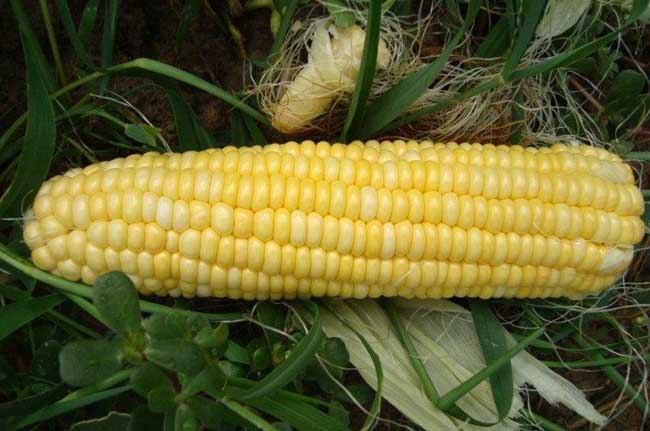
Everyone enjoys fresh sweet corn; the market capacity is large, yields are high, and returns are good. From sowing to fresh ear harvest takes about 90 days, and it does not affect hybrid rice planting, making it an excellent grain-and-cash cropping model for producing a thousand jin of grain and a thousand yuan per mu. Summarizing recent cultivation experience, to grow spring sweet corn well, the following points should be carried out well:
Use Good Seed
At present, the main sweet corn varieties promoted and planted in Henan are Chaotian No. 3 and Chaotian 204; new varieties such as Dongtian 206 can also be trial-planted and demonstrated. These varieties have high yields, a medium growth period, fresh grain sugar content above 16%, and good fresh-eating flavor.
Sow at the Right Time and Grow Strong Seedlings
Generally, sowing begins around March 15-20, and nylon film-supported covering must be used for seedling raising. Choose a sandy loam plot with loose soil, good fertility, and sufficient sunlight as the seedbed. After careful land preparation, apply a round of dilute human manure fertilizer, arrange the corn seeds at a seed spacing of 3-5 cm, press lightly, then cover the seeds with fine soil about 1 cm thick, and then set up the frame and cover with film for insulation. The seedling age is about 20 days, with leaf age from 2 leaves and 1 heart to 3 leaves and 1 heart; prevent overage transplanting, which reduces yield.
Improve Land Preparation and Transplanting Quality to Ensure Full and Uniform Stands
Before plowing, broadcast 25-30 kg of ammonium bicarbonate and 25 kg of calcium superphosphate per mu as base fertilizer. After plowing, prepare the land and make beds, with beds 1.2 m wide (including ditches) and two rows planted. For fields with heavier clay soil, fertilizer can be applied all at once: open a furrow in the center of the bed and apply 75 kg of ammonium bicarbonate, 25 kg of calcium superphosphate, and 15 kg of potassium chloride per mu; after covering with soil, uniformly spray 100 ml of 80% acetochlor per mu diluted with water on the bed surface to control weeds, then cover with plastic film and wait to plant seedlings. However, for sandy, heavily leaking fields, fertilizer should not be applied all at once; fertilization should follow the principle of "apply seedling fertilizer moderately, apply ear fertilizer heavily." Plant the corn seedlings, then water with a 1000-fold dilution of 50% phoxim or 40% chlorpyrifos to control underground pests, then cover a little soil to ensure survival. The transplanting density is 3300-3500 plants, with a plant spacing of about 33 cm. After transplanting and survival (about 7-10 days after planting), seedling fertilizer should be applied in time, generally 10 loads of dilute human manure or 10 kg of ammonium sulfate per mu.
Strengthen Management
Sweet corn varieties have a multi-ear phenomenon, which should be removed in time, leaving one strong ear per plant. At the trumpet stage, use 600-fold bt emulsion (Bacillus thuringiensis) or 500-fold 18% dimehypo or 1000-fold 90% crystal trichlorfon solution poured into the whorl to control corn borers. The use of highly toxic and high-residue pesticides is strictly prohibited. The use of any pesticide should be stopped 15 days before harvest.
Sweet Corn Should Be Planted in Isolation from Common Corn
A separation of more than 300 m is required to prevent cross-pollination from affecting the quality of sweet corn. Fresh-eating sweet corn can be sown in batches to continuously supply the market and avoid excessive losses caused by too large a quantity ripening all at once.