What are the methods for identifying the quality of wheat seeds?
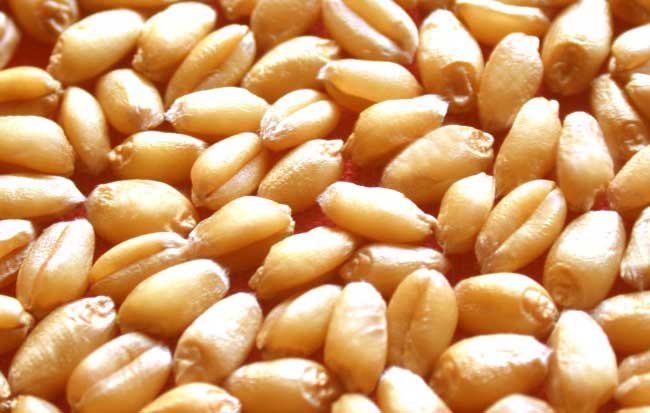
The quality of wheat seeds is mainly identified from several aspects: germination ability, seed moisture, seed morphology and seed vigor.
Germination ability
1. Simple water soaking germination method: Take 400 seeds, divide them into groups of 100 each, place them separately in containers, pour in clean water and soak for 18-24 hours, then remove them, cover the seeds with a wet towel (not too wet), and the germination can be observed after 1-2 days. The average germination percentage can be calculated separately.
2. Body (body temperature) germination method: Soak the seeds in warm water for 4-5 hours, then remove them, wrap the seeds in a moist towel, put them in a plastic bag, and place them in an inner clothing pocket. The pocket temperature is generally 25°C-30°C. Check once a day to let the seeds breathe. If the seeds become sticky, wash off the mucus secreted by the seeds to prevent them from becoming moldy. After 2-3 days the seeds will germinate, and at this point the percentage of germinated seeds out of all seeds can be calculated.
Seed moisture
1. Visual inspection: dry seeds are darker in color, fresh and glossy, while seeds with high moisture content are dull and lusterless;
2. Listening: toss the seeds up, dry seeds make a crisp “ka” sound, while seeds with high moisture content sound muffled;
3. Biting: dry seeds are harder to bite with the teeth, produce a loud sound, and have a smooth cross-section. Seeds with high moisture content are stickier when bitten, and the cross-section is not smooth;
4. Smelling: dry seeds have a fresh smell, while seeds with high moisture content have an off odor;
5. Feel: when a hand is inserted into a pile of seeds, if a cold sensation is felt, it indicates that the seeds are relatively dry; otherwise, the moisture content is relatively high. If pressing a seed with a fingernail on a hard board easily crushes it, and the seed coat and kernel are pressed into a mass that cannot be separated, it indicates that the seed moisture content is high, about 12% or more.
Seed morphology
Seed morphological characteristics are one of the most stable traits in the life history of plants, and are the main basis for identifying varieties. Seed size, surface features and color, etc. can be observed. These can only be applied to the identification of wheat seeds with obvious differences among varieties.
Seed vigor
Seed vigor determines the comprehensive expression of seed characteristics such as the strength of activity during seed germination and seedling emergence, as well as seedling morphology. It is a main indicator for evaluating seed quality. In agricultural production, great economic losses are often caused by the decline of seed vigor. Therefore, the identification of seed vigor is of great significance.
1. Seeds with a fresh and glossy seed coat have viability; otherwise, they have no viability.
2. Seeds with a light-colored, plump and full, elastic radicle have viability; seeds with a dark-colored, shriveled, shrunken, non-elastic radicle have no viability.
3. Breathe a mouthful of air onto the seeds; if no moisture adheres and a special luster appears, the seeds have viability; otherwise, they are non-viable seeds.