How to store rice after the autumn harvest? Methods and key points explained
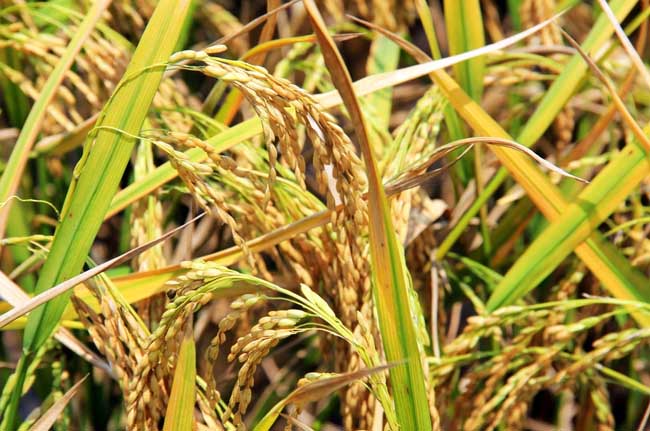
Paddy storage
1. Key points to note for storage
①Avoid high temperatures: Exposing paddy to strong sunlight or drying it at relatively high temperatures can increase the rate of kernel fissuring and discoloration, reducing its food value. If paddy at a high temperature is put into storage, moisture stratification and crusting may also occur, leading to heating and mold.
②Prevent sprouting and mold: Newly harvested paddy has strong physiological activity, and after being placed in the bin it readily self-heats, causing grain temperature to rise and leading to condensation and mold on the upper layer of the grain. When temperatures rise the following spring, condensation and mold also easily occur on top of the grain pile. In areas of the grain pile where condensation forms or rain leaks in, the increased moisture makes sprouting and rotting likely, commonly known as sprout rot.
2. Storage methods
Paddy is a grain type suitable for long-term storage. The respiration of paddy is generally relatively high in the 1st to 2nd years of storage, then gradually declines and levels off. Paddy is generally stored in warehouses. When putting it into storage, moisture and temperature must be well controlled, with moisture at around 14% and temperature below 25°C.
Rice storage
1. Key points to note for storage
After rice loses its protective husk layer, its nutrients are directly exposed to the outside, making it relatively sensitive to the effects of external temperature, humidity and oxygen. It is highly hygroscopic and carries a large amount of microorganisms, so pests and mold can easily attack it directly and nutrients are prone to accelerated metabolism. In addition, because the fat contained in the bran powder readily oxidizes and decomposes to form fatty acids, the acidity of the rice increases. Because of these adverse factors, rice ages and molds at a fairly prominent rate. Therefore, rice is best stored at low temperature, and should not be directly exposed to wind or suddenly cooled; it should only be cooled slowly, and in a low-temperature environment it should be slowly dehumidified and dried, not dried at high temperature or directly exposed to sunlight.
2. Storage methods
Rice is best stored at low temperature. During storage, the following measures should be taken well:
①Strictly control moisture: The safe moisture content for rice storage is below 13%. This safe moisture content can also be adjusted appropriately according to air temperature: in summer and autumn, when the temperature does not exceed 35°C, it is below 13%; in spring, when the temperature does not exceed 20°C, it is below 14%; in winter, when the temperature is below 10°C, it can be relaxed to 15%-16%.
②Remove bran powder and prevent pests and mold: During rice storage, inspections should be made frequently. If signs of heating and mold are found, it should be spread out to air in time. When milling rice, bran powder should be removed, and rice put into storage with a lot of bran powder should be cleaned again to improve the stability of rice storage.
③Store at natural low temperature: To keep rice safely through the summer, the natural low temperatures of winter and early spring can be used to lower the temperature and humidity of the rice, and the warehouse should be sealed before summer begins to reduce the impact of high temperature and high humidity on the rice.