Key Technical Points for Weed Control of Hard Grass in Wheat Cultivation
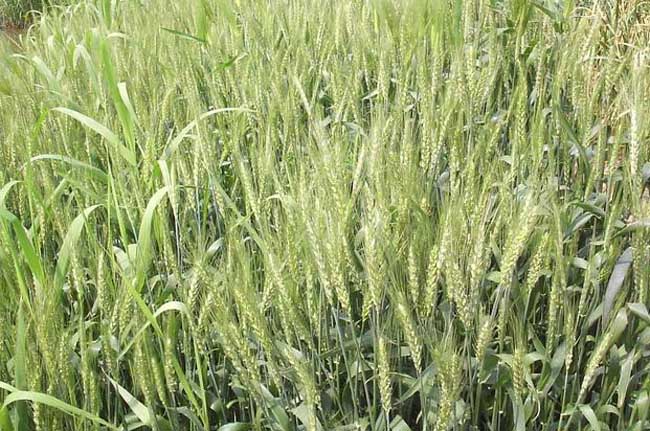
Hard grass is a species under the genus Sclerochloa in the grass family (Poaceae). It is an annual or winter annual grass that reproduces by seed. The suitable emergence depth for its seeds in soil is 0.12-2.4 cm; emergence is difficult when the depth exceeds 2.4 cm. It has strong tillering ability, with about 6 tillers per plant and paired branching. It mostly grows in hills, beside ditches and in fields, and mainly harms dryland crops such as wheat. After wheat is sown in autumn, when the daily average temperature is 16-18°C, it takes 3-5 days to form an emergence peak, that is, from wheat emergence to the 1-leaf stage.
Agricultural Control
Implementing paddy-upland rotation is an important measure to reduce the incidence of hard grass. The general paddy-upland rotation cycle is 3-4 years, which can reduce the severity of hard grass damage. In fields with severe hard grass infestation, transplanted rapeseed or other broadleaf crops can be planted instead during autumn sowing, and when the daily average temperature is stably above 7°C during the peak emergence period of hard grass, spray 20-30 ml of 10.8% haloxyfop-R-methyl emulsifiable concentrate or 40-60 ml of 15% quizalofop-p-tefuryl emulsifiable concentrate per mu with 30-40 kg of water.
Chemical Control
1. Soil sealing. After sowing barley and wheat but before emergence, spray 80 ml of 48% trifluralin emulsifiable concentrate plus 250 g of 25% chlorotoluron wettable powder per mu with 40 kg of water, with a control effect of over 98%. When sowing barley and wheat, the quality of land preparation and sowing should be improved, and the amount of water used should be appropriately increased under poor soil moisture conditions to improve the control effect.
2. Stem and leaf treatment. In fields where soil sealing treatment was not carried out after sowing barley and wheat but before emergence, stem and leaf treatment can be adopted. Before winter, at the 3-leaf stage to tillering stage of barley and wheat, spray 100 g of 75% isoproturon wettable powder per mu with 40-50 kg of water, with a control effect reaching 93%; or in the spring of the following year before the jointing stage of barley and wheat, spray 150 g of 75% isoproturon wettable powder per mu with 50 kg of water, with a control effect of over 90%.