Wheat disaster prevention and mitigation should start with autumn sowing
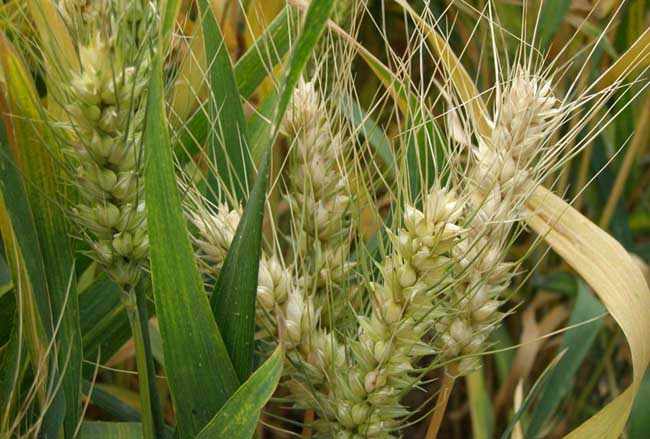
Wheat production goes through autumn, winter, spring, and summer, with a relatively long growth period, and faces a high probability of natural disasters such as drought, prolonged rain, wet damage, low-temperature freezing damage, and pests and diseases. In production, it is essential to start with autumn sowing, base efforts on disaster prevention and mitigation, and lay the foundation for achieving high and stable yields.
Seed treatment
Select high-yield, high-quality wheat varieties with broad adaptability and multiple resistance, requiring purity ≥98%, cleanliness ≥98%, germination rate ≥85%, and moisture content ≤13%, and sun the seeds 2-3 days before sowing. Before sowing, mix 10 ml of 6% tebuconazole suspension seed coating agent (Likesiu) with 300 ml of water to treat 25 kg of seeds, to prevent systemic infectious diseases such as wheat loose smut and sheath blight, as well as soil-borne diseases. For selected commercial wheat seeds, when soil moisture is suitable and favorable for emergence, 20 g of Aimiaozhuang per mu can be diluted with 0.5-0.75 kg of water to treat 6-10 kg of seeds, promoting root growth, tillering, and strong seedlings; even seed treatment is required, and seeds should be sown immediately after treatment. For fields not treated with chemical seed dressing for growth control that show excessive growth before winter and in early spring, measures such as compaction or chemical control can be taken to moderately inhibit growth.
Apply sufficient base fertilizer
Apply sufficient base fertilizer according to the principle of soil testing and formula fertilization, with phosphorus fertilizer mainly applied as base fertilizer, and nitrogen and potassium fertilizers applied as a combination of base and topdressing. Base fertilizer generally includes 5-10 kg of urea per mu and 25-35 kg of 45% ternary compound fertilizer (with 15% each of nitrogen, phosphorus, and potassium) per mu; where conditions permit, applying more than 1000 kg of organic fertilizer per mu is encouraged. For fields where all rice straw is returned to the field, the amount of nitrogen fertilizer in the base fertilizer should be increased by about 10%.
Supporting “three ditches”
Vigorously promote mechanical ditching, especially in the Huainan region, where high-standard supporting internal and external “three ditches” should be provided: dig one vertical ditch every 3-4 m, with a width of 20 cm and a depth of 20-30 cm; dig one horizontal ditch 2-5 m from the horizontal ridges at both ends of the field, and for longer fields add one waist ditch every 50 m, with a width of 20 cm and a depth of 30-40 cm; the outlet ditch at the field head should be 25 cm wide and 40-50 cm deep, ensuring that the internal and external “three ditches” are connected. For fields with straw returned, the width of the vertical ditch beds should be reduced to increase the density and depth of ditching within the field, increase the amount of soil taken from the ditch system to cover the bed surface, and prevent exposed seeds; at the same time, improve irrigation and drainage effects and reduce waterlogging damage.
Compaction and mulching
For dryland wheat in Huaibei and fields with straw returned, compaction should be carried out after sowing. A stone roller with a diameter greater than 30 cm or special compaction machinery can be used to compact the field surface, making the plow layer compact, improving the emergence rate, promoting full, uniform seedlings, preserving soil moisture, and preventing freezing, ensuring safe overwintering. For rice-stubble wheat, especially no-till direct seeding and wheat intercropped in rice fields, additional farmyard manure or increased ditch mud and straw mulching can be applied.
Scientific chemical weed control
After sowing and before seedling emergence, when soil moisture is suitable, spray 125-150 g of 50% isoproturon wettable powder per mu mixed with 40-50 kg of water to seal and kill weeds. Before overwintering, for fields where no soil-closing treatment was carried out after sowing and before emergence, or where the closing treatment effect was unsatisfactory, and the weed occurrence reaches the control threshold, spray chemicals promptly according to the weed spectrum. For fields mainly with monocotyledonous weeds, at the 2-4 leaf stage of weeds, spray 60-80 ml of Puma 6.9% fenoxaprop-P-ethyl emulsifiable concentrate per mu mixed with 40-50 kg of water; for fields mainly with dicotyledonous weeds, at the 4-5 leaf stage of wheat and after weeds have basically emerged, spray 30-40 ml of Shitalong 200 g/L fluroxypyr emulsifiable concentrate per mu mixed with 40-50 kg of water; for wheat fields with mixed monocotyledonous and dicotyledonous weeds, the relevant agents can be mixed and used. After spring begins, when the daily average temperature rises to about 8°C, suitable agents can be selected according to the weed spectrum for chemical control before wheat jointing. Pay attention to applying the chemical during cold-tail-to-warm-head weather and avoid applying before a cold wave arrives, to prevent phytotoxicity.