How to Cultivate Corn for High Yield? A Detailed Guide to Practical Techniques
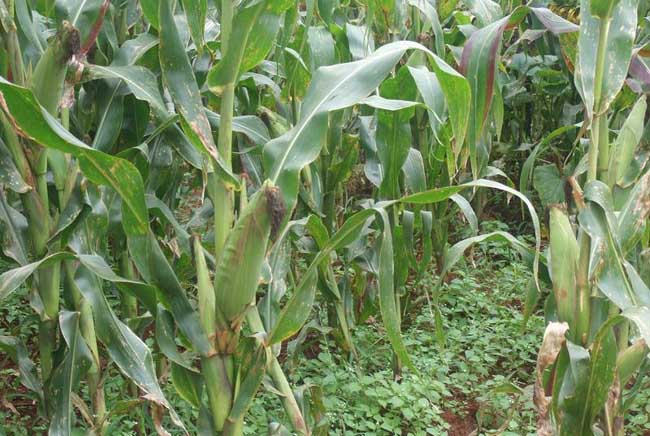
In this article, high yield refers to a yield of more than 1000 kg per mu. According to research and practice, the ecological conditions required for corn to reach a yield of 1000 kg per mu (667 sq m) are: accumulated temperature ≥3000°C, usable accumulated temperature ≥2800°C, frost-free period of 150-160 days, flat terrain, good fertilizer and water retention, loam or light loam soil, and above-average fertilizer and water conditions.
Selecting Excellent Varieties
Knowing how to select good corn varieties is a key issue related to increasing autumn yields and income. The following principles should be followed when selecting good corn varieties:
(1) Select varieties according to heat resource conditions. The local heat resources are related to the growth period of corn varieties. Corn varieties with a long growth period have good yield performance and high yield-increasing potential, and the local heat and growth period must meet the needs of the variety to fully mature. If heat is sufficient, try to choose corn varieties with a longer growth period so that the production potential of excellent varieties can be effectively realized. However, excessively pursuing high yield by using corn varieties with too long a growth period will cause the corn to fail to mature fully, with kernels that are not plump enough, affecting the nutrition and quality of the corn. Therefore, when choosing a corn variety, it is necessary both to ensure that the corn matures normally and not to affect the timely sowing of the next crop. The height of the terrain is related to ground temperature; highland areas have higher temperatures and are suitable for late-maturing varieties with a long growth period or mid-late-maturing varieties; flat land is suitable for mid-late-maturing varieties; low-lying land is suitable for mid-early-maturing varieties.
(2) Select varieties according to local production and management conditions. The yield potential of corn varieties is related to production and management conditions. Varieties with high yield potential require good production and management conditions, while varieties with lower production potential require relatively lower production and management conditions. Therefore, in areas with a high level of production management and fertile soil with sufficient water, corn varieties with high yield potential and high yield-increasing potential can be selected. Conversely, varieties with slightly lower production potential but better stability should be selected.
(3) Select varieties according to the previous crop. The yield and income increase of corn varieties are directly related to the previous crop. If the previous crop was soybean, the soil fertility is relatively good, and high-yield varieties should be selected; if the previous crop was corn and it grew well and yielded well, the same variety can continue to be selected; if the previous corn crop was infected with a certain disease, varieties susceptible to that disease should be avoided when selecting seeds. In addition, the same variety cannot be continuously planted in the same field for three or four years, otherwise soil depletion and variety degeneration will occur.
(4) Select varieties according to disease. Disease is the nemesis of high corn yields and is mainly related to soil. When soil nutrients are unbalanced and ground temperature is abnormal, varieties unsuitable for growth under such conditions should be avoided when selecting seeds. For example, "Denghai 9" is only suitable for growing in fields with balanced soil nutrients and a high degree of maturation.
(5) Select varieties according to seed appearance. The purity level and quality of corn varieties directly affect the level of corn yield. For every 1% decrease in the purity of grade 1 corn seed (98% purity), its yield decreases by 0.61%. Selecting high-quality varieties is a favorable guarantee for achieving high corn yields. High-quality seed packaging bags are sealed in one step and have the seed company's name and detailed address and telephone number; the seed label clearly states the production date, purity, cleanliness, moisture content, and germination rate; the shape, size, and color of the seeds are uniform and consistent.
(6) Select varieties according to local precipitation and accumulated temperature. According to experience, if the previous winter had little snowfall and was not cold, the following summer will have relatively more rainfall and accumulated temperature will not be high; varieties with too long a growth period will not have enough accumulated temperature, affecting maturity. Conversely, if the previous winter had heavy snowfall and was very cold, the following summer will generally have less rainfall and higher accumulated temperature, making it easy to choose varieties with strong drought resistance, and low-lying land can appropriately plant some mid-late-maturing varieties.
Early Sowing to Beat the Three Peaks, Drought-Resistant Precision Sowing
Drought-resistant precision sowing to ensure full stands is the prerequisite for achieving high yield. The "early sowing to beat the three peaks" technique means sowing early by seizing moisture at the right time to get ahead of the spring drought (making full use of the rising soil moisture); applying topdressing early before the summer drought (aligning the period of high corn demand for fertilizer and water with the peak of the July-August rain and heat period); and having corn mature before frost (making full use of effective accumulated temperature to promote early maturity and increased yield of corn). (1) The early sowing time is between April 15 and 25, with the optimal time being the 20th. The ground temperature indicator is that sowing can begin when the soil temperature at 10 cm stabilizes between 7-8°C. (2) Seed drought-resistance treatment techniques. Use corn biological seed soaking agent and drought-resistant water-retaining agent treatment (refer to the variety instructions for usage). (3) Sowing quality. Ensure suitable depth, uniform soil covering, and improved seedling emergence uniformity to achieve full, uniform, and strong seedlings.
As yield increases, the effect of sowing techniques on yield gradually strengthens. Sowing techniques include selecting seed treatment, soil moisture preparation, reasonable density, sowing method, sowing rate, and sowing depth, among others.
Seed treatment: sun-drying seeds. Corn seeds that have been dried in the sun absorb water quickly after sowing, germinate early, emerge uniformly, have a high emergence rate, and produce sturdy seedlings.
Seed soaking and seed dressing: soaking seeds in clean water mainly supplies moisture and promotes germination. Soaking seeds in chemical agents mainly uses potassium dihydrogen phosphate and trace elements, but if the soaking concentration is too high or the soaking time is too long, the seeds are prone to poisoning and damage, reducing the germination rate. Dressing seeds with pesticides can prevent and control disease and pest damage.
Seed coating is wrapping seeds in a layer of chemicals. Coated seeds have the ability to resist disease and pests and promote rooting and germination after sowing, and pesticides should be used according to the local disease and pest situation.
Careful soil moisture preparation: soil moisture is the key to affecting the quality of seed emergence. With good moisture and level land, sowing depth is easy to keep consistent, and seedlings emerge neatly and uniformly. An important step in preparing soil moisture before sowing is adjusting soil moisture. In the Huang-Huai summer corn and relay-cropped summer corn regions, seasonal drought often occurs after wheat harvest, deteriorating soil moisture at corn sowing time; therefore, in production, watering during the wheat yellowing stage is commonly used to supplement subsoil moisture.