Propagating irises by division: your yard can be full of them in just a few years
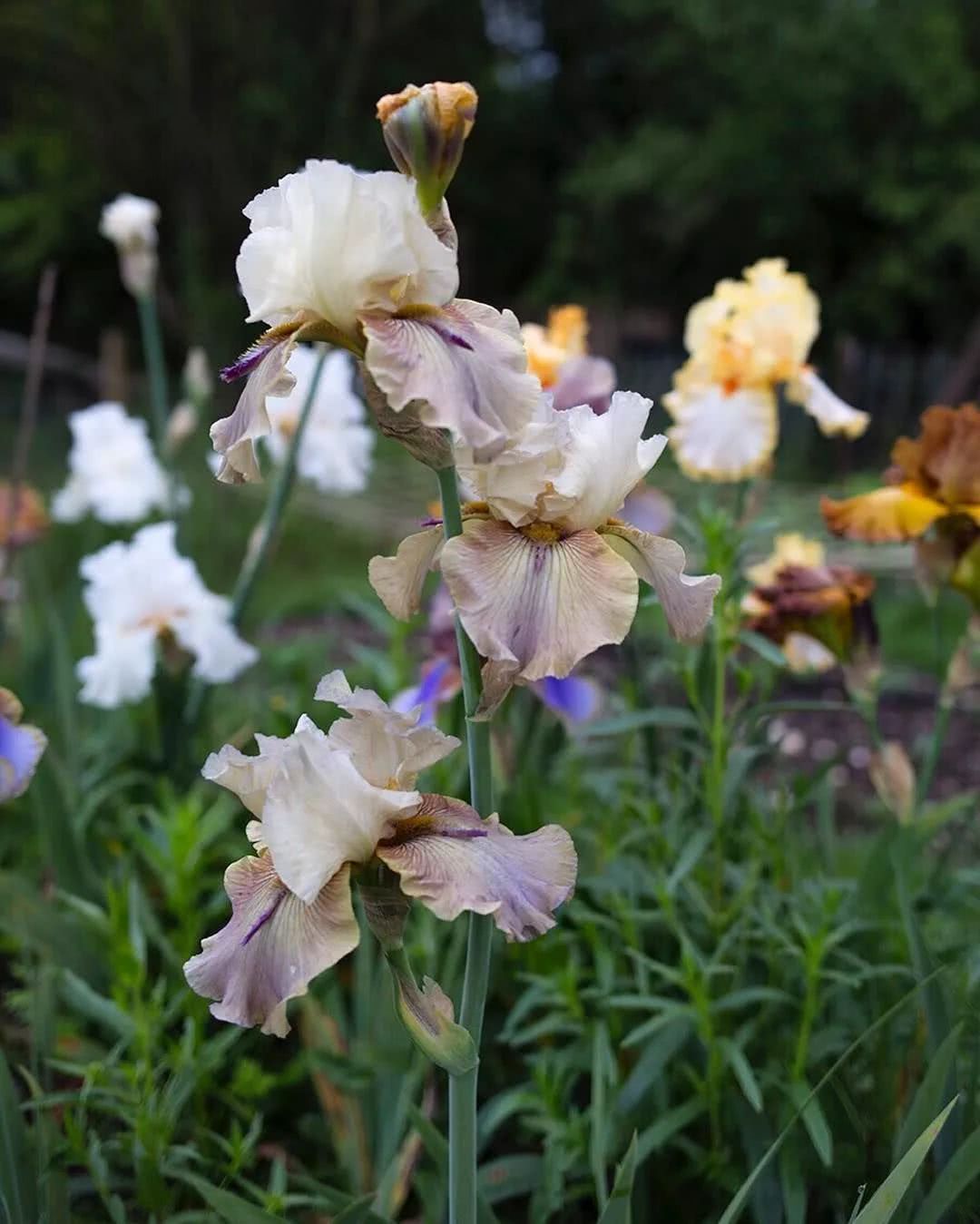
Irises are usually propagated by division in spring, generally transplanted and divided once every two to three years. If they are grown in pots, transplanting is even more necessary, so that they can bloom every year. Division is usually done in spring. If you miss both summer and autumn, the irises will become very crowded, and it will be difficult for them to bloom.
If irises grow too vigorously, their rhizomes and tubers will cross each other and produce a great many leaves, which affects blooming. Repotting and transplanting is generally done within 6 to 8 weeks after flowering.
Choosing the right time for division gives the irises a longer period to recover and grow, prevents their rhizomes from becoming overly crowded, helps them recover, and encourages them to bloom every year. Before dividing irises, you need to prepare some gardening tools, such as a common small trowel and a sharp knife.
You can see that the iris rhizomes grow outward, and the central part is easy to find. Before dividing, first dig up the tubers, cut some offshoots from the mother rhizome, and you can remove some of the top leaves to avoid excessive nutrient consumption, which helps them recover and grow faster.
Iris rhizomes generally grow fairly shallow. If they are planted too deep, blooming is affected instead. Some friends find that the irises they planted do not bloom, simply because the tubers were planted too deep.
When digging up iris tubers, dig a little deeper; this avoids excessive nutrient consumption, helps them recover, and only then can they be encouraged to bloom the following year.
As shown in the picture above, replanted irises should not be planted too densely; each one needs some spacing, about 35 cm, and you can dig a slightly shallow hole. Add some well-rotted compost as appropriate, cover with a layer of soil, and then plant the freshly dug iris tubers on top.
When planting, be careful not to plant too deep. If you transplant in spring, they may form flower buds in summer. If you transplant in summer, avoid excessive sun exposure and give them 5 to 7 days to recover.
When planting, they must not be planted too deep; planting them about 2 to 3 cm below the soil surface is enough. If planted too deep, blooming is affected. Iris tubers keep dividing, and their rhizomes become very crowded every two to three years of growth, and that is when division is needed.