Indoor hydroponic lucky bamboo is dying - these methods can save it
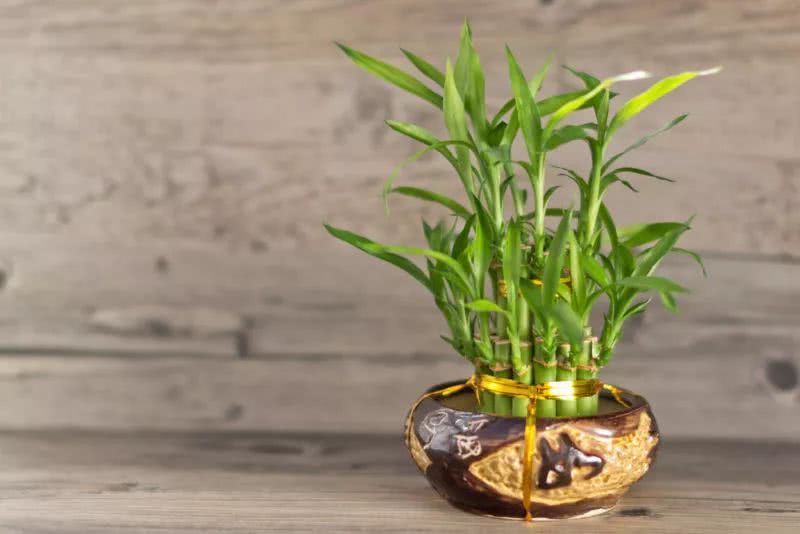
Around Chinese New Year, many plant lovers buy some lucky bamboo to keep at home. They are very suitable for growing as indoor hydroponic plants. They need very little light and can grow well in low-light indoor environments. They grow well as long as they are kept in a warm and humid environment year-round.
What should you do when hydroponic lucky bamboo develops yellowing or withered leaves? In most cases, people grow lucky bamboo hydroponically in conditions that are not quite suitable, or they neglect pruning. Newly purchased lucky bamboo has a lot of leaves, and the roots may not have grown out yet. Some are even freshly cut lucky bamboo.
Do not keep too many leaves on hydroponically grown lucky bamboo. Basically, a few leaves at the top are enough. Too many leaves consume a great deal of nutrients, which easily causes yellow leaves and also affects rooting and sprouting at the base of the stems.
The growing spot should stay ventilated. It can do without light, but the environment should still have bright light and some air humidity. Avoid excessive dryness.
If you notice the leaves of lucky bamboo turning yellow, be sure to cut off these yellow leaves promptly, and remove most of the leaves at the bottom. This preserves more nutrients and promotes rooting.
If you find root rot or stem rot at the base, be sure to pull it out promptly, clean it thoroughly, cut off the rotten roots and stems, soak it appropriately in potassium permanganate or carbendazim solution, and after 5-10 minutes, restart hydroponic propagation. Also pay attention to the following care tips.
Step 1: Pay attention to water quality
If you use tap water directly to grow lucky bamboo, pay attention to changing the water. Tap water contains more fluorine and chlorine compounds, which affect rooting.
Tap water can be left in a container for 2-3 days before use, so the chlorine in it fully evaporates. You can also use well water, rainwater, etc. directly.
Step 2: Growing location
Avoid keeping lucky bamboo in a place where the temperature is too low or too high. Do not place it next to large appliances, and do not put it next to a heater or air conditioner, otherwise it easily triggers yellow leaves.
Step 3: Check for pests and diseases
Lucky bamboo is rarely infected by pests or diseases, but you should still check it regularly. If you find leaves infected with leaf spots or other fungal diseases, cut off the diseased leaves promptly. You can appropriately apply some fungicide for timely control.
If you find pests, kill them promptly too. If they are common aphids or scale insects, you can directly use a cotton swab dipped in some alcohol to wipe them away.
Step 4: Change the water promptly
If lucky bamboo has not yet rooted in hydroponic culture, the water generally needs to be changed every 2-3 days. This keeps the water fresh and maintains its vitality, which helps promote rooting.
Of course, lucky bamboo that has already rooted does not need frequent water changes. You can wait until the clear water becomes cloudy before changing it, and care becomes very easy.
Step 5: Light intensity
When caring for lucky bamboo, avoid excessive exposure to strong sun, and of course do not keep it in a fully shaded environment. Hydroponically grown lucky bamboo generally only needs to be kept in a bright environment to grow well.
If the hydroponic container is transparent, then it cannot be exposed to sunlight. Keeping it in a bright, shaded spot indoors is enough. Too much sun makes green algae grow easily on the container surface, and in severe cases green algae also grow on the roots in the water, which prevents the roots from absorbing oxygen and eventually leads to rot. Keeping it in a dark place causes the leaves to become dull and yellow.
Step 6: Pay attention to fertilizing
Whether lucky bamboo is grown hydroponically or in soil, it needs a little diluted fertilizer regularly. Of course, fertilize during the growing season. Each application should not be too concentrated, and the frequency should not be too high. In spring, summer and autumn, you can give a dilute organic liquid fertilizer once every 3-5 weeks.
Step 7: Prune regularly
If you find withered stems, cut them off promptly to prevent them from consuming too many nutrients and to avoid fungal infections. Also promptly cut off any withered leaves and yellow diseased leaves you find.