Kalanchoe not growing new shoots or leaves after pruning? Three steps to make new shoots sprout nonstop
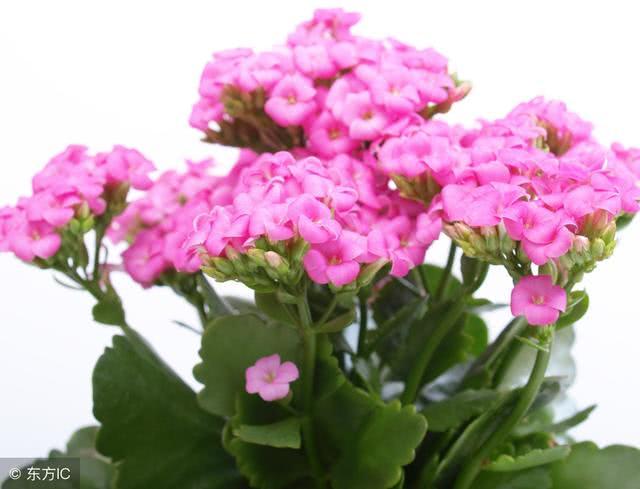
After each blooming period, in order for it to bloom more and more beautifully the next year, we all need to prune the kalanchoe, cutting off the spent flower stems, weak and diseased branches, overlong branches, old branches, and so on, so that it sprouts more new branches, and only in this way can it be prepared for the next bloom. But many growers' kalanchoes, after being pruned, are slow to grow new shoots and new leaves, which makes people very anxious. In fact, after pruning, the kalanchoe only needs three steps to make it sprout new branches nonstop.
Control watering
After the kalanchoe is pruned, do not rush to water it right away; letting the potting soil dry out a little is more helpful for sprouting new shoots and growing new leaves. Once the new shoots and new leaves have already come out and are growing, then water a bit more, so there is enough moisture for growth. This is because the biological clock of a kalanchoe that has had its branches and leaves cut off will be completely thrown off; at this time it will no longer grow, but instead adjust its biological clock, and this process needs very little water. Watering too much will smother the roots until they turn black and lose vitality, and later the new shoots and new leaves will all grow very slowly. When it starts growing new shoots and new leaves, the new biological clock has already stabilized, and the water requirement will also increase; a bit more water will neither smother the roots nor fail to promote growth.
Control light
Pruning kalanchoe is generally done in late spring and early summer; some kalanchoes have a long blooming period and may not be pruned until mid-to-late June. At this time the weather gradually gets hotter and the light gets stronger, and after pruning there are fewer branches and leaves. If the kalanchoe is placed in strong light and baked in the sun, it is like a monk sunbathing, and it is not just a matter of sweating a little; it will completely faint from the sun. So, we should place a kalanchoe whose branches and leaves have all been cut off in a semi-shaded spot or a spot with diffused light to grow, letting it have a process of adapting to its current state. There is another reason a pruned kalanchoe cannot be exposed to strong sun: if the temperature is too high, the kalanchoe will go dormant, and once dormant it really will not grow branches and leaves! Keeping it in a relatively cool place for care delays the dormant period, and new shoots and new leaves emerge quickly.
Reasonable fertilizing
After the kalanchoe's flowers fade, a large amount of nutrients has been consumed, and it is already exhausted, with leaves becoming soft and thin. After pruning, if there are not enough nutrients for growing new shoots and new leaves, it will be very difficult for it to grow lushly. But fertilizing during high temperatures easily burns the roots, so whether to fertilize or not is a very contradictory matter. What should be done? This requires us to exploit a loophole, avoiding high-temperature weather and applying thin fertilizer frequently when the temperature is relatively cool! Note, it must be thin! Or buy some foliar fertilizer and spray a little foliar fertilizer at the appropriate time to promote the growth of new shoots and new leaves. At this time, fertilizing is mainly for growing shoots and leaves, so the fertilizer should have a relatively high nitrogen content, or simply use nitrogen fertilizer.
As long as the above three points are done well, there will be no problem at all with the kalanchoe growing shoots and leaves after pruning, and it will also bloom early in winter. Many growers' kalanchoes do not grow shoots or leaves after pruning, mainly because right after pruning they flood them with water or put them in the sun, yet pay no attention at all to fertilizing, making it difficult for the kalanchoe even to stay alive! If you find it useful, give it a like, and follow me to learn more about flower-growing knowledge