Stunted potato plants with purplish-red color may be phosphorus deficiency; rational fertilization promotes high yield
There are 16 nutrient elements essential to crops, and if any one of them is lacking, it is difficult for the plant to develop well, and each one plays an important role in the plant body. In my previous articles, I have basically covered the common nutrient elements such as iron, magnesium, nitrogen, phosphorus and potassium.
However, potatoes were not among them. For different crops, although the principle behind the symptoms of nutrient deficiency is much the same, the specific manifestations in the plant still differ slightly. Below is an interpretation of phosphorus deficiency in potatoes, which I hope will be helpful to everyone.
The early stage of phosphorus deficiency in crops is not very obvious, but it gradually becomes more and more obvious in the middle and late stages. Phosphorus deficiency interferes with nitrogen accumulation and protein synthesis, and also seriously interferes with the synthesis of nucleotides, DNA and so on, thereby weakening cell division.
Therefore, the obvious characteristics of the plant are stunted growth, thin and weak stems that tend toward purplish-red, and in addition flowering and seed setting are also severely restricted. This is very obvious in corn.
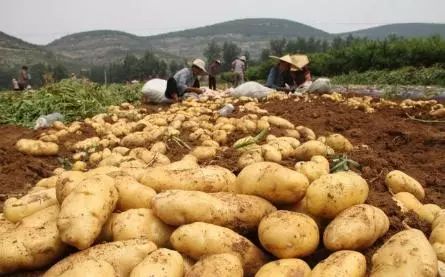
In potatoes, the manifestation of phosphorus deficiency is also very obvious. The root system and growth of the plant are affected, and it may even fail to flower later. However, the part harvested from potatoes is the underground tuber, and after phosphorus deficiency, because the photosynthetic capacity of the aboveground part of the plant is insufficient, the accumulated starch cannot be effectively transported to the potato tubers, so naturally the potatoes are very small, or there may even be no tubers at all. Even if tubers form, the potatoes tend to show rusty-brown signs, leading to a decline in quality.
Solutions:
Therefore, in agricultural production, the best way to solve phosphorus deficiency is to supplement a sufficient amount of organic fertilizer in the base fertilizer, and fertilizers such as superphosphate should also be applied. In the middle stage of plant growth, the possible phosphorus deficiency problem can be solved by spraying potassium dihydrogen phosphate on the leaves.