The Implications of Traditional Chinese Philosophy in the Appreciation of Chinese Cymbidiums
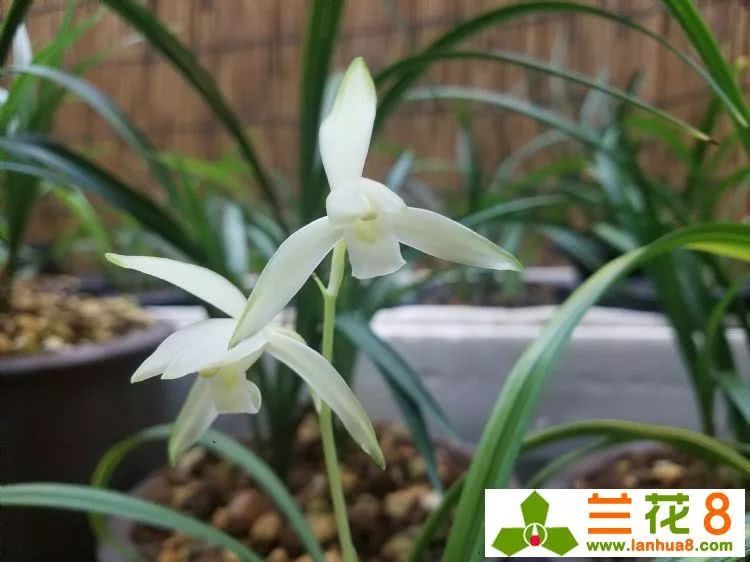
Promote Chinese cymbidium culture, spread orchid knowledge
The Chinese cymbidium has a distinctive grace, pure and proud, flourishing for a thousand years without decline, and to this day it still exerts a profound influence on Chinese culture, aesthetic thought, aesthetic psychology and aesthetic consciousness. "The orchid - a symbol of culture" is a rather profound and accurate definition of the Chinese cymbidium given by Professor Liu Qingyong. How the Chinese cymbidium came from being an ornamental plant into the richly connoted realm of Chinese culture is well worth exploring. From the existing literature it can be seen that the greatest role here was played by the writings and verses of China's earliest and most famous thinker and educator, the progenitor of Confucianism Confucius, and of the progenitor of romantic lyric poetry, Qu Yuan. They caused this ornamental plant, the Chinese cymbidium, the moment it appeared in writing to reach an extremely lofty height, and from then on it has had a far-reaching influence on Chinese culture and art.
Why have other ornamental plants not reached such a realm? This is because the "form, color and fragrance" of the Chinese cymbidium and its distinctive charm accord with traditional Chinese philosophy and culture. The form of the Chinese cymbidium itself is in fact very simple, and simplicity is a kind of purity, and purity is the highest realm of formal beauty. In brief visual communication a person finds it hard to accept complex and cumbersome images; only simplicity will do, and only the Chinese cymbidium, with its simple leaves, simple fragrance and special, enchanting charm, can mobilize a fascinating artistic realm and aesthetic intensity. Once the ancient sages saw the Chinese cymbidium, an air of elegance rushed at them, and they were captivated by its distinctive color, form and fragrant charm, yet they did not cling to the outward shape of the thing; their intent was to pour out the feelings in their hearts.
As the saying goes, "Entrusting feeling to plants and trees, always with the utmost variation of literary sentiment, until the lumps in my chest are all spat out and only then do I stop"! Once the Chinese cymbidium was endowed with cultural color, it became a perfect blending of the Chinese cymbidium with philosophy and with personality; its concrete expression shifted into the experience of ideal beauty, and this plant, the Chinese cymbidium, was emphasized and omitted. This form expresses an idea. Carrying a surge of emotion and a rhythm of power, using the techniques of symbolism and allegory and rich imagination, the ancient sages made the Chinese cymbidium into a model, a standard for how to conduct oneself, thereby bringing the aesthetics of the Chinese cymbidium into culture and into philosophy; so that the aesthetics of the Chinese cymbidium does not remain at the level of a purely sensory stimulus, but enters into an idea.
"Now the orchid should be the king of fragrant plants, yet today it alone flourishes among the common grasses," "To associate with a good man is like entering a room of zhi and lan orchids; after a long time one no longer smells their fragrance, for one has become one with them" - do not such famous lines embody the highest realm of traditional Chinese philosophy, "the unity of Heaven and man"? "The unity of Heaven and man" in traditional Chinese philosophy requires people both to know the "Way of Heaven" and the "Way of man," and to practice the "Way of Heaven" and the "Way of man," and since the "Way of Heaven" is rooted in the "Way of man," it suffices truly to know and practice the "Way of Heaven." It is nothing more than requiring people to reproduce, with their thoughts and feelings, the work of Heaven and Earth's creation. Hence it is also a manifestation of "the unity of Heaven and man." The Chinese cymbidium precisely reproduces this work of Heaven and Earth's creation. Only then did the ancient sages have such exclamations; in the Chinese cymbidium is embodied the unity that traditional Chinese philosophy pursues on the questions of truth, goodness and beauty. That the Chinese cymbidium so perfectly reproduces the highest realm of ancient aesthetics lies in the fact that the basic spirit of traditional Chinese philosophy is to teach people how to "conduct oneself," and for this there should be a requirement for "conducting oneself," that is, there should be an ideal realm of truth, goodness and beauty. Although the forms and contents manifested by people's ideals differ in thousands of ways, there should always be an ideal, a pursuit of a noble spiritual realm. And the Chinese cymbidium reproduces such a model. No matter in what circumstances the Chinese cymbidium survives, it has a standard, a pursuit, and is forever the king of fragrance. In the bleak severe frost and the cold winter when a hundred flowers wither, the Chinese cymbidium, with its proudly solitary flower countenance, stretches its sinews and relaxes its bones, faintly revealing its face - how supremely noble! Especially the Chinese cymbidium growing in mountain streams and wild wastes, truly attracting no one's notice, standing alone from the world, contending with no one - how purely noble! Let the wind and snow be fierce as they may, it will never let its head touch its heels. To bow and bend the knee - how faithful and steadfast it is not! The personification of the Chinese cymbidium is "the unity of Heaven and man."
With the development of the times, orchid cultivation and orchid culture, from the Tang, Song, Yuan, Ming and Qing dynasties to the modern era, have become more standardized and more profound whether in cultivation techniques or in the appreciation of the form, leaf and flower artistry of orchids; the Chinese cymbidium appears even more widely in poetry, calligraphy and painting, bringing orchid culture into something even more magnificent in momentum and broad and exquisite in subtlety; making orchid culture an art form that blends emotional beauty, realistic beauty, ideal beauty, the beauty of artistic conception and formal beauty into one, pushing the expression of the Chinese orchid to a wondrous realm of perfect mastery. Therefore, it is not hard to see that the essence of appreciating the Chinese cymbidium is the perfect blending of the orchid and traditional Chinese philosophy; this perfect elevation has produced endless variations in orchid culture, and these variations will continue. The appreciation of the Chinese cymbidium and orchid culture are a wonderful flower in ancient Chinese culture and art, the product of traditional Chinese cultural psychology and aesthetic ideals, and the result of the development of aesthetic consciousness together with philosophy and the laws of art. Therefore the Chinese cymbidium is a national quintessence and a national treasure. Today, as a fine piece in the treasure house of Chinese culture and art, it is gradually being accepted by people around the world through various media. It has changed from the past level at which the Chinese cymbidium was limited to being enjoyed mutually only among the scholar-official class, and has become an independent art form, and in future times it will be carried forward and made even greater.
Orchid Bar, your good teacher on the road of orchid cultivation