A Complete Guide to Growing and Caring for Mountain Roses
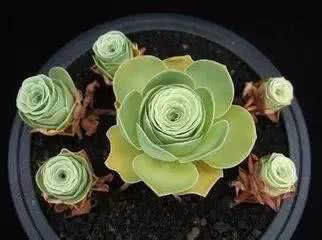
Mountain Rose
Greenovia
Crassulaceae,
genus Aeonium.
Characteristics:
Because during its dormancy period it avoids unfavorable conditions such as strong light and intense heat, the outer leaves age and wither, while the leaves in the central part wrap tightly together, making the plant look like one rosebud after another about to bloom. It is precisely this trait that drives most plant enthusiasts crazy.
Appearance Characteristics
The mountain rose has fleshy alternate leaves arranged in a rosette, and the plant's spread varies greatly depending on the variety, ranging from 2 cm to 40 cm. Leaf colors include grayish green, blue-green, or emerald green. The flowering period is from late spring to early summer, with a raceme inflorescence and yellow flowers. After flowering, as the seeds mature, the mother plant gradually withers, but small shoots grow from its base.
About the Substrate
Because the growing environment is an indoor enclosed balcony with poor ventilation, the non-granular portion of the substrate used is very small, only about 1/6 rice husk and peat; the remaining 5/6 is all various granules, including honeycomb coal cinders, orchid stone, pumice, LECA, perlite, small stones, etc.; in addition, 2 mm diameter maifan stone and small stones are used for topdressing.
The granules lining the bottom of the pot are larger, but the granule size in the middle is best kept at 3 mm or less, because the mountain rose's root system is relatively fine, and granules that are too large will hinder root growth. No insecticides are added to the substrate, and fungicides other than potassium permanganate are rarely used. All substrate is soaked in water before use, then sterilized in a microwave on high heat for 20 minutes, trading part of the beneficial microbial community for the peace of mind of avoiding pesticide residues.
About Watering
In places with relatively high air humidity, relatively more rain, and insufficient light intensity, water is generally given only once every 4 weeks to help control the plant's shape. But the substrate of seedlings within 1 year must not dry out completely, and the amount of water given should generally be at least 1 times more than for mature plants. You can water by the soak method, with the water level at about 2/3 the height of the pot, soaking for a few seconds and then taking it out, keeping the substrate surface dry year-round, which can avoid root rot as much as possible.
Another advantage of the soak method is that it allows free control of the amount of water given. For example, in late spring, to be safe, many growers gradually reduce the amount of water, slowly transitioning to cutting off water entirely throughout the summer. You can also choose to use the quick soak method, dipping it briefly and shallowly in the water and then taking it out, keeping moisture at the bottom of the pot.
Especially for seedlings, there is basically no need to cut off water in summer, at most just slightly restrict water. Also, a reminder: try not to let water accumulate in the center of the leaves, otherwise the core easily rots, especially in an indoor environment with poor ventilation. If water accidentally accumulates in the leaf center, quickly absorb it with a cotton swab and then ventilate as much as possible.
About Ventilation
For the mountain rose to get through summer, strong ventilation is essential. For example, place it at an open window during the day and in an air-conditioned room at night. If the air conditioner is not turned on, then place it by an open window all day. If you are really worried, you can even hang a small breeze ceiling fan nearby. As long as ventilation is good and the plant's root system is healthy, it can get through summer safely. But it is best not to put it here in the morning and there at night, moving it constantly every day; excessive pampering is instead detrimental to the mountain rose's normal growth. To grow plants well, the key is not what you want to give them, but rather making the effort to figure out what they want.
In other seasons, placing it normally indoors is fine, with no need to deliberately open windows for ventilation. Ventilation in spring and autumn is fine, and no ventilation is also fine. In winter, ventilation is basically unnecessary.
About Light
A south-facing window is ideal, and of course an even more ideal state is outdoor cultivation, but unfortunately for most friends who only have a balcony, this is just a dream. So apart from enthusiasts in blessed places like Kunming, most Crassulaceae enthusiasts rarely get to see the mountain rose in its sun-reddened form. What a captivating purplish-red with a grayish-white base that is!
About Propagation
Mountain roses can be propagated by sowing, division, and beheading.
Sowing
Seeds are best stored in the refrigerator's crisper compartment, and after about 5 years they still have a high germination rate. Sowing is done during the growing season, with autumn being the best. Spread the seeds evenly on the soil surface, do not cover with soil, place in a spot without direct sunlight, and water by the soak method to avoid the tiny seeds being washed away by water. They germinate 5 to 10 days after sowing. During the seedling stage, keep the soil moist and provide sufficient but soft light. When the seedlings become too crowded, thin them out in time so as not to affect their growth.
Division
Except for a few varieties such as Aeonium diplocycla, mountain roses relatively easily produce side shoots. During the growing season, you can snap them off, let them dry for 3 to 5 days, and once the wound is dry, plant them directly in a pot; whether they have roots or not, they readily survive.
Beheading
In autumn, insert dental floss or fishing line into the gap between the leaves, wrap it around the plant at mid-height, and pull tight, and you can separate the core from the base. Leave the base in the original pot, being careful not to let the wound touch water, otherwise it easily rots, and soon many side shoots will sprout between the leaves. Place the cut-off core in a ventilated spot to dry the wound; depending on plant size and environmental humidity, dry it for anywhere from two or three days to a week, then plant it dry in moist soil (meaning the substrate is moist but not wet; it clumps when squeezed by hand and falls apart when released), and wait for it to root. Once signs of growth are observed, you can water and care for it normally.
Tips
For newly purchased mountain rose plants, if the outer leaves have all withered, it is best to peel off the withered leaves, otherwise they easily mold after potting and then infect inward. In addition, before potting, remove the withered roots and keep only the healthy, plump roots. After drying for 2 to 7 days, plant dry in moist soil; plants recover faster after root pruning.