The reason we can eat water bamboo is thanks to a fungal infection
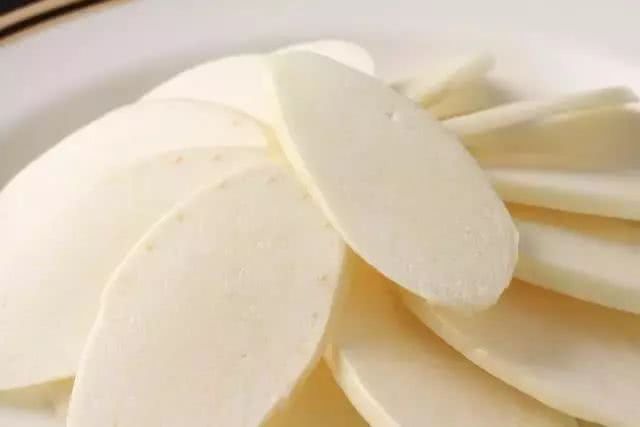
The first time I sawwater bamboo (jiaobai)was still in Yunnan, on my great-aunt's dining table, where there was a dish that looked like sliced bamboo shoots stir-fried with meat. Butthe texture of these "bamboo shoot slices" was a bit strange, not crisp like the ones you normally eat, but rather with a bit more chew to them. If you said they were like dried bamboo shoots, well, they were softer than dried bamboo shoots, especially the center part, which had a somewhat spongy feel. The taste was more like the corn stalks I chewed as a child, or the sugarcane bagasse after the juice has all been sucked out. My great-aunt called this dishjiaogua, and it is one of my earliest memories of Yunnan vegetables.
Later, water bamboo stir-fried with meat appeared in restaurants in the north, and whole water bamboo appeared in the vegetable markets. These vegetables really do look like melons, and also like bamboo shoots, each one white and plump, with residual green leaves on top. However, this thing is neither a melon nor a bamboo shoot, buta "diseased" plant stem. Don't worry, this infectionwill not affect human health; instead, it brings us deliciousness.
White and plump water bamboo. Image: en.wikipedia
A niche vegetable spread across north and south
To talk about water bamboo, we must first talk aboutgū (wild rice)[gū]. For most people, the character gu is completely unfamiliar, and as for what it actually is, that is even more of a puzzle. When you say "jiaobai," many friends from the south will not find it unfamiliar, and this bamboo-shoot-like vegetable is appearing more and more frequently in vegetable markets in the north. In fact,water bamboo is the swollen stem of gu, and moreover a malformed stem。
Like many grasses, gu does not look impressive. These plants growing in paddy fieldslook like clumps of rice, only with longer and denser leaves than rice. Their habitat spreads across north and south, and they can potentially be seen in paddy fields and marshes in Heilongjiang, Jilin, Liaoning, Inner Mongolia, Hebei, Gansu, Shaanxi, Sichuan, Hubei, Hunan, Jiangxi, Fujian, Guangdong, and many parts of Taiwan, China. So we Chinese have been dealing with gu since long ago.
An abandoned grain crop
If we rank seniority in the circle of plant-based foods, then gu definitely counts as a "big name." This plant of the genus Zizania in the grass family was, back in the day,a grain crop able to stand on equal footing with the "Five Grains". In the gathering era and the early period of agricultural development, the grains of gu -gu mi (wild rice grains)(hudiao mi) - once appeared as an important food. In ancient texts such as the Rites of Zhou, the ancients even once listed gu alongside the Five Grains of "rice, millet, ji millet, wheat, and soybean [shū]" as thesixth grain。
Gu mi rice. Image: en.wikipedia
In fact, all grasses have starch-rich seeds; it is just that some seeds are too difficult to gather (such as African wild rice growing submerged in water), some seeds are too small (such as reeds), and some seeds cannot be gathered on a regular schedule (such as bamboo).Relatively speaking, gu mi is still a grain that is fairly easy to harvest and use. Moreover, gu is aperennialplant; once planted, it can, like a fruit tree, provide us with grain for a very long time.
It is just that the yield of gu mi cannot compare with that of rice. Add to that gu's long flowering period, inconsistent seed maturation, and the fact that seeds fall from the panicle as soon as they mature, and it can be said to bevery hard to manageas a grain crop. So afterward it was gradually neglected by people.
After cultivated gu was abandoned by the mainstream grain crop team, it quickly found a new position in the vegetable stall; thosecultivated gu plants parasitized by smut fungus made a comeback。
A vegetable blessed in disguise
The rhizome of cultivated gu becomes malformed due to fungal parasitism, producing a bamboo-shoot-like vegetable, and that is water bamboo. Not all cultivated gu can produce water bamboo;the stems of those cultivated gu plants that are not infected remain in their original state, and are therefore called "male jiao."
Infected stems become malformed and swollen. Image: jichitube.com
We usually think of the relationship between plants and microorganisms as life-or-death, such as the Penicillium that rots citrus, the Aspergillus flavus that makes peanuts toxic, and the yeast that makes apples mushy. Butsome microorganisms and plants can coexist peacefully, each taking what it needs。
The most typical symbiotic situations in nature arethe rhizobia of legumes and the symbiotic fungi of orchids. In both of these typical parasitic cases, it isthe plant landlord that holds the dominant position; they specifically set aside rooms for microorganisms, providing housing for these invisible-to-the-eye microbes.
Root nodules on soybean roots, each containing hundreds of millions of rhizobia. Image: Wally Eberhart / AllPosters
Of course, the microbial tenants do not live there for free; they serve the landlord. The rhizobia of legumes turn nitrogen from the air into fertilizer the plants need, while the symbiotic fungi of orchids can help the landlord absorb water and mineral nutrients. If we look at the root system of orchids, we can understand the wonder of symbiotic fungi -orchid roots are all bare, without a trace of root hairs, because the fungi have completely replaced the orchid's root hairs. This is the typical symbiotic relationship in nature.
The roots of a Cattleya orchid, without a trace of root hairs. Image: orchids9.blogspot.com
The relationship between smut fungus and gu is not so peaceful. Gu parasitized by smut funguscan no longer set seeds. Moreover, the smut fungus also secretes certain chemical substances tostimulate the swelling of gu's stems. You should know that the stems of normal gu are about as thick as rice stems, and at most no thicker than ordinary chopsticks, but the swollen stems are already comparable to a rolling pin. This allowed the smut fungus to greatly expand its living space. When gu's growing period ends, large numbers of smut fungus spores are released to infect new plants.
Cut open water bamboo and you can see the black masses of smut fungus spores. Image: blogspot.com
In fact, cultivated gu has completely given up the ability to set seeds;even cultivated gu that has not been infected by smut fungus only flowers and does not fruit; let alone those gu plants that after infection do not even flower, because much of the nutrition is used to grow the fattened stems. How to reproduce without seeds then became a big problem. Do not worry,water bamboo can use the clone method - just collect the gu roots after harvesting the water bamboo, sort them, and plant them in the field again, and the next season you can harvest water bamboo again.
The uses of water bamboo
In any case, water bamboo isa very good vegetable, especially becausefresh water bamboo contains large amounts of sugars and amino acids, giving water bamboo a unique fresh sweet flavor. Slice the water bamboo, add garlic cloves, and stir-fry it plain or with sliced meat, and it is a delicious dish. Thus gu found its own place in the vegetable family.
Stir-fried shredded meat with water bamboo. Image: Douguo Meishi
The stems and leaves of gu are alsoexcellent fodder and pasture grass, suitable for feeding both cattle and sheep. At the same time, theyalso play an important role in marsh ecosystems, first by providing fish with winter shelter, and second by stabilizing embankments. It seems that gu, once one of the six grains, can continue to play a role today.
The precious corn truffle
It is not an isolated case; in nature, the crop infected by smut fungus is not only gu, and the vegetable produced is not only water bamboo. Corn, a distant relative of gu, can also be infected by smut fungus, forming the deliciouscorn truffle. The part parasitized by smut fungus, however, is not the corn stalk, but the corn ear. Thosecorn kernels invaded by smut fungus become abnormally swollen, and at the same time their color also changes togray-black. Although normal corn kernels cannot form, these abnormal kernels known as "corn truffle" are also delicious.
By the way, truffle is a general term for a class of fungi of the genus Tuber, of which about 10 species have been discovered so far, most growing on the roots of broadleaf trees such as pines, oaks, and oak trees. Truffles have a special aroma, and those who love them love them extremely. Large truffles are expensive and are a sought-after ingredient for gourmets.
This article is a 2016 article from Species Calendar, from Species Calendar author @Shi Jun.
Like Teacher Shi Jun's articles?
Quickly take away hissigned new book!