Where do rainbow roses get their seven colors from?
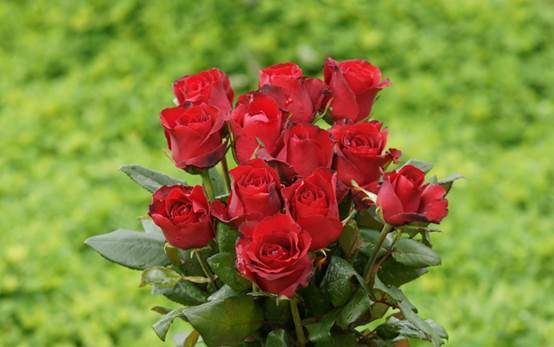
Roses are a great addition to any garden or home landscape. Roses come in a wide variety of colors and forms, from trellis-climbing to upright, and even low-growing varieties. They are easy to maintain, easy to care for in most environments and cold-hardy. Roses work well in our landscape decorations because the plant comes in a very adaptable range of types.
Plant Classification
Botanists use plant classification systems to avoid confusion when describing various plants. Many plants have many common names. The classification system starts with the broadest categories and ends with the most descriptive ones, namely the genus and species of the plant. The categories are divided into division, class, order, family, genus and species.
The Rose and the Magnolia Division
The first great branch of life is the kingdom. There are two great kingdoms, the plant kingdom and the animal kingdom. Roses belong to the plant kingdom. Division is the next category. Roses belong to the magnolia division. Plants in this division are called flowering plants, or angiosperms. The seeds these plants produce are enclosed in a structure called a fruit.
Other Families in the Magnolia Division
There are ten major plant families in the magnolia division. These plants include asters, orchids, legumes, wheatgrasses, grasses, mints, mallows, myrtles, oleanders and peonies. Many people do not think of grass as a flowering plant, but they do classify all the plant parts as flowers. Therefore, roses can be considered related to grass in some ways.
Complete Classification of the Rose
The complete classification of the rose, from the largest category, kingdom, to the most specific category, species, is as follows: kingdom - Plantae, division - Magnoliophyta, class - Magnoliopsida, order - Rosales, family - Rosaceae, genus - Rosa. There are many different species names to identify each kind of rose. Interestingly, other members of the rose family include apples, apricots, plums, cherries, peaches, pears, raspberries, strawberries and almonds.
Although some rose varieties have different colors, rainbow roses offer vibrant colors within each bloom. The color combination of rainbow roses comes from a dyeing technique, not as part of their natural growth. Although rainbow roses cannot achieve their multicolored appearance naturally, you can grow suitable roses to create your own rainbow roses
Choose rose varieties with long stems, such as Rosa multiflora and hybrid tea roses. Choose light-colored flowers, such as white, cream or pale yellow. 'Ivory Fashion' and 'Nicole' are varieties suited to Florida, while 'Crystal Rose' and 'Lynette' are hybrid tea roses that can make striking rainbow roses.
Prepare for your roses in a sunny spot in your yard. Roses need at least 6 hours of sunlight to bloom high-quality flowers. If you live in a climate where summer temperatures are often above 32.2°C, choose a spot that provides shade during the hottest part of the afternoon.
Prepare the planting site by digging a hole two to three times wider than your rose's roots. Place the rose plant in the hole so that the crown sits slightly above the surface of the surrounding soil. Mix equal parts of plant compost and backfill soil, pack the soil around the root ball, and fill it in.
Water the rose plant immediately after planting, moistening the soil throughout the root zone. When the soil surface becomes dry, irrigate around the plant, watering thoroughly and soaking the soil throughout the root zone. Depending on how porous the soil is and the rainfall in your area, you may need to water 2.5 to 5 cm every one or two weeks. In spring and summer, apply rose fertilizer to the roses every four to six weeks.
Harvest the rose buds when the buds begin to open. Using a sharp knife, rather than pruning shears, cut cleanly at the point where the rose stem connects to the main plant. This will provide the length needed for the dyeing process. Cut the bottom of the stem into 10 to 15 cm lengths to form four long sections.
Pour 5 cm of water into the bottom of 4 small glasses. Put 15 to 20 drops of food coloring in the glasses, a different color in each one. Place the vases together, arranging all four in a circle. Put a rubber band around the narrow vases to bind them tightly together. Insert your rose into the vases, placing one section of stem in each vase.
Place the rose in a cool spot to absorb the colors into its stem and petals. Once the rainbow rose has reached the desired color level, remove it from the four vases, place it in a vase filled with clean water, and display it wherever you want.