To grow a clivia from a seedling, only with good care will its flowers be large when it blooms
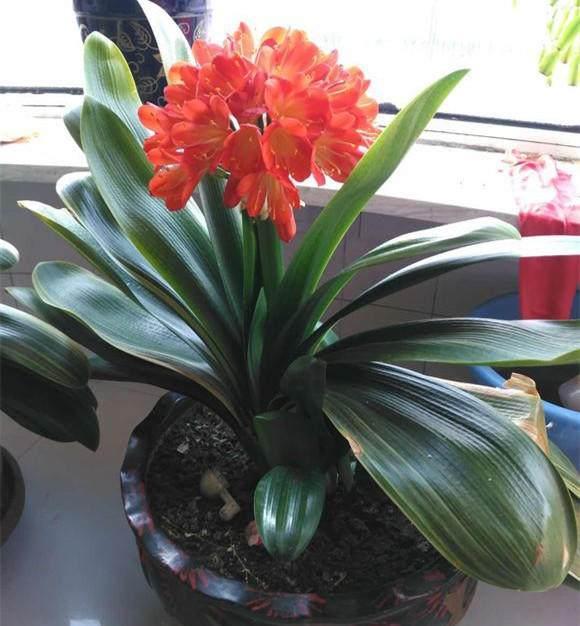
Clivia, when it comes into bloom, bears strings of red flowers covering the branches, very beautiful to look at. Moreover, the leaves of the clivia are slender and green, and also have high ornamental value. However, many flower growers who raise clivia from seedlings always run into problems. Today, let's talk about the care knowledge for young clivia.
After sowing, when the clivia seedlings grow 1-2 leaves, transplant them separately. The potting soil can be made by mixing 7 parts horse manure soil with 3 parts river sand, or 7 parts forest humus soil with 3 parts river sand. When putting the small seedlings into small pots, gently fill in the growing medium so as not to damage the roots.
After planting, water thoroughly, and place in a ventilated spot indoors, keeping the temperature at 15-20°C. During the seedling stage, when summer temperatures are high, water once a day. When winter temperatures are low, water thoroughly only after the potting soil has dried out completely; no fertilizing is needed, as the nutrients contained in the new growing medium are already enough to meet the growth needs of the seedlings.
When the seedlings have grown into large plants at 2 years old, in both spring and autumn a dilute general-purpose liquid orchid fertilizer can be applied as a top dressing, diluted 500 times, watered onto the roots once a week, but do not let the fertilizer liquid splash onto the leaves, to avoid rotting the leaves. For 2-year-old clivia, keep the soil moist and maintain the temperature at 15-25°C.
When it turns warm in summer, the clivia should be placed in a semi-shaded spot outdoors, avoiding direct sun exposure; when it turns cold in winter, it should be placed in a sunny spot indoors to prevent frost damage. If managed well during this period, the plant grows robustly and can bloom after 3 years; otherwise it takes 5 years or longer.
In addition, during the growth of the clivia, if the temperature is too low and the soil is dry, it will affect flower growth and cause the "arrow stuck" phenomenon. If this phenomenon occurs, flower growers should first ensure the soil contains sufficient moisture, keep the room temperature at 17-20°C, and apply a top dressing of a mixed solution of 500-times diluted organic liquid flower fertilizer and 0.5% monopotassium phosphate to promote the emergence of the flower stalk.
In addition, during the growth of the clivia, yellowing leaves often occur. There are 4 main causes of yellow leaves: first, sunscald. Second, too much water and fertilizer. Third, the soil is too alkaline or too acidic. Fourth, lack of nitrogen fertilizer.
Solution: Place the clivia indoors or in a shaded shed with scattered light, avoiding direct sunlight, and keep the temperature at 15-25°C; replace the growing medium, cut off rotten roots, and control the use of water and fertilizer; change the pH of the growing medium so that it becomes neutral or slightly acidic. If you pay attention to cultivation, the yellowing of leaves will be eliminated.