How should cyclamen bacterial diseases be treated properly?
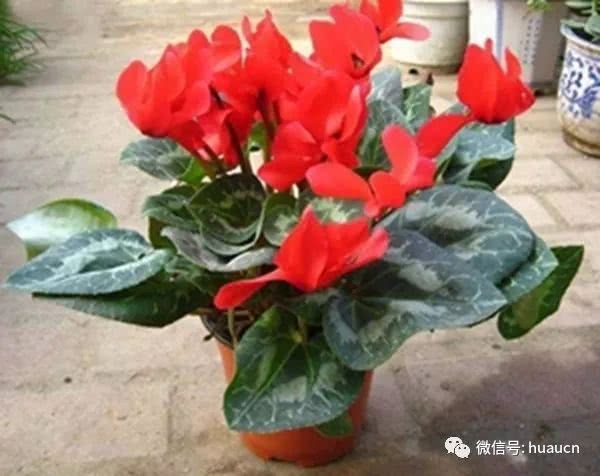
Cyclamen is a semi-hardy bulbous flower with a relatively long growth cycle, generally more than 10 to 12 months, so even with thoroughly sterilized soilless culture (substrate culture), many soil-borne diseases are still unavoidable. Cyclamen diseases have become one of the main obstacles to its large-scale cultivation. Below is an introduction to the two most frequently occurring types of cyclamen bacterial diseases.
I. Bacterial soft rot
1. Pathogen
Erwinia carotovora, genus Erwinia, carrot soft rot Erwinia, a Gram-negative bacterium, with an optimum growth temperature of 25°C to 30°C, a maximum of 40°C, a minimum of 2°C, and death after 10 minutes at 50°C.
2. Transmission route
The pathogen overwinters in the soil with diseased plant residues. The following year, it spreads via rainwater, irrigation water and insects, and invades through wounds. After invasion, the pathogen secretes pectinase to dissolve the middle lamella, causing cells to disintegrate, leading to leakage of water from the cells and causing rot. The disease is severe on cloudy and rainy days, when leaves are tended before watering has dried, or when pest damage is frequent.
3. Symptoms
It can generally be observed on the leaves. The symptoms are uneven yellowing of the leaves, followed by the collapse of the entire plant. Most petioles appear water-soaked, and some of the water-soaked petioles turn black. On the underside of the leaves at the base, oil-stain-like water-soaked spots develop along the veins. When the plant is lifted, the stem and leaves separate easily. The corm appears soft-rotted, milky white in color, with a foul odor. After winter begins, some corms develop cracks, and milky white bacterial ooze can be observed flowing from the cracks.
II. Bacterial leaf rot
1. Pathogen
Erwinia herbicola, belonging to Erwinia, a rod-shaped bacterium. The suitable temperature for disease development is 25°C, with a minimum of 10°C and a maximum of 33°C.
2. Transmission route
It is mainly transmitted through soil, invading through wounds created during management operations. The disease occurs easily under high temperature and high humidity.
3. Symptoms
The disease mainly occurs on leaves, petioles, buds and corms. Initially, water-soaked spots appear at the base of the petioles, then expand into dark brown rot and spread to the corm, causing the part of the corm connected to the growing point to become brown and rot in patches. The leaf margins of the leaves at this growing point wilt, new leaves show mottled yellowing, the petioles undergo localized water rot, and the young buds turn black and wither. On the base of the underside of some leaves, oil-stain-like patches appear. Further internal rot of the corm forms depressions, with no foul odor.
III. Control
Low potassium and high nitrogen easily lead to the occurrence of bacterial diseases; poor root growth, leggy leaves, excessive shading, excessive fluctuations in fertilization levels, and excessive temperature fluctuations all easily weaken plant resistance, causing stomata to become too large or creating wounds, thereby allowing bacteria to invade.
First, during the vegetative growth stage, the nitrogen-to-potassium ratio should be maintained at about 1:2, water should be controlled, and light should be increased to promote robust plants and improve resistance. Second, control of the macro environment is also very critical. The greenhouse should be disinfected regularly, for example by sulfur fumigation, to reduce bacterial population density. In addition, operations should be standardized as much as possible to reduce mechanical damage. When cleaning up dead leaves, this should be done centrally on sunny days, after which the corms should be protected with chemicals. The larvae of moths and lacewings often damage the leaf buds and flower buds of cyclamen plants, causing many wounds near the corm, which easily leads to bacterial invasion. Therefore, pest control is also one of the key points in preventing bacterial diseases.
For infected plants, they should be removed from the greenhouse as soon as possible, while strengthening the disinfection of hands and tools to avoid cross-contamination. In chemical control, copper preparations can be used as protective agents for routine prevention. For areas where the disease has already occurred relatively severely, only antibiotic agents can be chosen - streptomycin.
·END·
An interactive platform for flower growers, gardeners, and green plant enthusiasts to communicate, show off, and be a bit cheeky. An online home for sharing flower cultivation methods and household gardening tips. A fresh flower subscription platform.
Fresh flowers: hyacinth|stock|plum blossom|carnation|camellia|kalanchoe|jasmine|gardenia|peach blossom|balloon flower|osmanthus|calla lily|lily|forget-me-not|clivia|apricot blossom|honeysuckle|milan|peony|sunflower|chrysanthemum|serissa|crown of thorns|tulip|narcissus
Green plants: poinsettia|money tree|pothos|spider plant|elephant ear|lucky bamboo|asparagus fern|aloe|ivy|anthurium|monstera|bougainvillea|silk tree|peace lily|schefflera|boxwood|sago palm|rubber tree|maidenhair fern|snake plant|
huau.cn
……
Search the public account "Flower Friends" or "huaucn" to get the latest information
Business cooperation, promotion. Please contact WeChat private ID:ihuaucn