Using vermiculite to root succulents: fast rooting, and they can fill out the pot and grow beautifully
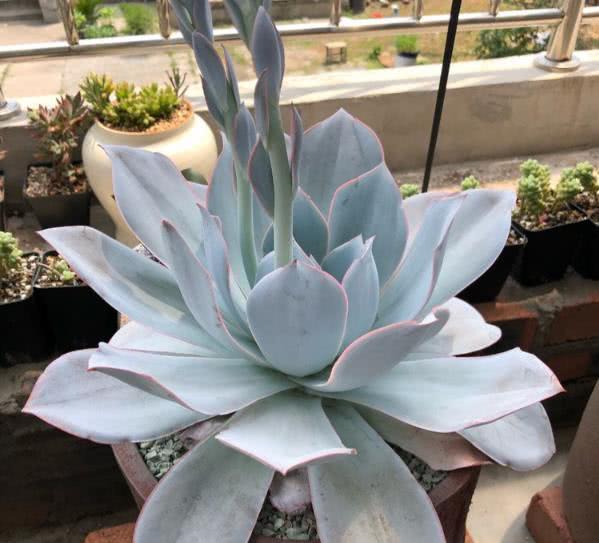
As the best ingredient for growing succulents, vermiculite can raise the survival rate of succulents. Never underestimate this tiny bit of vermiculite. Although its hardness is not high and its appearance is not appealing, vermiculite is the best top dressing for plants. Vermiculite holds water well and automatically regulates moisture for plants, thereby keeping the humidity of the plant's growing environment within a reasonable range, which in turn induces seed germination or plant rooting.
Vermiculite is a natural, non-toxic mineral that expands under high temperatures. After high-temperature processing, expanded vermiculite has good air permeability, strong water absorption, small temperature fluctuations and a sterile effect, making it very suitable for rooting succulents. But vermiculite also has a drawback: it holds too much water, and it can also cause succulents to turn to mush and rot. It is best to mix it with other growing media and only spread a thin layer of vermiculite on the surface, so that after new roots emerge they will pass through the surface layer of vermiculite and reach the potting soil below, which is safer and will not lack nutrients.
Vermiculite has good air permeability and does not easily harbor bacteria, letting roots breathe freely! It can keep the succulent soil mix moist (not wet) for a longer time, which is more conducive to the growth of the succulent's root system and avoids the "dry thoroughly, water thoroughly" approach that damages succulents too much. The correct way to use pure vermiculite for rooting is: 3-6 mm granular Xinjiang white vermiculite, inserted dry without watering to root. If the environment you are in is relatively dry, you can spray water on the surface of the vermiculite; it is enough if it feels moist to the touch. When the water evaporates, part of it will be absorbed by the vermiculite, and that is enough for the succulent to root.
When using pure vermiculite to root succulents, should you water or not? If watering is needed, how should you water? Vermiculite has a strong ability to adsorb moisture from the air. In many fields, vermiculite can be used as a desiccant. Vermiculite can adsorb moisture from the air. At an air humidity above 30%, even with no watering at all, the environment inside the vermiculite is very suitable for succulents to root. To make the vermiculite granules better fit the succulent's growing point, the most suitable vermiculite for rooting is 3-6 mm vermiculite granules. Smaller granules are not good for ventilation, while larger granules cannot provide suitable humidity for the succulent.
Vermiculite itself has few nutrients, but it holds water better. Some gardening enthusiasts like to mix vermiculite into the soil as a granular component, and enthusiasts each have their own views on the pros and cons. Some enthusiasts add too much vermiculite when mixing soil, so the medium has a relatively high water content and holds too much water, leading to root rot. Of course, this does not mean vermiculite cannot be put into the medium. Generally, 1 part vermiculite to 10 parts soil is enough, and of course it can be even less.
If there are more granules in the soil, water permeability will be better, the soil will dry quickly, and frequent watering will be needed. If the soil has a relatively high proportion of soft peat soil, it will have better water retention, and the watering interval needs to be lengthened. The size and shape of the pot also has a great influence. For example, a wide-mouthed shallow flower pot with a larger diameter will lose moisture faster, and because it is shallower it cannot store too much water, so this type of pot can be watered frequently and more. A deeper pot with a small mouth stores a large amount of water and moisture is harder to evaporate, so after normal watering, the interval can be lengthened further.
This is a gathering place for succulent lovers, sharing succulent care tips. You are welcome to follow and exchange ideas.