Orchids not growing? 90% of the time it's old pseudobulbs - soak them in this, water once every 7 days, and side shoots and new leaves will sprout together
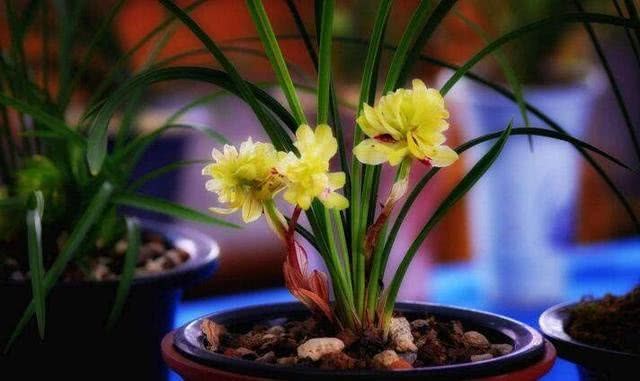
Since ancient times, orchids have been called the gentleman's flower, pure and elegant in nature, and especially loved by many scholars and refined people. Keeping one at home, whether placed in a study or a living room, adds a great deal of literary elegance. Orchids are also very precious, and keeping one is a symbol of status. As people's living standards improve, more and more flower lovers have fallen in love with orchids and like to keep one at home. However, if you want to grow orchids well, it really takes a bit of care. Recently, a netizen left a message saying that the orchid they grow simply will not grow, let alone bloom. In 90% of such cases, the orchid has become an "old pseudobulb." At this point, we can soak it in this, water once every 7 days, and side shoots and new leaves will sprout together!
First, let's talk about when an orchid is considered an old pseudobulb. That is, the orchid neither grows nor dies, entering a dormant state of no growth. This is mainly because the soil's air permeability has been affected, and water seepage becomes very difficult, so the potting soil ends up either in a dry state or in a waterlogged state.
If we also often fail to fertilize it, or fertilize it in the wrong way, it is even more likely to cause its roots to rot. Even if they do not rot, it is very easy for it to fail to absorb nutrients, which leads to the plant becoming stunted.
Flower lovers may ask, what should be used to soak in water for watering? What is this thing?
Actually, it is not some precious thing. It is willow branches, which can be seen everywhere. Why can watering flowers with water soaked from willow branches have such a good effect?
This brings us to the habits of the willow tree. I believe flower lovers have all heard this saying: If you deliberately plant flowers, they may not bloom; if you casually plant a willow, it will grow into shade. This well reflects that the willow is a plant with extremely high self-propagation ability. Why is that?
This is mainly because willow contains a substance called salicylic acid, and in large amounts. In plain terms, salicylic acid is a growth hormone and has a very good effect on promoting plant rooting. In addition, willow branch infusion can also inhibit the breeding of bacteria and prevent cuttings from rotting due to bacterial infection, so it is more than ideal for growing orchids.
The method of use is as follows:
Pick willow branches of the current year (those of the current year contain the most salicylic acid). After bringing them home, cut them into sections. It is best to smash their outer bark, then soak them in water. Generally, about 10 hours is enough before taking the water to water the flowers
When you first start using it, use it once every 7 days. After about a month, once you see signs of orchid growth, you can gradually reduce the amount, and finally just once a month. Flower lovers must not be greedy!
If you want to grow orchids well, we usually need to pay attention to the following points:
1. The potting soil for flowers should be mainly humus, primarily leaf mold or mountain forest humus. In the south, use humus from the place of origin, commonly known as orchid mud. You can also use leaf mold, vermiculite, perlite, etc. to artificially mix a loose, airy, water-permeable growing medium.
2. For topdressing orchids, liquid fertilizer or foliar fertilizer is mostly used, and the concentration should be lighter than for other flowers. Generally, during the growing season, you can apply fully decomposed dilute cake fertilizer water at about 15%, or 0.1% urea fertilizer water plus 0.2% potassium dihydrogen phosphate fertilizer water, once every 15 to 20 days. From before flowering to the flowering period, you can spray the leaves 2 to 3 times with 0.2% potassium dihydrogen phosphate or plant ash water to promote the development of roots, stems, and flowers.
3. Watering should achieve moist but not wet, dry but not parched; watering must not be too much or too little, and grasp the principle of not dry in autumn and not wet in winter.
4. When growing orchids at home, to control the amount of light, it is best to place them on a balcony windowsill or under the eaves with bamboo blinds for shade. Generally, provide shade from 9 a.m. to before 6 p.m., and open the blinds in the morning and after 6 p.m. so they receive scattered sunlight.