Potted jasmine: grow it from a seedling and let it bloom all summer long
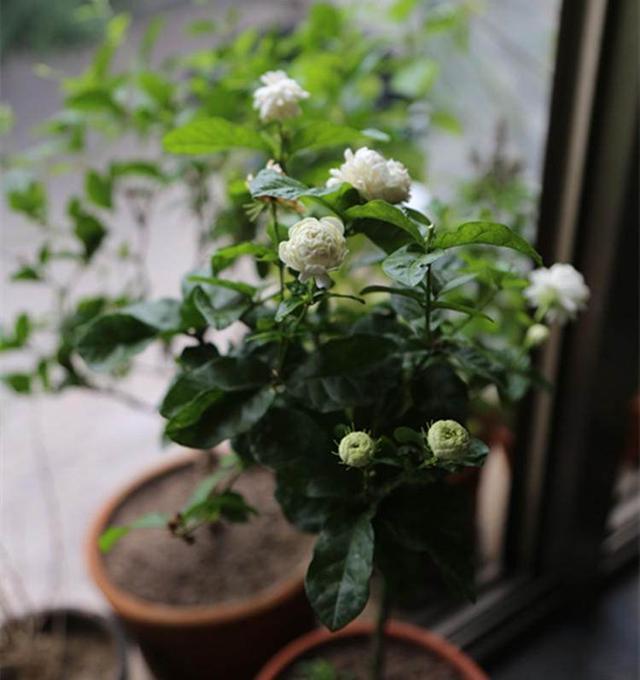
Jasmine has emerald-green leaves, snow-white flowers and an intoxicating fragrance, and it blooms in midsummer, bringing a scent and a feeling of coolness, so it is much favoured by people. It has always been loved by flower enthusiasts. So, how do you grow jasmine from a seedling and let it bloom all summer long?
First of all, jasmine is a tropical plant: it likes warmth and sunlight and fears the cold. It grows best in a humid environment and in loose, fertile, well-drained, slightly acidic soil, and it dislikes waterlogging. When the temperature rises above 20°C it begins to form buds and then flowers successively, and above 30°C it reaches peak bloom, when bud formation and development speed up greatly and the flowers are plentiful and fragrant.
Please click to enter an image
Now let's look together at how to buy jasmine as a seedling and then grow and care for it.
1. At the turn of spring and summer, jasmine sold on the market usually comes in two forms: potted and bare-rooted. The bare-rooted ones are mostly seedlings that were successfully rooted from cuttings last year. When buying, choose ones with upright, fresh branches and leaves, and preferably with plenty of sound fibrous roots.
2. For the soil used to plant jasmine, it is best to use mountain soil or potting mix blended with 10% sand or rice-husk ash. After planting, water thoroughly and place it outdoors in semi-shade; after about 15 days, move it to a sunny spot and switch to normal care and management.
3. Plants with a long flowering period generally like fertiliser, and jasmine is no exception. Whether in the bud-forming stage or the flowering stage, you should continuously apply various organic fertilisers combining nitrogen and phosphorus with phosphorus as the main component. Use mainly light fertiliser: about every 7 days apply a general-purpose liquid flower fertiliser once, with a fertiliser-to-water ratio of 1:500. In this way the leaves will be green and the flowers abundant, and it will bloom without stopping.
From late August, gradually reduce the frequency of fertilising to once every 10-15 days. After early October, when the third flush of flowers forms, fertilising should basically stop. If in the early flowering stage you alternately water with 0.2% potassium dihydrogen phosphate combined with organic liquid fertiliser, the jasmine will bloom more and the flowers will be more fragrant.
In addition, jasmine likes moisture, and its growing season coincides with hot weather. For potted jasmine exposed to the scorching sun, water it promptly once the soil dries, and water it thoroughly. If you water in the morning and the soil in the pot is dry by evening, you should water it once more. If the soil in the pot stays too dry for a long time, the branches and leaves easily wilt and flop over, and the basal leaves also tend to turn yellow and drop, which affects further growth and flowering.
When the cool autumn weather arrives, watering can be reduced; just keep the soil in the pot slightly moist. Even more importantly, prevent the soil in the pot from being constantly too wet or from accumulating water after rain. If this happens, you must promptly clear the drainage holes, otherwise it will cause the branches and leaves to turn yellow and drop, and even kill the plant.
For potted jasmine, from May it begins to grow new branches and leaves and to form buds. If it is a single-stemmed, upright plant, you should pinch out the growing tips or cut it back to encourage side branches to grow, so that it will flower more later. Dead, diseased and weak branches should be cut away promptly, and leggy branches should be cut back. Branches that have finished flowering should also be pruned or cut back appropriately, to encourage more side branches, more buds and more flowers.