Orchid care is not complicated and easy to understand once explained, with only one exception
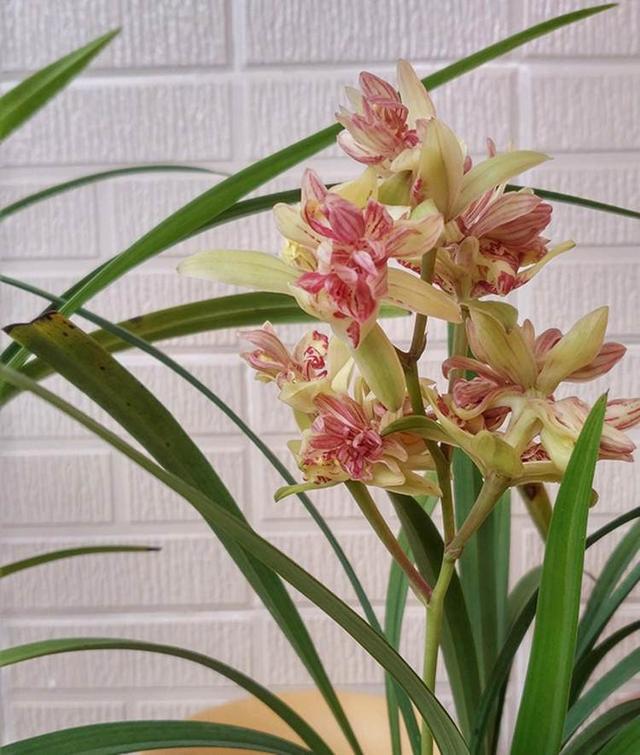
As the saying goes, understanding orchids takes a moment, but mastering watering takes three years of practice. This means that growing orchids is not complicated and easy to understand once explained, with only one "exception," which is watering according to the orchid's needs, and this is not an easy task. Fellow gardeners need a relatively long period of exploration before they can handle it with ease. Today, let's talk about watering orchids again.
Previously, much has been said about how watering orchids must vary according to differences in season, temperature, humidity, light, potting medium, pots and many other factors. Today, we will discuss watering according to the orchid's variety.
The natural ecological micro-environments of different types of wild orchids' native habitats are not all the same, thus forming different growth habits for each type of orchid. These different growth habits in turn create different water requirements for different types of orchids. Therefore, watering must also differ according to the orchid's variety.
1. Cymbidium sinense types
Wild Cymbidium sinense mostly grows in relatively shaded areas at the foot of mountains, where the temperature is warmer, rainfall is abundant, and the soil is moist. Therefore, Cymbidium sinense types must be watered relatively frequently, and at the same time the leaves should be misted often to raise air humidity, so as to benefit the growth of Cymbidium sinense.
2. Cymbidium faberi types
Wild Cymbidium faberi mostly grows on mountaintops under sparse forest, with ample light, good ventilation, and soil that drains quickly and dries quickly. Compared with other orchid types, Cymbidium faberi is more drought-tolerant; even when drought occurs, it will not wither and die in the short term. According to the habits of Cymbidium faberi, the potting medium used for cultivating it should be chosen as a substrate with fast drainage, and there is no need to water too frequently.
3. Cymbidium ensifolium types
Wild Cymbidium ensifolium mostly grows in foggy places facing south, or on forest-edge slopes, or in sparse forest on mountaintops. Cymbidium ensifolium likes warm, humid and semi-shaded environments, is vigorous and easy to grow, tolerates drought and also slightly tolerates moisture, and has very strong adaptability. Its drought and moisture tolerance lies between that of Cymbidium faberi and Cymbidium sinense; its water requirement is greater than that of Cymbidium faberi but less than that of Cymbidium sinense.
In addition, for orchids of various varieties, when watering, in order to maintain vigorous growth, fellow gardeners can fertilize the orchids in combination with watering. Fellow gardeners are recommended to use an organic liquid fertilizer specially made for orchids, at a fertilizer-to-water ratio of 1:500; if leaf spraying is needed, use a fertilizer-to-water ratio of 1:1000, once every 10-15 days.
4. Cymbidium goeringii types
Wild Cymbidium goeringii mostly grows in shaded areas halfway up mountains. It likes shade and moisture, dislikes dryness, and is not heat-tolerant. Cymbidium goeringii's water requirement is slightly greater than that of Cymbidium faberi.
5. Cymbidium kanran types
Wild Cymbidium kanran mostly grows at high altitude, with heavy mist, good shade, and steep slopes, halfway up broad-leaved forests or mixed forests. When rain comes, most of the rainwater runs off down the slope, while part of the water seeps into the soil layer, making the soil both moist and not waterlogged. The potting soil for Cymbidium kanran must never be waterlogged; if too wet, the roots rot very easily, so the potting soil is better slightly dry. Its water requirement is slightly greater than that of Cymbidium faberi, but the air humidity should be higher.
Watering Chinese orchids should differ according to the type of orchid; however, even within the same Cymbidium ensifolium type, different varieties may have different water requirements. In summary, fellow gardeners can water orchids according to this pattern:
For orchid types with relatively thick and large roots, such as the original variety of Cymbidium ensifolium, Sijilan, Jinbian Sijilan, Yinzhen, etc., because the roots are plump and large and store relatively more water, there is no need to water too frequently. For orchid types with thick leaf cuticles and good glossiness, such as Tiegusu, because the amount of water evaporation is relatively small, watering must also be controlled.
In short, watering orchids is a highly technical task and requires consideration of many factors, but as long as one puts in some hard work, it is possible to master this "exception" of watering.