How to care for a Radermachera sinica? A few simple tricks to make the leaves green and large
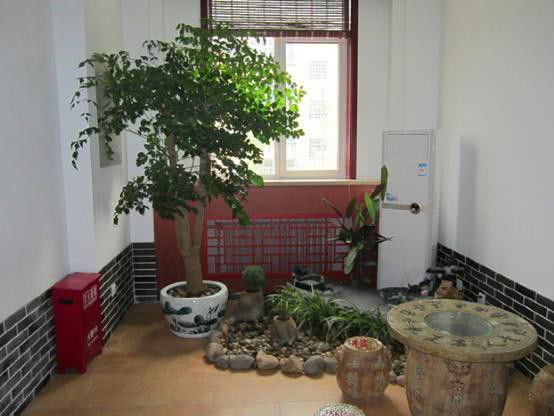
Many plants are given beautiful meanings by us, and planting these plants with "auspicious" attributes at home will more or less make people feel more cheerful. There are many examples of this, among which the editor's favorite is the Radermachera sinica. Indeed, as a plant that is easy to grow and has high ornamental value, placing a pot of Radermachera sinica at home is quite eye-catching. So here is the question: how can you make your own Radermachera sinica grow tall and upright with emerald-green leaves? Perhaps the article below will give you the answer.
Pot and soil: Radermachera sinica is a particularly easy-to-grow ornamental plant. For the soil choice, you only need to ensure it is loose and breathable, and you can add some base fertilizer during the mixing process to increase the fertility of the growing medium. As for the flower pot, here we recommend that friends prepare for two situations: during the seedling stage, a small flower pot can be used for cultivation, and as the Radermachera sinica gradually grows larger, it must be transplanted into a large flower pot at the appropriate time, as only this is beneficial for the Radermachera sinica to grow better.
Watering: The growth of Radermachera sinica cannot be separated from the support of moisture, especially in today's scorching summer, when water replenishment is particularly important. According to our experience, Radermachera sinica should be watered 2 times a week. Of course, this number is not absolute, and it still depends on the specific dryness of the soil. "Water when dry, stop when wet" is a principle we are already very familiar with, so we will not introduce it too much here. It is worth mentioning that in winter, Radermachera sinica is almost in a state of stopped growth, so you only need to control the potting soil so that it does not dry out.
Light: Radermachera sinica is a light-loving plant with strong shade tolerance and is not tolerant of direct sunlight. It can be said that in terms of light, apart from needing shade in the hot summer, Radermachera sinica can accept direct sunlight. Generally speaking, placing it on a south-facing balcony is more suitable. However, one point that needs to be emphasized is that if your Radermachera sinica has always been grown indoors, then when you move it outdoors, be sure not to let it directly receive sunlight, as it is very easy to get sunburned. So this is a gradual process.
Fertilizing: Generally speaking, during the growth process, Radermachera sinica does not need us to supply too much fertilizer, but if you want it to grow taller and faster, then investment in this aspect is still necessary. Generally speaking, during the growth period, applying diluted cake fertilizer water once or twice a month is a more suitable choice, and after adding decomposed cake fertilizer at the potting stage, not much additional fertilizing is needed during the growing period. In autumn and winter, phosphorus and potassium fertilizer can be added once or twice to ensure the normal growth of roots and leaves.
Pest and disease control: If plants are to grow well, pest and disease control must also be done properly. Generally speaking, the troubles that Radermachera sinica is most likely to encounter are leaf spot disease, scale insects, and mites. Usually these pests and diseases are caused by poor ventilation and high temperature and high humidity in the environment where the Radermachera sinica is placed. Moving it to a place with better air circulation and appropriately lowering the temperature can effectively alleviate the problem. Of course, if the situation is serious, then the necessary medication can also be used as the first step.