Cypripedium tibeticum home care methods: bring this flower of the high peaks home
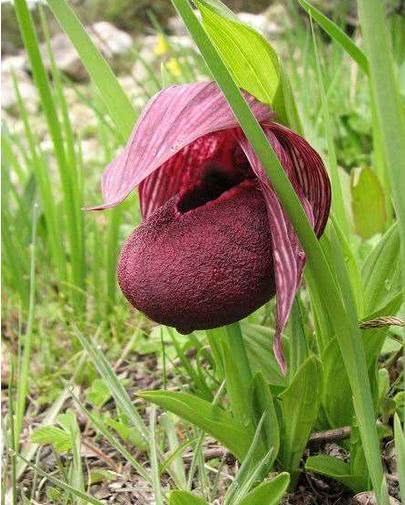
Cypripedium tibeticum is a plant that grows at high altitudes, generally found in scrub grasslands at elevations of 2500 m to 4200 m. Cypripedium tibeticum usually has 3 oval leaves, and the flowers are generally purple, purplish-red or dark red, with distinct pale yellow markings on the petals. The flowering period is from May to August.
Cypripedium tibeticum grows poorly in environments that are too hot or too cold, so in summer take care to shield it from the sun, and in winter take care to keep it warm. It grows best at 15°C to 30°C. Even outside of summer, Cypripedium tibeticum must not be exposed directly to direct sunlight; it prefers shade, so a spot with somewhat filtered sunlight is sufficient.
The root system of Cypripedium tibeticum is fleshy and prone to root rot, and its soil requirements are that it be nutrient-rich, easy to keep moist, and yet well-draining. When mixing soil, you can use leaf mold or sandy soil with a higher humus content, then appropriately add some perlite and grit to increase the soil's air permeability. At the bottom of the pot, you can place some small stones to speed up drainage.
If the plant is growing well, it can generally be divided and repotted after about three years, and the time should preferably be chosen in spring and autumn, when the temperature is more suitable. After changing the pot and soil, the plant must not receive too much sunlight; first care for it in a cool place for about half a month, during which the soil must not dry out and a certain humidity must be maintained. Afterward, reduce the amount of watering and gradually increase the amount of sunlight it receives.
The watering principle for Cypripedium tibeticum is to keep the soil moist but not waterlogged, and maintaining humidity at around 60%-70% is sufficient. What kind of level is that? It means that when watering, water a little at a time, not all at once in a heavy pour, as this easily leads to overwatering. When watering, pour in a circle along the inner edge of the pot, then wait a moment for the water to slowly seep down. If water comes out of the pot's holes, you must stop immediately.
In addition, you can observe the color of the soil surface. Suitable moisture should show as the soil appearing somewhat darker. If the color is too dark or the soil looks clumped together, that indicates there is too much water. When you notice the soil color is rather light, you can water. Never pour heavily or water into the center of the plant, as this very easily causes "crown rot."
Watering frequency varies depending on the soil medium and the size of the plant, but you can water whenever the soil is on the dry side. Watering frequency is generally once every two days in summer; avoid watering when the blazing sun is overhead. In winter, water about once a week. Be careful not to water the flowers directly with cold water straight from the tap; the same applies in summer. Let the water sit for a while first, and once the water temperature is close to room temperature, then water the plant.