Use the right soil for succulents in summer, and with simple steps they will quickly fill the pot
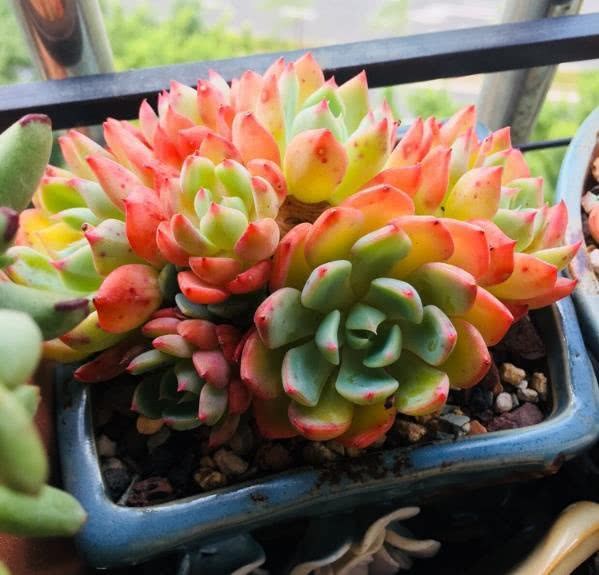
In summer, succulents are in a humid, stuffy environment, such as a greenhouse. It is recommended to use dust-free granular media with good air permeability, as this helps drain excess water and allows root hairs to fully contact air. Because the environmental humidity is high, there is no need to worry about root hairs drying out, and more attention should be paid to air circulation and exchange. Recommended materials are akadama, granular peat, perlite, rice hull carbon and pumice, and the soil mixing ratio is 4:2:1:1:2 respectively. Of course, you can also choose ready-mixed special horticultural soil.
You can also prepare a mixed soil of coconut coir, peat soil and perlite and put it into the small holes of honeycomb coal for growing succulents. Using honeycomb coal to grow succulents not only allows water and air to pass through and prevents root rot, but coal cinders also contain a variety of trace elements that supplement nutrients for succulents. The common coal cinders we see can also be used to care for succulents. Coal cinders have been fired at high temperature, so they are free of pathogens and insect eggs and can serve as granular soil, and they contain some trace element components. Although coal cinders are good for growing succulents, if you do not have coal cinders there and it is not easy to find them, then we had best use them to grow peat soil plus perlite. At present, most domestic greenhouses use this soil mixing method, mainly because it is convenient for management, the materials are easy to collect, and it saves labor.
Cacti and succulents generally like warmth and a relatively large temperature difference between day and night. Except for epiphytic cacti and species of the genus Haworthia, light should be sufficient but soft. For this reason, except for a few species with flat stem segments and tall columnar species and certain Agave species, they should generally be cultivated in a greenhouse year-round. Epiphytic species should be shaded except in winter, and in summer this should be combined with cooling. Succulents that grow in summer can basically have their temperature adjusted by referring to terrestrial cacti. Their light requirements are relatively lower, and some species with enlarged stem bases are not cold-tolerant, so a relatively high temperature should be maintained in winter.
If you want to grow succulents well in summer, keeping indoor ventilation and air convection is a very important factor. Air convection can reduce gatherings where bacteria breed, and water can also be carried away by the convective airflow, so it will not create a stuffy, humid environment. In addition, it can lower the temperature at ground level, which is very effective for plant growth. You can place a small fan next to the succulents to increase the speed of air movement. In a ventilated, low-humidity environment, such as a balcony or windowsill. It is recommended to use soil containing fibrous peat and water-retaining media, and do not remove the dust, because these tiny dust particles are the best attachment points for root hairs. Removing them can easily cause root hairs to dry out, and the plant will enter a repeated cycle of rooting again and again, making it impossible to grow well.
What kind of pot is better for growing succulents? Generally, the most common pots for planting succulents are ceramic pots, plastic pots and porcelain pots. The choice of pot involves many factors: local weather conditions, watering habits, soil mix, succulent varieties, and the growing location. In terms of air and water permeability, ceramic pots have the best air permeability and water permeability and should be the first choice, followed by plastic pots, and then porcelain pots with holes. If you like to water frequently, you can use ceramic pots; if you do not like to water, you can use plastic pots.
In fact, you can also choose according to the soil quality. If there is a lot of peat, pair it with a ceramic pot; if there is a lot of granular soil, pair it with a plastic or porcelain pot. Nowadays many people like to grow succulents outdoors, and in summary, the first choice for outdoor succulent growing should also be ceramic pots. Personally, I think porcelain pots are still a relatively good choice to a certain extent, because porcelain pots have the following advantages: attractive appearance, moisture retention and heat retention, and you only need to pay attention to watering. In addition, beginners had best not use clay pots to grow succulents, because clay pots are too poorly made, the bottom of the pot is not breathable, and they are also expensive, which is not conducive to succulent growth. You can choose an appropriate flower pot size according to the succulents you plant.
This is a gathering place for succulent lovers, sharing succulent care tips, and you are welcome to follow and exchange ideas.