Don't make these mistakes when repotting succulents if you want faster root growth
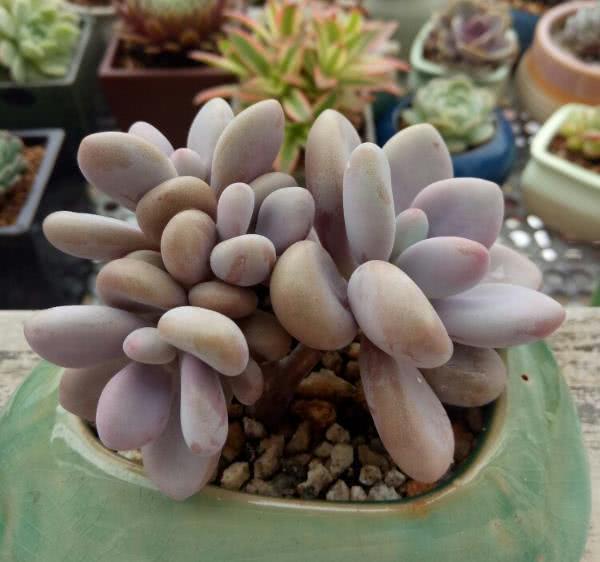
After succulents have been grown for a long time, although the plants may still look relatively healthy, by then the roots have already filled the entire pot, which is bad for drainage and air permeability, and the soil nutrients have been completely depleted, turning from the original granular structure into powder, and the soil has become acidic. Therefore, once the plants have grown to a certain stage, they must be repotted and the soil replaced. The best time to repot is when the dormant period is about to end and the plants are about to start growing. Clustered plants can also be divided and propagated at the same time as repotting. In addition, if you find that a plant has root rot, you can carry out emergency repotting at any time. When repotting, the steps must be clear and you must not make these mistakes, so that succulents can grow healthily.
Many gardening enthusiasts repot directly without pruning the roots. After the succulent is taken out of the pot, some enthusiasts, worried about damaging the roots, gently shake off the soil around the roots and repot it directly. This is not conducive to the succulent sprouting new roots, and it also affects the succulent's recovery after repotting. You should clean the soil off the succulent's roots thoroughly, expose the roots clearly, trim off the rotten roots, and then repot. Some enthusiasts are too impatient: after pruning the roots, before the wounds on the roots have dried and healed, they rush to repot, which easily causes the wounds to become infected. After pruning the roots, you must place the plant in a cool, ventilated place to let the wounds dry, and wait 2-3 days before repotting.
Newly purchased succulents generally need to acclimate to their pot, whether or not they are being repotted. Acclimating to the pot means acclimating to the environment, not just the pot. Since the living environment has changed, there is inevitably an adaptation period. Acclimating to the pot is crucial to a plant's growth. If it acclimates well, it grows quickly; if not, it takes a long time, or it may even remain in a state of maladjustment the whole time. It is like a person's sub-health state, neither dead nor alive for a long time. Try your best to create a suitable living environment for the plant, including soil, light, air, pot, etc. This requires us to have a certain understanding of the plant's habits and to know what should be done at what time.
Different varieties of succulents are planted with different growing media. Coarse-grained soil should be placed at the bottom of the pot, then fine-grained soil, and the plant should be held upright. While adding soil, lift the plant slightly so that the roots spread out. Do not add too much soil, to make watering easier later. After planting, gently tap the pot on the ground a few times so that the soil and roots are tightly combined. After planting, there is no need to water immediately. Practice has shown that in slightly moist soil, the plant actually roots faster and better. After that, when the potting soil dries out, spray a little water as appropriate, and after 7 to 10 days you can water thoroughly once. Newly potted plants should be kept in a place with bright light but no direct sunlight.
The purpose of placing ceramsite at the bottom of the pot is to prevent water accumulation and improve water permeability, and it is usually suitable for larger pots. Do not add too much soil, to make watering easier later. After planting, gently tap the pot on the ground a few times so that the soil and roots are tightly combined. After planting, there is no need to water immediately. Practice has shown that in slightly moist soil, the plant actually roots faster and better. After that, when the potting soil dries out, spray a little water as appropriate, and after 7 to 10 days you can water thoroughly once. Newly potted plants should be kept in a place with bright light but no direct sunlight.
If it is a relatively weak and small succulent seedling, then it needs a bit more water, and you can water frequently in small amounts to keep the soil slightly moist. Also try to place them in a warmer place, growing in a relatively stable environment. Adult large succulents, however, are much more resistant, and watering must be minimal; especially strong ones can even go a month without a single drop of water and still be fine. When watering, water the soil thoroughly. Soil moisture can be checked by inserting a toothpick into the soil or by feeling the weight of the pot.
This is a gathering place for succulent enthusiasts, sharing succulent care tips. You are welcome to follow and exchange ideas.