Kalanchoe not fertilized for 5 years, Aunt Li fed it a handful of medicine, and its leaves stayed glossy green and it still bloomed
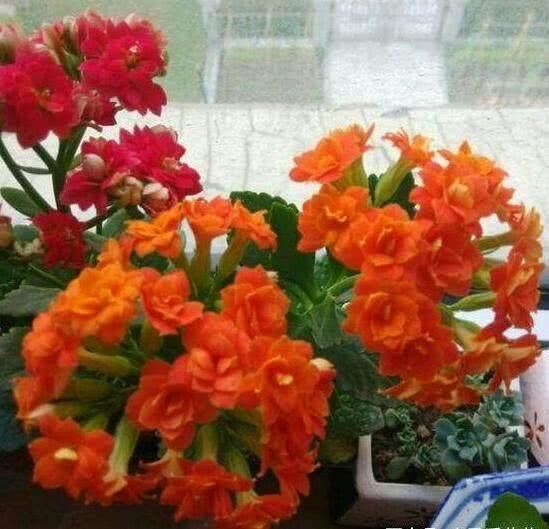
Aunt Li doesn't like any other flowers, she only likes kalanchoe. There's no other reason: this flower is both beautiful and auspicious. Just listen to its name, "Changshou" (longevity) - how auspicious and wonderful. Aunt Li keeps many pots of kalanchoe at home, and when the flowering season comes, they all bloom all over the pot, especially beautiful. When asked how she raises kalanchoe so well, the aunt said, there's no other method, it's just that my health is poor and I take medicine myself, so I also fed it a handful of medicine. I didn't really take care of anything else, and it still grew so well!
Here's what happened: Aunt Li takes Chinese herbal medicine year-round because of her health, and she saw that the leftover herbal dregs contained plant roots, leaves, stems, and some animal organs and such. She felt it should be pretty good for growing flowers, so without thinking much, when she planted the kalanchoe, she grabbed a handful and put it at the bottom of the pot. As it turned out, by a lucky accident, her kalanchoe all grew especially well. The aunt has one pot of kalanchoe that she has kept for 5 years without fertilizing, and it still blooms especially well every year.
Actually, the aunt's method of using Chinese herbal medicine to grow flowers is correct, because
Chinese herbal medicines are mostly plant roots, stems, leaves, flowers, fruits, and bark, as well as poultry and animal limbs, organs, shells, and some minerals, and they are rich in organic and inorganic substances.
The nitrogen, phosphorus, and potassium fertilizers needed for plant growth are all present in Chinese herbal medicines. Using herbal dregs as fertilizer has many benefits for growing flowers and trees, and it can also improve soil permeability.
Today Xiaohua will talk about the correct ways to use Chinese herbal medicine to grow flowers:
1. Herbal dregs need to be exposed to the sun before use. The simplest way to use them is like the aunt did, directly placing them at the bottom of the pot, but note here that they must be kept away from the kalanchoe's root system, otherwise root burn may occur.
2. You can put the sun-dried herbal dregs into a large flower pot in layers, one layer of garden soil and one layer of herbal dregs, water thoroughly, and place it in the sun to ferment. In summer, after about 60 days it can ferment into a nutrient-rich organic fertilizer soil, which can be used directly to grow kalanchoe. The fertilizer effect is long-lasting and it will not burn the roots.
3. If conditions permit, the sun-dried herbal dregs can be ground into powder with a grinder. Dig a few small holes around the edge of the kalanchoe pot, put a small spoonful into each hole and cover it with soil, but it must also be kept away from the root system.
Note:
Because herbal dregs have sufficient fertility, they should not be used in too large an amount. Generally, the mixing ratio should not exceed one tenth. Too much will instead affect the growth of flowers and trees.
This kind of flower fertilizer can be used for 98% of flowers and plants, such as Chinese rose, gardenia, Christmas cactus, kalanchoe, money tree, pothos, clivia, camellia, jasmine, spider plant, and so on.
Flower friends, have you learned it?
With sufficient nutrients, flowers and plants have the strength to grow and bloom, but other care cannot be neglected either. Xiaohua will also talk about other care for kalanchoe, so that your kalanchoe will burst into full bloom as soon as the flowering season arrives.
1. Light
Kalanchoe is a short-day, light-loving flower. Flower friends can usually place it on a balcony for care, but during the high temperatures of summer it needs shading, and during the flowering period light needs to be controlled, giving it 8 hours of sunlight. Too much or too little will affect its blooming.
2. Watering
Kalanchoe's leaves are thick and fleshy and have a certain water-storage capacity. Flower friends usually only need to water once every 4-5 days or even once a week. In summer, you can often spray it with water to cool it down, but do not water if the potting soil is not dry. During the flowering period, you can water a little more appropriately, but never let water accumulate in the pot.
3. Pruning and pinching
During the growing period, kalanchoe needs to be pinched once to encourage it to produce more branches and more flowers. Also, it doesn't look good if it grows too tall, so flower friends should not be reluctant to do it. After flowering, remove the spent flowers in time as well. Only then can it bloom all over the pot.
That's all for today's sharing