Solve your lighting problems this way, so you stop agonizing over them
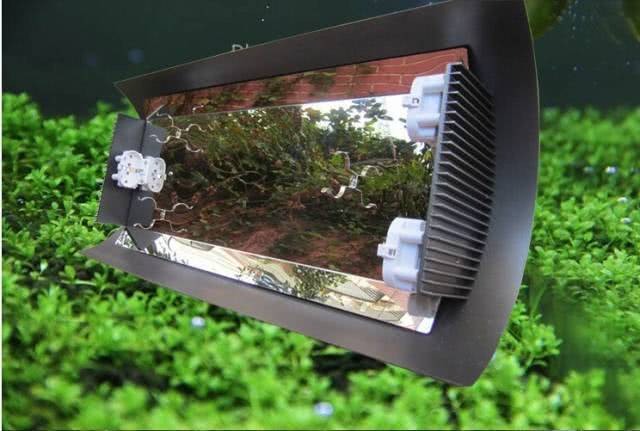
Lighting is one of the essential pieces of equipment for keeping a planted tank, but there are so many varieties, and it needs to be configured according to the aquatic plants and the size of the tank. For beginners, it is simply overwhelming. Below we will walk you through this knowledge about lighting for planted tanks, and we hope everyone will find it useful.
Q: Must a planted tank use lighting? Can sunlight work instead?
A: Light is the most basic condition for the survival of all green plants, including aquatic plants, so a planted tank must use lighting. Sunlight is not suitable for growing aquatic plants; it easily breeds algae and cannot be controlled, which greatly limits plant keeping, and the viewing effect is also poor.
Q: What kind of light should I buy? Will the light that comes with a complete tank work?
A: The currently popular calculation method is W/L, that is, calculating the power consumption of the light fixture based on the size of the tank. For low-light plants, it is generally 0.3~0.7W/L, and for high-light plants it is above 0.7W/L (see below for the difference between low-light and high-light plants).
This calculation method is not perfect, but it has some reference value for tanks of "standard" dimensions. Generally speaking, this standard means height and width between 0.4~0.6 m, and length between 0.6~1.5 m.
Tanks that are too large or too small are not suited to this calculation method. Most of the lights in complete tanks are not up to par; besides the lighting power generally being insufficient, the light emitted by the tubes is also not suitable for aquatic plant growth.
Q: What is spectrum? What spectrum do aquatic plants need for growth? What kind of light can meet this requirement?
A: Spectrum refers to the composition of the various colors of light in a lamp. For example, the three primary colors of red, green and blue in a television can combine into white light, and the amounts of red, green and blue light contained in this white light are the spectrum.
Most green plants prefer red light and blue light, while green light basically has no effect, so the more red and blue light there is, the more suitable such a spectrum is for aquatic plant growth.
However, since keeping aquatic plants is for viewing, there must be a certain amount of green light; otherwise it will cause color deviation and the viewing quality will be poor. Any lamp meeting the above conditions can be used to grow plants.
Q: What is color temperature about? What color temperature is suitable for growing plants? What are 865 and 840?
A: Color temperature refers to the color of light. The higher the color temperature, the more blue the light color, and vice versa, the more red-yellow. What determines whether plants can be grown is the spectrum, not the color temperature. Although color temperature is determined by the spectrum, it cannot represent the spectrum; the same color temperature may also have different spectra. The guiding significance of color temperature is mainly for viewing quality.
For Asian people, the more suitable color temperature for viewing is 5500K~8000K, while for Europeans it is between 4000K~6500K. 865 and 840 refer to a model of fluorescent tube (some metal halide lamps also use such model numbers), specifically referring to tubes with color temperatures of 6500K and 4000K respectively.
Due to the relatively high color rendering, they can present the colors of aquatic plants more truly and richly, with a good visual effect.
Q: Are 865 and 840 the best for growing plants?
A: No. 865 and 840 are general-purpose models of civilian fluorescent tubes, and because they are widely used, their prices are relatively low. Compared with other civilian fluorescent tubes, the spectra of 865 and 840 are somewhat better for aquatic plants.
Therefore, in terms of cost-effectiveness, they are the best. However, the spectra of these lighting-specific tubes still contain a large amount of yellow-green light, so purely in terms of plant-growing efficiency, they are still not high. There are quite a few tubes specially used for growing aquatic plants or green plants that have higher growing efficiency, but they are relatively expensive, so only a few enthusiasts use them.
For most people, 865 and 840 can basically meet the requirements for growing plants.
Q: What do T8/T5/T5HE/T5HO/PL/metal halide/LED all mean? Which is better?
A: Those with the prefix T specifically refer to straight-tube fluorescent lamps. The number in the suffix indicates the tube diameter of this kind of tube; multiplied by 1/8 inch gives the tube diameter. T8 is a tube with a diameter of 1 inch (2.54 cm), and T5 is 1.6 cm in diameter. In addition, there are the relatively rare T6, T12, T15. HE and HO refer to the performance of the tube. HE is high efficiency, and HO is high output.
At the same power consumption, HE tubes are about 12% brighter than ordinary tubes, while HO tubes achieve higher brightness by consuming more electrical power. PL tubes are commonly known as chopstick tubes, that is, folded fluorescent lamps, equivalent to folding a straight fluorescent tube in half, with a shorter size.
Metal halide lamp is the short name for metal halide lamp, a light source that uses high-temperature halogen gas to emit light, with extremely high brightness. LED is a light-emitting diode, which is a semiconductor light-emitting component.
For aquatic plant growing, what is currently relatively mature is fluorescent lamps and metal halide lamps, while LED is still developing and still needs to be observed.
Q: What kind of light is better for beginners to choose?
A: Generally speaking, fluorescent tubes are relatively easy to master. Due to their spectral characteristics, metal halide lamps require users to have some growing experience; especially in growing red plants and controlling algae, metal halide lamps are generally considered somewhat difficult to master. T5HO fixtures have relatively high performance, and T8 fixtures have relatively high cost-effectiveness; each person can choose according to their own financial situation.
It should be noted that, due to differences in tube sizes, tanks of different lengths should also choose differently matched fixtures. For example, a 1 m tank can choose T5HO and T8 fixtures, while for a 90 tank it is best to choose T5HO fixtures. When purchasing specifically, you should ask the seller what specification of tubes the fixture uses; the closer the tube length is to the tank length, the better.
Q: What else should be noted when choosing a light fixture?
A: Reputation is very important; do not be greedy for cheapness. The reflector of a light fixture has a great influence on its performance. After choosing the length and wattage of the fixture, focus on examining the reflector. The examination includes whether it is an independent reflector, the shape of the reflector, what material the reflector is made of, and so on. An independent reflector means that each tube uses a separate reflector and does not share one with other tubes. This structure has a relatively good reflective effect. The shape of the reflector includes the opening width of the reflector and the cross-sectional shape.
Generally speaking, the opening width of the reflector should be 3~5 times the diameter of the tube. The best cross-sectional shape is parabolic, followed by semicircular, and then trapezoidal. If it is a fixture with 4 or more tubes, trapezoidal is enough. Some fixtures use a "gull-wing" (also called "McDonald's") reflector; this kind of reflector will have somewhat higher efficiency, but it depends on whether the price is too much more expensive.
The materials of reflectors currently in common use include mirror aluminum, mirror stainless steel, nano reflective film, galvanized iron sheet (steel sheet), reflective paper, and so on. Among them, the latter two are of very poor quality and should not be chosen. If it is a fluorescent lamp, the quality of the ballast also needs to be examined. Generally speaking, fixtures using electronic ballasts are generally of better quality than those using magnetic ballasts. For T5HO fixtures, pay attention to whether a dedicated T5HO electronic ballast is used.
In addition, attention should also be paid to the installation method of the fixture, especially for tank-mounted fixtures; note whether the mounting bracket matches the thickness of the glass, which is very important when modifying a complete tank.
For some DIY-style finished fixtures, you should communicate fully with the maker before purchasing and agree on the materials and workmanship, so as to avoid unpleasantness.
Q: How should lighting be considered for a small tank?
A: A small tank refers to a planted tank with a length of less than 60 cm. When choosing lighting, it cannot be considered by W/L; the actual requirement is often far higher than the calculated result. For a small tank, the contradiction between fixture size and power is often quite prominent.
The light sources relatively suitable for use in small tanks are PL tubes, energy-saving lamps, and metal halide lamps. Try to avoid using straight fluorescent tubes; fluorescent lamps of this length often have poor luminous efficacy and cannot provide sufficient light intensity.
Q: Do red aquatic plants need very strong light?
A: This depends on the variety of the aquatic plant. Aquatic plants that are naturally red, such as Ludwigia glandulosa and Alternanthera reineckii, do not have very high requirements for lighting conditions. If aquatic plants such as Newton, red rotala, and purple bamboo leaf are to show vivid red, they need relatively strong light.
When we say red aquatic plants need strong light, we mean that the light intensity required for them to show vivid red is generally very high, while the light intensity required for them to maintain survival is not much different from that of other green aquatic plants. Generally speaking, the stronger the light, the deeper the degree of red, and it can even change from red to dark red.
Not only light intensity, but spectrum also has a certain influence on the coloration of aquatic plants. Using some professional aquatic plant tubes, even if the light is not very strong, the aquatic plants will still show the color tone they would have under strong light. The color tone of red plants is not only related to lighting conditions, but also to many conditional factors such as CO2, trace elements, nutrients, PH value, and water hardness. How to cultivate red aquatic plants that satisfy you requires continuous exploration and experimentation to achieve the goal.
End
May every aquascaping enthusiast have a tank with an aquascape that you love.