You do not need to buy a jade plant; one leaf from a neighbor's plant, grown by my mother-in-law, produced a huge pot that blooms and fills the pot every year
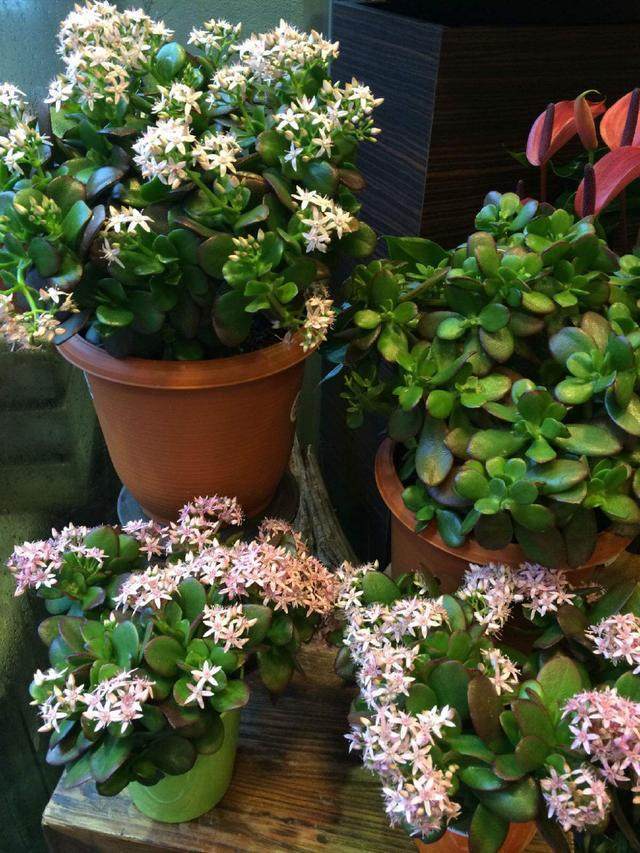
My mother-in-law loves growing flowers, and there are dozens of pots of flowering plants at home, many of which she propagated herself later on. One jade plant at home was grown by my mother-in-law from a single leaf she pinched off a neighbor's plant, and now it is not only growing vigorously but also blooms every year.
The jade plant (Crassula ovata) is actually a very easy plant to grow, and its propagation method is also very simple, with a high survival rate. It can be propagated by either stem cuttings or leaf cuttings. For leaf cuttings, you can twist off 1- to 2-year-old leaves from the base, let them dry for 8 to 10 hours, and insert them into plain sand or sandy soil. It is best to insert them at an angle, with a depth of 1/4 to 1/3 of the leaf length. After inserting, spray a small amount of clean water, place in a shaded and ventilated spot, and keep it slightly moist regularly. In about 30 days, it will take root and grow young shoots.
The jade plant is very tolerant of pruning, poor soil, and drought, and it grows very quickly. One pot can be kept for decades.
The jade plant loves light, so it should be placed in a warm environment with ample light all year round. This is the key to flowering. The jade plant is very drought-tolerant, so it should not be watered too much ordinarily; water only when the soil is dry, and water thoroughly only after it has dried out. In the hot summer season, do not let it be exposed to the sun and then heavily watered by torrential rain, as this can easily cause leaf drop.
When the summer temperature is relatively high (above 35°C), growth enters a stagnant state. Attention should be paid to controlling water to prevent root rot from too much water at high temperatures, while also shading it from light around noon and stopping fertilization. After the temperature cools at the end of summer, fertilization can continue.
Every half month, the pot can be turned once to prevent the branches and leaves from leaning to one side and affecting the appearance. If there is insufficient light, even more attention should be paid to preventing root rot and leaf drop caused by damp heat. When the plant is relatively large, only apply base fertilizer and no topdressing, in order to control the height. For base fertilizer, organic fertilizers such as decomposed soybean cake fertilizer and soybean milk residue can be used.