What to do about black rot in succulents? Let me teach you the beheading rescue method
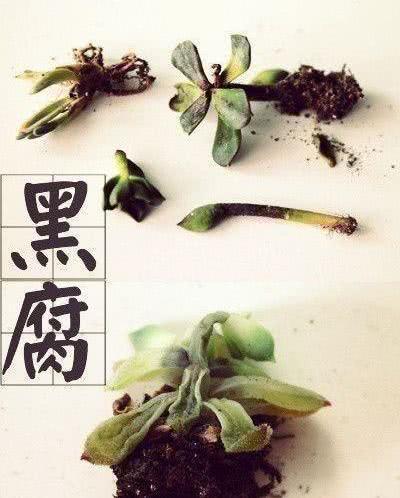
I believe fellow succulent growers all know that a normal succulent's roots are not black; they should be light brown or woody in color, similar to ordinary plants. So how do you tell whether your own plant has black rot? It is suggested to first dig out the plant, then pinch the black part with your fingers. Generally, roots or stem sections with black rot are relatively soft, and you can feel it. If you are worried it is not reliable, you can use a small knife to scrape off a piece of the skin from the black rot area. If the inside is also black, then it is almost certainly black rot
Black rot in succulents is a relatively common problem for succulents in summer. The cause is high temperatures and overly moist potting soil, which lead to bacterial infection. "Fusarium" generally exists in the soil. Once the roots have a wound or a problem, the bacteria will invade the roots, and soon the roots will develop black rot. The reason black rot spreads relatively quickly is also related to watering. After a succulent is watered, the roots absorb water and transport it upward, and the bacteria travel upward along with it. Therefore, black rot generally starts from the roots and rots bit by bit, finally reaching the top. If at this point only the roots have black rot, it can still be rescued
The rescue method is commonly known as "beheading"
1. After confirming that the succulent indeed has black rot, dig out the succulent and remove all the black rot parts. Beheading generally uses scissors or a blade; sterilize them before use so as not to cause a second infection. The beheaded part must not carry even a little bit of black, otherwise the infection can continue.
2. For the cut-off part, apply carbendazim to the wound for disinfection, then place it in a ventilated and shady spot to dry the roots. The drying time is generally determined by how the wound heals; it can only be planted after the wound has dried
3. When planting, the previous flower pot can no longer be used, and new flower soil must be used. Pot it in slightly moist soil, and after potting, place it in a spot with scattered light and good ventilation to grow roots. Do not water before roots have grown, because without roots, the water cannot be absorbed and may instead cause root rot
4. In addition, succulents grow roots relatively slowly in summer, so be patient and do not frequently poke at them with your hands. Generally, new roots should grow in about half a month.
5. Let me also share a little knowledge on preventing black rot in summer:
1. First, reduce the frequency of watering. Although watering too much is not the source of black rot, moist soil can provide good conditions for bacteria to survive and reproduce.
2. Ventilate frequently. Whether roots are present or not, ventilation in summer is the most critical factor for succulents' survival. The same applies to newly potted ones and beheaded rootless ones. Be sure to ensure good ventilation.
3. Avoid direct sun exposure. When the ultraviolet rays are strong in summer, succulents grown outdoors should be properly shaded.