Remember one general rule for orchid care, and the blooms will be both beautiful and vivid
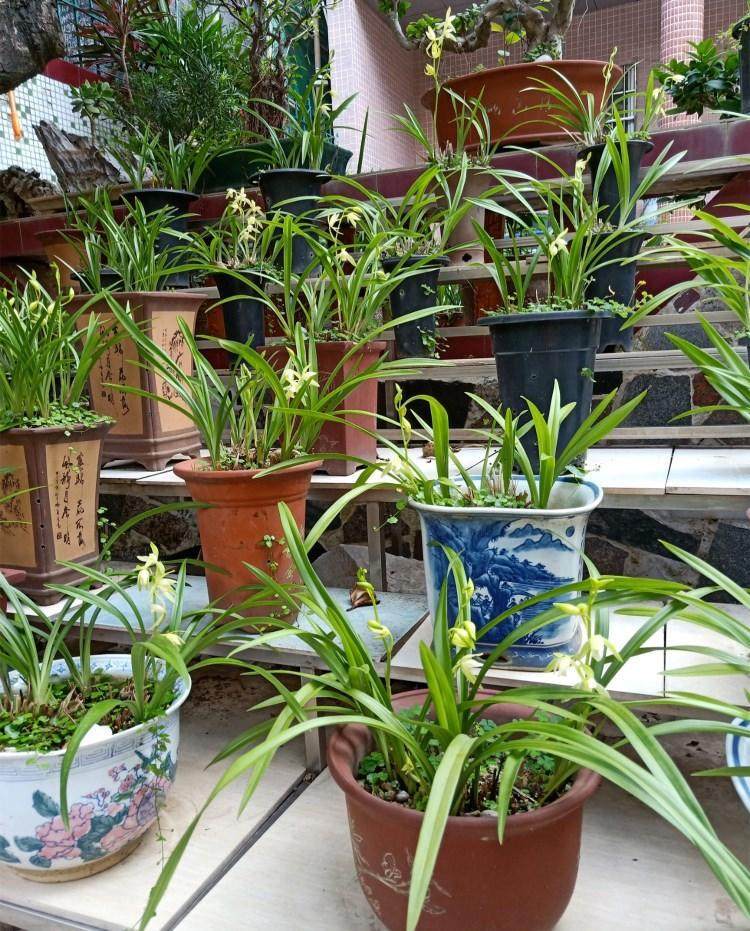
Summer is the season when orchids begin to sprout most vigorously. At this time, because the weather is quite hot, many flower growers choose not to fertilize their orchids. In fact, this practice is not scientific. Fertilizing orchids should actually be done in all four seasons; as long as you remember one "general rule," the blooms will be wonderfully beautiful.
This "general rule" of fertilizing orchids is the growth habit that "orchids love fertilizer but fear turbidity." When using fertilizer, you must firmly remember the two words "acid" and "dilute." That is, do not apply alkaline fertilizers, and do not dilute fertilizer with alkaline water. The diluted fertilizer solution should be tested for its pH, which should be 5.5~6.0; composted organic fertilizer should be diluted 150~200 times. When broadcasting organic fertilizer and organic granular fertilizer, the amount should be small rather than large.
Generally, chemical fertilizers are not recommended, because they easily cause fertilizer burn. It is recommended to use liquid organic fertilizer specially made for orchids, with a dilution concentration of 500-1000 times, watered onto the roots once a week, and the orchids will grow vigorously and bloom wonderfully.
In addition, when growing orchids, do not fertilize frequently. That is, the interval between fertilizations should not be too short. When applying to the roots, once every 15-20 days is appropriate. If you want to apply light fertilizer frequently, you can dilute the concentration by another 1 time (that is, if it was originally diluted 500 times, now dilute it 1000 times), and then you can water it on once a week. Use a spray bottle with even output, and spraying once every 7~10 days is appropriate.
So, some flower growers may ask why the interval should be so long and the concentration so dilute. The reason is this fertilization "general rule": orchids love fertilizer but fear turbidity. Some flower growers often mistakenly think that applying more fertilizer and stronger fertilizer will rot the root system. And that spraying more fertilizer is always fine.
In fact, fertilizing orchids is just like people: we eat three meals a day and still want a snack; so wouldn't the leaves be "starved" if fertilized only once a week? Besides, a foliar fertilizer is only such a tiny bit, used in an amount even less than soy sauce, with no taste at all, so what harm is there in a little more?
In fact, fertilizers for orchids, especially foliar fertilizers, are generally highly concentrated fertilizers. They are like monosodium glutamate; applied too much, they simply cannot be "eaten." In fact, these views have long deviated from the orchid's habit of "loving fertilizer but fearing turbidity." If orchid growers love them too much and spray fertilizer often, casually pouring in some when diluting, the fertilizer will almost block the leaf pores.
If at this time the air humidity is low, the root system is few or its absorption function is low, and there is not enough water to dissolve the fertilizer on the leaf surface, it will inevitably hinder the leaves' photosynthesis and respiration, thus causing slight leaf wilting, stunted growth, and even premature decline and death. Therefore, spraying foliar fertilizer once every 7 days is appropriate; use liquid fertilizer specially made for orchids, diluted 1000 times, and do not increase it at will, to avoid a result opposite to what you intend.