Grow this flower in summer: buds in June, blooms in July, and it never tires of flowering
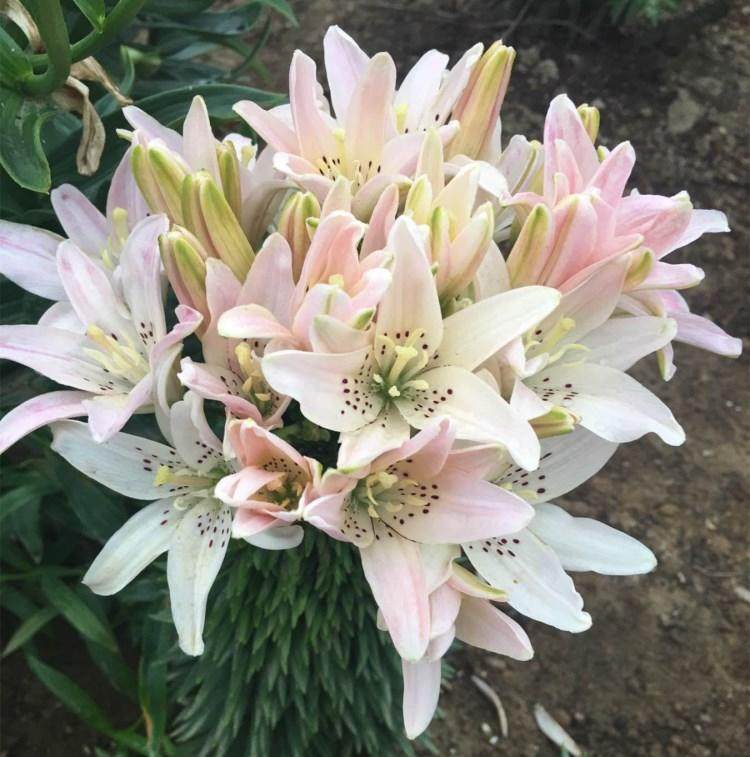
In summer, do you feel that flowers and plants all look listless, growing withered and droopy? Actually, in summer, there is a kind of flower already covered with buds, and as soon as July arrives it bursts into bloom, and once it starts flowering, it never tires, with clusters of blossoms covering the branches and even giving off fragrance. This flower is the lily.
Lilies generally form buds in early June, begin flowering in early July, reach full bloom in mid-July, and finish flowering in late July. So how should lilies normally be cared for so that they "flower tirelessly" in July?
Potted lilies like loose, well-drained, slightly acidic loam, generally mixed from peat soil and perlite at a ratio of 9:1. Different lily types have different light requirements; for example, Asiatic lilies are very sensitive to light, while Oriental lilies are not. For light-sensitive types, insufficient light leads to slender stems and weak buds, and in severe cases can cause bud drop.
For the first two weeks of lily planting, the temperature should be kept at 10-15°C, which is favorable for the growth of lily stem roots. If the temperature is too high, stem roots grow poorly, affecting quality. Afterward, the temperature can be gradually increased to favor plant growth, but it is best not to exceed 25°C. If the temperature is too high, placing the pot in a ventilated spot can effectively lower the temperature.
Lilies like moisture; once the soil surface dries, give one thorough watering. It is best to water in the morning or before noon when the temperature is lower, and the water temperature should be close to the soil temperature. When lilies are budding, reduce watering appropriately, and in hot, dry seasons, spray the leaves frequently to help the branches and leaves grow.
Lilies have low fertilizer requirements; during the growing period, fertilizing once every half month is enough. At the early cultivation stage, start fertilizing after the stem roots have formed, mainly with general-purpose liquid fertilizer for flowers. After budding, add 0.2% monopotassium phosphate to promote flowering and extend the flowering period.
In addition, when caring for lilies, two problems are often encountered: first, lilies developing scorched leaves; second, how to manage lilies after flowering. Below is a detailed explanation of how to handle them:
Lilies developing scorched leaves: lily leaf scorch is also called "leaf burn" in cultivation, and is most common from when lily buds first appear to when the flower stem begins to elongate. Before budding, the young leaves curl slightly inward, and after a few days yellow-green to white spots appear at the leaf tips; in severe cases, the leaves and young buds fall off.
The main cause of scorched leaves is an imbalance between water uptake and transpiration in the plant, and it is also related to excessive salt in the growing medium and poor root development. Therefore, for home cultivation, adjust the temperature for rhizome development and choose suitable varieties; in addition, not spraying water on the plants during the period when leaf burn is likely to occur can also effectively prevent scorched leaves.
Lily care after flowering: after lilies flower, if you are not saving seed, promptly cut off the spent flowers and place the plant in a spot with ample light for care. At the same time, apply a 1000-fold dilution of general-purpose organic liquid fertilizer to promote rapid bulb growth, fertilizing once every half month. When all the plant's leaves have turned yellow and withered, stop fertilizing and reduce watering; after all the leaves have withered, stop watering, move the pot to a ventilated, shaded place to pass through dormancy, or dig out the bulbs and store them in sand to overwinter.