Trump's election changes the economic landscape, 2017 global economy expected to recover slowly
Trump's election changes the economic landscape, 2017 global economy expected to recover slowly
Bidding farewell to 2016, a year of frequent black swan events and violent swings in stock markets, currency markets and commodity markets, will the global economic trend take on a completely new look in the year ahead? The Fubon Financial Trends Forum kicked off on the 28th, offering in-depth analysis of the 2017 global economic development trend from various angles and providing investors with the best response strategies.
In his keynote speech "2017 Global Economic Outlook," Dr. Lo Wei, chief economist at the Fubon Financial Holding Economic Research Center, pointed out that the three main themes of next year's global economic outlook include: the global economy maintaining a slow recovery, fiscal expansion replacing accommodative monetary policy, and the end of the commodity slump. Overall, the global economic outlook for 2017 has a chance to be better than 2016.
Lo Wei further pointed out that as the United States and Europe expand fiscal spending, driving up demand for raw materials, emerging markets will gradually stabilize, and the global economy will see a favorable turning point. Lo Wei said that 2017 still has many uncertain factors affecting the global economy and capital markets. The first is what changes the new U.S. administration's policy adjustments and personnel appointments will produce, and whether they will trigger an international trade war, which remains unknown; the second is that Germany and France will hold elections, Italy may also hold early parliamentary elections, and with the UK's application for and negotiations over leaving the EU, Europe's political risks next year cannot be ignored; the third factor is China's mortgage and credit problems, which, if not properly regulated, could cause market turmoil and affect neighboring countries in Asia; and finally, rising geopolitical conflicts in North Korea, Syria and Ukraine will drag down global capital markets.
Lo Wei emphasized that overall, in terms of investment direction in 2017, equities are better than bonds. Because the global economic fundamentals are decent, countries' efforts to promote fiscal policy will generate substantive demand; whether it is infrastructure or tax cuts, the effects are better than past accommodative monetary policy. The monetary policy effects of major countries' central banks have reached their limits, so next year they will no longer push large-scale QE. In addition, accelerating price growth in various countries will be unfavorable to the bond market, while the importance of inflation-protected bonds will rise significantly. In the currency market, under the tacit understanding that major countries' central banks will not use monetary policy to interfere with exchange rates, attention must be paid to capital shifts caused by political risks. Commodity prices, meanwhile, will gradually stabilize as supply-demand imbalances improve, and precious metals will once again have opportunities to perform.
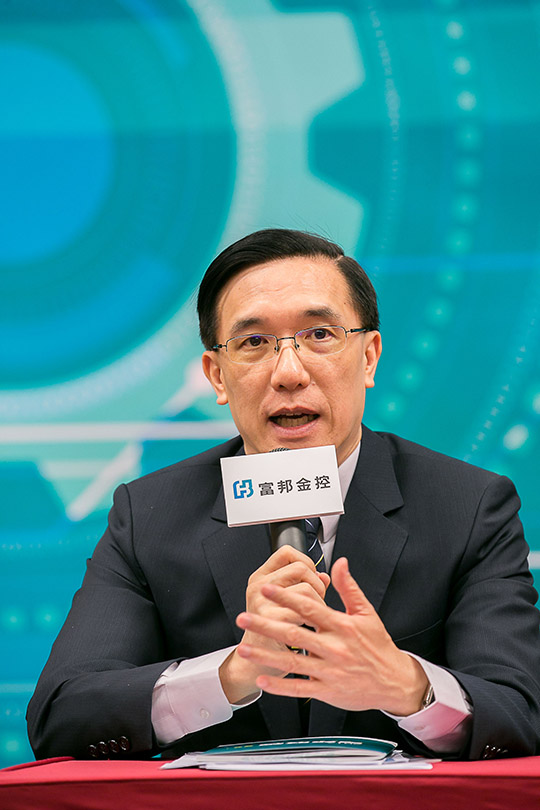
▲Lo Wei, chief economist at the Fubon Financial Holding Economic Research Center, presented the three main themes of next year's global economic outlook and economic forecasts for major countries at the press conference for the "2017 Fubon Financial Trends Forum."