Detailed Explanation of Key Points for High-Yield Cultivation Techniques of Mosla chinensis
Mosla chinensis is the dried aerial part of the plant Mosla chinensis Maxim. or Mosla chinensis 'Jiangxiangru' of the Lamiaceae family. The former is commonly called "Qingxiangru" and the latter "Jiangxiangru." In summer, when stems and leaves are luxuriant and flowers are in full bloom, choose a sunny day to harvest by cutting, remove impurities, and dry in the shade. Mosla chinensis was first recorded in "Mingyi Bielu" and listed as a medium-grade herb. Its nature is pungent, slightly warm. It enters the Lung and Stomach meridians. It has the effects of inducing sweating and releasing the exterior, and transforming dampness and harmonizing the middle. It is mainly used for summerheat-dampness common cold, aversion to cold and fever, headache without sweating, abdominal pain with vomiting and diarrhea, edema, and difficult urination. Qingxiangru is mainly produced in Hunan, Guangxi, Guangdong, Fujian, Jiangxi, Sichuan, and other places; Jiangxiangru is mainly produced in Fenyi, Yichun, Xinyu, Shanggao in Jiangxi, and Hangzhou in Zhejiang, and other places. Mosla chinensis likes to grow in a warm and humid environment with sufficient sunlight and abundant rainfall. So, how can Mosla chinensis be planted to achieve high efficiency and high yield?
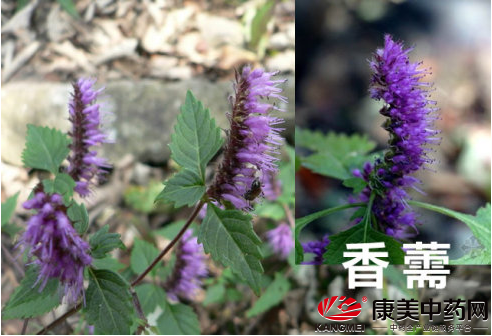
[Cultivation Techniques]
I. Land Selection and Preparation
Mosla chinensis has strong adaptability. It is best to choose loose-textured, wind-sheltered, sunny, and well-drained sandy loam soil for planting. Red soil with loose texture on hilly slopes can also be used. Before planting, plow the soil first to allow it to fully weather. According to the soil type and fertility status, apply 2000-2500 kg of decomposed barnyard manure or compost per mu as base fertilizer. Deeply plow the land 15-20 cm, harrow fine and level it. Generally, two plowings and two harrowings are sufficient. Then make beds 120-150 cm wide and 12-15 cm high, with bed furrows 25-30 cm wide, and shape the bed surface into a turtle-back form. Apply 375-450 kg of calcium magnesium phosphate fertilizer per hectare evenly on the bed surface, then cover it with broken soil from the bed furrows.
II. Planting Methods
1. Seed Collection and Seed Treatment
Select healthy, disease-free plants and keep them until late September to early October, harvesting when the seeds are fully mature. It is best to harvest on a sunny morning with dew, as the seeds are less likely to fall off. Cut off the roots of the pulled-up plants, transport them back, and place them on a cement drying yard or drying mat to dry until 80% dry. Then beat the seed heads with a small stick to dislodge the seeds, winnow away impurities, dry in the sun, store in an earthenware jar, and place in a ventilated, dry place.
2. Sowing Methods
The suitable sowing time is from late March to early-to-mid April, and summer sowing can be carried out in June. Sowing methods can be hole sowing, drill sowing, or broadcast sowing, with drill sowing being preferable as it is easier to manage. When sowing, mix the seeds evenly with plant ash and choose a sunny or cloudy day. For hole sowing, use a plant-to-row spacing of 3-5 cm × 3-5 cm; for drill sowing, use a row spacing of 20-25 cm, open shallow furrows 2 cm deep, evenly sow the seeds in the furrows, and the density should not be too high. After sowing, press lightly to make the seeds closely contact the soil, which helps germination. The sowing rate is 1.5-2 kg/mu. After sowing, cover with fine soil sifted through a soil sieve mixed with plant ash or burnt soil ash, about 1 cm thick. After 1-2 weeks, the seeds will sprout.
3. Seedling Stage Management
After Mosla chinensis seedlings emerge, thin them in time, thinning the dense and keeping the sparse, thinning the weak and keeping the strong. Generally, carry out the first thinning when the seedlings are about 5 cm tall, then carry out 2-3 more thinnings according to growth conditions, and finalize the seedlings when they are 10 cm tall.
4. Planting and Management
(1) Cultivation and Weeding
During the entire growth period of Mosla chinensis, carry out cultivation and weeding 4-5 times. After emergence, pull weeds in time, pulling them as soon as they appear, following the principle of pulling small weeds and pulling them out completely, to prevent weeds from competing with Mosla chinensis for nutrients. Be careful not to damage the root system.
(2) Fertilization
The growth period of Mosla chinensis is relatively short, so topdressing should be applied in time, mainly with organic fertilizer, and attention should be paid to combining organic fertilizer with inorganic fertilizer, preferably by band application. On the basis of applying sufficient base fertilizer, carry out the first topdressing when the seedlings are 5-10 cm tall, using 75 kg of urea per hectare; carry out the third topdressing before heading, using 120-150 kg of urea per hectare, broadcast on the bed surface, or dissolve urea in water and pour it on, using 1-1.2 kg of urea per 100 kg of water. After that, apply appropriate topdressing according to seedling growth conditions.
(3) Irrigation and Drainage
Mosla chinensis likes moisture but is afraid of water accumulation in the root system. During the seedling stage, water should not be too much. If rainfall is excessive, open ditches in time for drainage to avoid water accumulation in the field. Before and after flowering is when Mosla chinensis has the greatest water demand. If drought occurs, irrigate appropriately to ensure sufficient water supply.
[Pest and Disease Control]
I. Diseases
1. Root Rot
Root rot occurs in the roots and root crown. In the early stage of the disease, brown patches appear on the roots and root crown and gradually expand, and the main root and stem base turn dark brown. In the late stage, the lower leaves of the plant shrink, turn yellow, and die, gradually progressing upward. The pathogen Fusarium oxysporum belongs to Deuteromycotina, Fusarium. It overwinters as mycelium in diseased residues or soil. The disease begins in April, peaks in May, and reinfects through rainwater or irrigation water.
Control methods: Adopt the measures of "prevention first, integrated control." First, strengthen cultivation management, do a good job of clearing the garden in winter, remove weeds, and centrally burn or deeply bury diseased leaves and weeds to reduce sources of inoculum. During the rainy season, clear ditches and drain well to prevent water accumulation; promptly remove diseased plants when found to prevent spread. For chemical control, spray with 50% carbendazim 500-fold solution, once every 7-10 days, for 2-3 consecutive sprays; or drench roots with 50% Tuzet wettable powder 1000-fold solution.
2. Rust
In plants affected by rust, leaf lesions are round or oval, with scattered pale yellow urediniospores on them, which finally become exposed and powdery.
Control method: Spray with 50% carboxin wettable powder 1000-fold solution.
II. Insect Pests
Black cutworm:Black cutworm (Agrotis ypsilon Rottemberg) belongs to Lepidoptera, Noctuidae. It damages plants as larvae. In the young larval stage, it feeds on the tender leaves of Mosla chinensis seedlings, biting them into concave spots, holes, and notches. After the 3rd instar, the larvae burrow into the soil surface and bite off tender stems, causing seedlings to wilt and die, resulting in missing plants. It can occur 6-7 generations a year. It begins to appear in mid-to-late February each year. There are two peak breeding periods in mid-to-late March and early-to-mid April. Late April to early May is the peak damage period. After late June, adults begin to emerge, and the field population gradually decreases.
Control methods: During the damage period of older larvae, inspect the field in the morning. If newly wilted or cut seedlings are found, open the surface soil and manually capture and kill the larvae. In the young larval stage, spray with 50% phoxim emulsifiable concentrate 1000-fold solution or 90% trichlorfon crystal 800-fold solution, using 75 kg of spray solution per mu, once every 7-10 days, for 2-3 consecutive times. Alternatively, use 50% phoxim emulsifiable concentrate 200 mL/mu, mix with 30 kg of moist fine soil to make toxic soil, and broadcast it along the rows near the seedling roots in the evening; or use 90% trichlorfon crystal 200 g or 50% phoxim emulsifiable concentrate 200 mL, add an appropriate amount of water, mix with 5 kg of cottonseed cake to make toxic bait and broadcast it. The control effect is relatively good.