Growing Hovenia dulcis seeds: two benefits at once, good for both medicine and ornamental use
Hovenia dulcis seeds, also known as guai zao, ji ju zi or li zao zi, are the dried mature seeds of Hovenia dulcis Thunb. The fruit is harvested when ripe from October to November, sun-dried, and the husks, fruit stalks and other impurities removed to collect the seeds. It was first recorded in the Tang Bencao. The Bencao Gangmu lists it under the fruit section. Its nature is sweet and neutral; it enters the heart and spleen meridians. It has the effects of quenching thirst and relieving restlessness, clearing damp-heat, and counteracting alcohol toxicity, and is mainly used for alcohol intoxication, thirst with vomiting, difficult urination and defecation, and similar conditions. The original Hovenia dulcis plant has fine, hard wood, making it a good timber for construction and fine woodworking tools. Besides the seeds being usable as medicine, its fleshy infructescence axis is rich in sugar and can be eaten raw, used for brewing wine, or boiled for sugar; among the people it is often used to steep "guai zao jiu," which can treat rheumatism. Apart from its medicinal use, Hovenia dulcis also has excellent ornamental value, with a graceful tree shape and dense, deep green foliage. So how should such a good medicinal plant be grown?
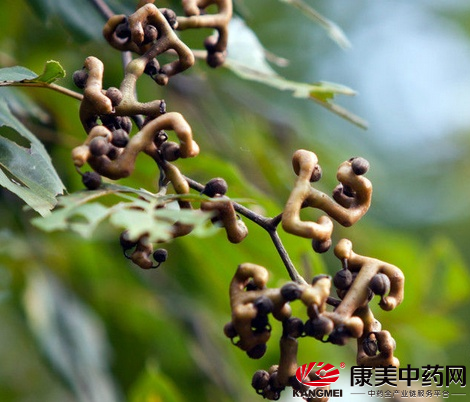
[Cultivation Techniques]
I. Site selection and land preparation
Hovenia dulcis has strong adaptability and prefers to grow in sunny, moist, fertile soil with good drainage and a neutral pH. After choosing a suitable planting site before planting, first dig pits 1 m deep and 1 m wide; on sloping land, fish-scale pits can be dug to prevent soil erosion. Add plenty of dead branches and fallen leaves into the pits for use when planting the trees.
II. Planting methods
1. Seed collection and seed treatment
Hovenia dulcis cultivation mainly uses seed propagation. Collect seeds when they mature in November. The seed coat is reddish brown. One fruit contains 3 seeds. The seed coat is leathery and the embryo is yellow-white, and it does not easily absorb water. After collection, use the wet sand stratification method to promote germination, storing them in a pile with one layer of seeds and one layer of wet sand; after 50-60 days, raised radicles will appear. Sow in a prepared seedbed (small plot), either in holes or in drills, 2-3 cm deep, and seedlings will emerge in early April.
2. Sowing methods
When the seedlings grow 3-5 true leaves, thin them, keeping the strong and removing the weak. When the seedlings are 35-40 cm tall, dig holes for planting at a row spacing of 400 cm × 300 cm, planting 1 plant per hole.
3. Seedling-stage management
During the seedling stage, water and fertilize frequently to promote growth.
4. Planting and management
Hovenia dulcis seedlings grow slowly, so management of young trees should be strengthened. After transplanting, cultivate and weed 4 times each year, and apply barnyard manure, compost and similar fertilizers once each in spring and autumn every year. In winter, prune away shaded and weak branches. Promote a straight, upright and sturdy trunk. Generally, it begins to bear fruit only after 5-6 years. Each year when weeds grow in spring and summer, loosen the soil and weed, and water promptly during drought. Apply fertilizer three times: in March of spring, June of summer, and November of winter, to promote growth. With modern dwarfing and branch-bending techniques, fruiting can be advanced to 3 or 4 years. In the second year after planting, when the small tree grows to 1-1.5 m, bend the main trunk; let it produce secondary branches, then bend the branches in the same way, and flowers and fruit can form on the third- and fourth-level branches, with the branches spreading out in all directions, achieving early fruiting, more fruit, and increased economic income.
[Pest and Disease Control]
I. Diseases
1. Branch blight
Branch blight mainly damages the branches and trunks of the plant. In the early stage of the disease, pale yellow or light red spots appear on the branches and trunks, which later expand into irregular brown spots. In the later stage, the edges of the lesions protrude above the surrounding tissue, the center is gray-white and sunken, and the epidermis cracks, producing needle-like black dots on the canker lesions, which are the fungus's pycnidia. If the canker lesion encircles the stem for one full circle, the branches and leaves above the diseased area will die, seriously affecting plant growth.
Control method: For leaf blight, use Bordeaux mixture at 1:1:400 before and at the beginning of the disease.
II. Insect pests
1. Aphids
Aphids mainly harm tender shoots and young buds.
Control method: Spray with a 2000-fold aqueous solution of 40% dimethoate to achieve satisfactory control results.
[Harvesting and Processing]
The fruit should not be harvested before it is ripe, as the fruit stalk contains more tannic acid; it tastes astringent and sour and is difficult to eat. After several frosts following Frost's Descent in November of winter, harvest when the fruit stalk turns reddish brown. Cut off the fruit branches and store them in a cool place to after-ripen for 7 to 10 days. They can then be sold fresh, or sold after being dried in the shade and pressed for juice. They can also be further processed: cut off the fruit and remove fruit stalks with spots.
Hovenia dulcis is suited to a warm and humid climate. However, it is not tolerant of air that is too dry; it likes abundant sunlight and grows in moist environments, with the best temperature being between 20-30°C. It is not strict about soil requirements and can grow in both acidic and alkaline soils, with strong adaptability. Hovenia dulcis has many uses: its wood is relatively hard and can be used as building timber; its trunk is straight and its branches and leaves are luxuriant, making it very suitable for landscaping.