How to grow ricebean? Detailed explanation of cultivation techniques for this Chinese medicinal herb
Ricebean was first recorded in the Shennong Bencao Jing (Divine Farmer's Materia Medica), listed as a middle-grade drug. It is the dried mature seed of the legume Vigna umbeuata Ohwi et Ohashi or Vigna angutaris Ohwi et Ohashi. It has the effects of promoting diuresis and reducing swelling, and of detoxifying and discharging pus. It is mainly used for edema and abdominal distension, beriberi with puffiness, jaundice with dark urine, wind-damp-heat impediment, carbuncles and sores, and intestinal abscess with abdominal pain, and is a medicinal and edible herb. Ricebean can be eaten whole, or used to cook rice, porridge, or ricebean soup. It is often made into bean paste as a filling, which is delicious. Ricebean has a wide production area and is commonly cultivated throughout the country.
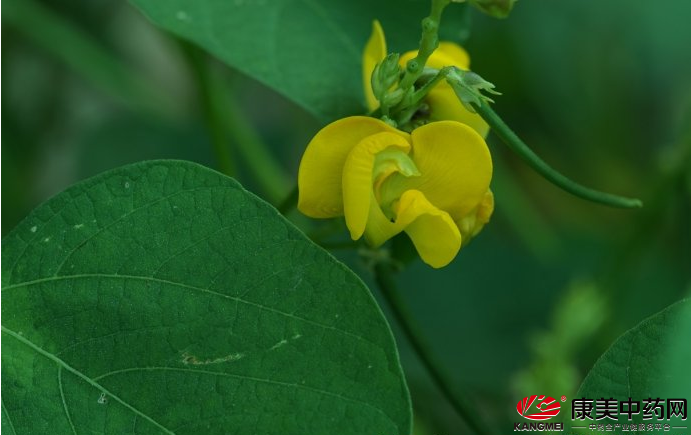
Photo of the original ricebean plant
[Ecological Habits]
Ricebean has strong adaptability and low soil requirements, and can be planted in general farmland. Sunny sites with loose soil and medium fertility (overly fertile soil tends to cause excessive vegetative growth and fewer pods) are best, and continuous cropping should be avoided.
[Cultivation Techniques]
I. Site selection and land preparation
Ricebean is a legume crop and has no strict soil requirements; sandy loam with good drainage, good water and fertilizer retention, and rich organic matter is ideal. Ricebean is not tolerant of waterlogging and is relatively tolerant of poor soil. Choose plots where the previous crop was a grass-family crop such as corn or wheat, and avoid continuous cropping with legume crops, because continuous cropping can worsen diseases, cause weeds to flourish, impair root development, and reduce root nodules, lowering the yield and quality of ricebean. When selecting a site, it is necessary to choose a plot where long-acting pesticides such as atrazine, chlorimuron-ethyl, clomazone, and imazethapyr were not used the previous year, so as to avoid phytotoxicity and unnecessary losses. Ricebean has weak ability to push through the soil, so the land must be finely prepared, leveled and harrowed until crumbly, with ridges formed early in spring when the soil is moist, and pressed promptly to maintain soil moisture. In combination with land preparation, apply 100~150 kg of refined organic fertilizer, 150 kg of diammonium phosphate, and 50 kg of potassium sulfate per hectare; or apply 250 kg of potassium sulfate-type compound fertilizer with a content of 48% (in which N:P:K is 13:23:12 respectively). The amount of fertilizer may be increased or decreased according to soil fertility and actual production conditions. Apply all the base fertilizer at once to meet the nutritional needs of the entire growth period. To prevent root-knot nematode disease, mole crickets, and other soil-dwelling pests and rodent damage, 10 kg per hectare of 5% terbufos granules or 3% phoxim granules can be mixed evenly with the fertilizer used and applied to the soil.
II. Planting methods
1. Seed collection and seed treatment
Selecting excellent varieties for planting is the foundation and key to obtaining a high yield of ricebean. Varieties with relatively large seeds, early maturity and high yield, bright seed color, thin skin, and a high paste yield should be chosen. Generally, varieties such as Dahongpao, Baoqinghong, Yingguohong, Nanjinghong, and the Japanese variety Dainagon can be selected; these varieties have good glossiness, excellent quality, high yield, and strong disease resistance. The seeds should be manually selected to remove impurities and damaged grains so that the seeds meet the standard for precision drilling. Before sowing, choose sunny weather and sun the seeds for 2~3 days. After sunning, coat the seeds with a seed coating agent before sowing; Silinshen Seed Dressing King can be used, with a medicine-to-seed ratio of 1:50~60, and sow after drying in the shade.
2. Sowing methods
Ricebean is a warm-loving crop. The minimum temperature for germination is 8°C, and the optimum germination temperature is 14°C~18°C. Therefore, sowing should not be too early; the soil temperature in the field at sowing should be stable above 15°C, and the suitable sowing period is late May to early June. For ridge cultivation, the ridge spacing is 65 cm and the plant spacing is 10~15 cm. The sowing rate is 45~60 kg/hectare, drilled in rows on the ridges, with a sowing depth of 3~4 cm, and pressed promptly after sowing.
3. Seedling stage management
Thin the seedlings promptly after they emerge evenly, and set the final stand at the first compound leaf stage. Keep strong, large seedlings and pull out weak ones. After emergence, combine thinning with the first hoeing and ridging; hoe deeply and throw up little soil to prevent burying the seedlings, which helps raise the soil temperature. About 10 days after the first hoeing and ridging, carry out the second intertillage. Before flowering, combine weeding with ridging and hilling. In the later period, pull large weeds once.
4. Planting and management
At the early flowering stage of ricebean, apply 3 kg of monopotassium phosphate per hectare together with 24 small bags of Qiangli Duowei root-promoting and seedling-strengthening agent (25 g per small bag) and 24 small bags of high-energy peptide (6 g per small bag), mix evenly with water, and then spray on the leaves; the weight of the spray liquid should be about 500 kg. This can promote flower bud differentiation of ricebean and improve the seed-setting rate. At the late flowering stage of ricebean, according to its growth condition, spray plant nutrient regulators such as K-D-plant immune nutritional protein, Luyeshen, and CP-PO-plant diseased cell repair transfer factor to promote the growth of ricebean plants, increase yield, improve seed color, and enhance commodity quality.
Applying chemical weed control technology saves labor and effort. Herbicides such as fluazifop-p-butyl, quizalofop-p-ethyl, fomesafen, haloxyfop, sethoxydim, and quizalofop-p-ethyl can be selected to kill weeds. The specific usage should follow the instructions and local application practices.
Ricebean is seriously affected by pests and diseases such as root-knot nematode disease, root rot, downy mildew, viral disease, aphids, and red spider mites. For viral disease, moroxydine·copper acetate 800 g/hectare, 0.5% lentinan aqueous solution 40 g/hectare, or drugs such as Nuoer Like, Virus A, and Jingpin Jundu Shaxing can be used; for root rot, 500~800 g/hectare of Simiaolan Gen Kuaizhiling and 200~400 g/hectare of CPPO-plant diseased cell repair transfer factor can be used, mixed evenly with 450~500 kg of water and then sprayed evenly on the leaves; for downy mildew, 60% wettable powder of Zhenjun Xijun Yibianjing or agricultural streptomycin, carbendazim, etc. can be used for control. For aphids and red spider mites, 5% acetamiprid, 4% Jianzhu, Zhuguang No. 2, 40% omethoate, etc. should be used promptly for control.
[Pest and Disease Control]
I. Diseases
1. Root-knot nematode disease
Root-knot nematode disease is a disease caused by nematode parasitism. After nematodes parasitize, the function of the root system is destroyed, causing the aboveground part of the plant to grow weakly and turn yellow, affecting yield. It mainly damages the leaves, flower buds, and flowers of the host plant, causing leaf yellowing, leaf drop, small leaves, or leaf deformity. When the heart bud is damaged, it causes dead heart or hollow heart, and flower rot often appears at flowering. The roots become swollen and deformed in a chicken-claw shape, and the root tissue turns black and rots; some roots also produce spherical root knots.
Control methods: In the pre-production stage, fumigant agents are mainly used, and one of the following measures can be selected according to specific conditions. Use isothiocyanate-type substances, 98% dazomet 10~15 kg/mu, or 20% horseradish essential oil suspension concentrate 25~50 g/square meter, or 35% metham sodium aqueous solution 100~150 ml/square meter; chloropicrin stock solution 40~60 g/square meter, or 1,3-dichloropropene liquid 10~15 g/square meter, or dimethyl disulfide 40~50 kg/mu, or methyl iodide, etc. 20~30 g/square meter; mixed fumigation, using chloropicrin mixed with other fumigants, has a good comprehensive control effect on various soil-borne diseases and pests represented by root-knot nematodes, such as chloropicrin + 1,3-dichloropropene (1:2~2:1 mixture), chloropicrin + dimethyl disulfide (1:1 mixture), chloropicrin + methyl iodide (2:1~3:1 mixture). Usually, if the pre-production chemical fumigation treatment is done well, no further control is needed throughout the growing season. When carrying out chemical fumigation treatment, strictly follow the instructions. In the planting stage, non-fumigant agents are mainly used, and one of the following measures can be selected according to specific conditions. Use 10% fosthiazate granules 2 kg/mu mixed with soil and broadcast evenly, or 1.5 kg/mu mixed with soil and applied in a concentrated manner (referring to furrow application or hole application).