Is Dipsacus easy to grow? An introduction to Dipsacus cultivation methods
Dipsacus is the dried root of the plant Dipsacus asper Wall. ex Henry, of the family Caprifoliaceae (Dipsacaceae). It was first recorded in the Shennong Bencao Jing and listed as a superior-grade herb. Its taste is bitter and pungent; its nature is slightly warm. It has the effects of tonifying the liver and kidneys, strengthening sinews and bones, mending fractures and injuries, and stopping flooding and spotting. Dipsacus is mainly distributed in Tibet, Yunnan, Sichuan, Guizhou, Hubei, Hunan and other provinces. Enshi Prefecture is rich in Sichuan Dipsacus and has a long history of producing it, with the largest quantities coming especially from Hefeng County and its neighboring Wufeng County; moreover, it is characterized by "thick roots, soft texture, a dark green or brown interior, and no woody core," and can be called the best Dipsacus in the country, commonly known as "Wuhe Dipsacus." As a commonly used traditional Chinese medicine in orthopedics and traumatology and in gynecology, it is mainly used clinically for soreness and weakness of the waist and knees, rheumatic arthralgia, traumatic injuries, flooding and spotting, and threatened miscarriage. Modern pharmacology has proven that Sichuan Dipsacus has anti-osteoporosis effects, promotes the healing of bone injuries, and has anti-inflammatory, anti-aging, and anti-premature-birth and anti-miscarriage pharmacological effects, giving it considerable research and development value. So, is Dipsacus easy to grow? Below is an introduction to Dipsacus cultivation methods.
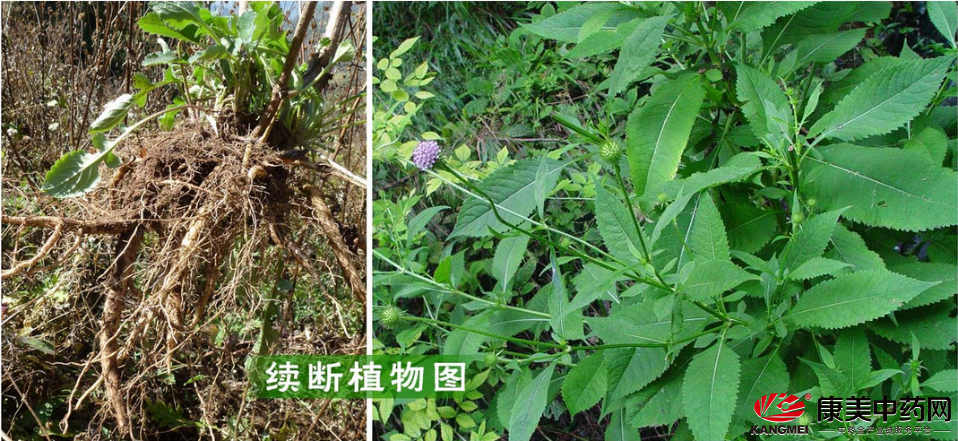
[Cultivation Techniques]
I. Site Selection and Land Preparation
Select sandy loam, mountain sandy soil, and oil sandy soil with deep soil layers, relatively high organic matter content, and good drainage. Soil that is heavy and clayey, poorly drained, or full of gravel is not suitable for planting. In hilly areas, gently sloping land with a slope of less than 10 degrees should be chosen; if the slope is too steep, after the medicinal roots are dug up the soil is left bare, and rainwater erosion will cause severe soil and water loss, so it is not suitable to plant Sichuan Dipsacus there. Virgin wasteland is especially best, and continuous cropping should be avoided. Reasonable crop rotation and changing of crops can regulate fertility, reduce pests and diseases, and thereby increase yield. Generally, a rotation system of more than 3 years is practiced. The preceding crop should preferably be corn or second-year fallow land.
After the land is chosen, it is generally plowed and turned twice in October of the sowing year, the clods are broken up fine, stones and debris are picked out, and then furrows are opened and beds are made. The beds are 120 cm wide, the furrows are 30 cm deep, and the furrows are 25 cm deep; the length of the beds depends on the terrain. The clods on the bed surface must be broken up fine and then shaped into a tile-back form, after which the side furrows, bed furrows, and middle waist furrows in the field should be opened well to ensure smooth drainage.
II. Planting Methods
The main propagation method is seed propagation. Sometimes, in order to speed up seed propagation, after the medicinal roots are dug up, the plants from which the larger roots have been taken for medicinal use are replanted in the soil; afterward the plants can still grow normally, the remaining small roots can also swell, and they can flower and bear fruit. In production, Sichuan Dipsacus is mainly grown by direct sowing and by raising seedlings for transplanting.
1. Direct sowing. Spring sowing is preferable. Before sowing, choose the land well, break the soil up fine, and open furrows and make beds. Either drilling or hole sowing may be used. For drilling, open furrows at a row spacing of 30-40 cm and a furrow depth of 5-7 cm; for hole sowing, dig holes at a hole spacing of 30-50 cm and a hole depth of 7-10 cm, sowing 8-20 seeds per hole. The average sowing rate is 22.5 kg per hectare. After sowing, cover with fine soil 2-3 cm thick.
2. Raising seedlings for transplanting. Autumn sowing from mid-July to mid-August is best, and dense broadcast sowing is the better sowing method. Before sowing, prepare the soil and make beds, and prepare humus rich in fallen twigs and leaves as mulch. The sowing rate is 225 kg per hectare. After sowing, cover with humus soil and promptly water with diluted manure water; if the weather is clear, a layer of grass should also be spread to shade the light and preserve moisture.
After the seeds germinate, promptly remove the grass layer; after seedlings emerge, thin them promptly and cultivate strong seedlings. The bed surface must often be kept free of weeds; after seedlings emerge, promptly remove the grass covering the bed surface used for moisture retention, and also promptly clear weeds and loosen the soil, doing so by frequent and shallow hoeing, and it should also be done when the soil is relatively dry to avoid damaging the roots and affecting growth. About every 1 week, topdressing may be applied once, each time applying 7500 kg (direct-sown fields) to 37500 kg (seedling-raising fields) of diluted manure water per hectare. In addition, seedlings should be thinned, fixed, and replanted promptly to cultivate strong seedlings. When the seedlings are 5 cm tall, carry out thinning, fixing, and replanting: for hole sowing, keep 2-3 strong seedlings per hole; for drilling, keep 2-3 seedlings every 25 cm; for broadcast sowing, keep seedlings at a plant spacing of 10 cm.
III. Field Management
1. Transplanting and Establishing
Seedlings raised by sowing in the previous autumn can be transplanted in the spring of the following year. The best time for planting is from March to May in spring, before the buds sprout. When transplanting, open furrows at a row and plant spacing of 30-40 cm and a furrow depth of more than 20 cm; apply into the furrows 37500 kg of decomposed barnyard manure per hectare plus 750 kg of ordinary superphosphate, or 750 kg of compound fertilizer, then place the seedlings at a plant spacing of 20-25 cm. When planting, take care that the roots spread out in the furrow and are required to be vertical and not bent; cover with soil 4-5 cm thick, and do not let the covering clods press on the heart leaves of the plant. After planting, water thoroughly to settle the roots and aid survival.
2. Intertillage, Weeding, and Clearing Furrows for Drainage
Both direct-sown seedlings and transplanted seedlings must have weeds promptly cleared and the soil loosened after sowing or planting, doing so by frequent and shallow hoeing to avoid damaging the roots and affecting growth. The time for loosening the soil is generally chosen on sunny days, and it should be done when the soil is relatively dry, taking care not to damage the roots. Because the roots of Sichuan Dipsacus are fresh, tender, and juicy, soil compaction, poor aeration, and high humidity easily cause disease; therefore, after each intertillage and weeding, the furrows must promptly be cleared once. At the same time, loosening the soil can make the soil loose, aerated, eliminate weeds, regulate moisture, and raise soil temperature, providing a good growing environment for Sichuan Dipsacus.
3. Topdressing and Earthing Up
For transplanted Sichuan Dipsacus, basal fertilizer is primary and topdressing is supplementary. After each intertillage, apply 1 round of diluted manure water to promote seedling growth; when the plants die back in winter, apply 1 round of wintering fertilizer, applying 37500 kg of decomposed cattle-pen manure per hectare, then carry out 1 relatively deep clearing of the furrows and place the soil over the fertilizer on the bed surface as earthing up. When the buds sprout in the spring of the 2nd year, another round of diluted manure water may be applied to promote seedling growth.
In direct-sown fields, in the sowing year, topdressing may be combined with the number of intertillages: after each intertillage, apply 1 round of diluted manure water to promote seedling growth; when the plants die back in winter, apply 1 round of wintering fertilizer, applying 37500 kg of decomposed cattle-pen manure per hectare, then carry out 1 relatively deep clearing of the furrows and place the soil over the fertilizer on the bed surface as earthing up. When the buds sprout in the spring of the 2nd year, another round of diluted manure water may be applied to promote seedling growth.
4. Removing Flower Buds
Sichuan Dipsacus has many branches and many flower buds, and the process of flowering and setting seed is long, consuming large amounts of nutrients. Removing flower buds inhibits reproductive growth, which can reduce nutrient consumption and concentrate nutrients for the growth of the underground part. In May-June, starting when the flower stalks first appear, all flower buds should promptly be removed except for plants retained for seed, in order to promote vegetative growth and increase root yield. Sometimes, to speed up the removal, a thin bamboo pole may be used to sweep them off, once every half month, carried out multiple times.