Reed rhizome is both a medicinal material and a papermaking raw material. How is it planted?
Reed rhizome is the fresh or dried rhizome of the grass-family plant reed, Phragmites communis Trin. It can be dug throughout the year, removing the buds, fibrous roots and membranous leaves, and used fresh or dried in the sun. Reed rhizome was first recorded in the "Bielu" and listed as a lower-grade drug. Its taste is sweet, and its nature is cold. It enters the Lung and Stomach meridians. It clears heat and drains fire, promotes fluid production and quenches thirst, relieves restlessness, stops vomiting, and promotes urination. It is mainly used for febrile disease with restlessness and thirst, lung heat cough, lung abscess with purulent vomiting, stomach heat with vomiting and hiccups, heat strangury with painful urination and other conditions; it is a medicinal and edible dual-use medicinal material. Reed rhizome is produced throughout the country. The original plant, reed, grows on riverbanks, lakes and marshes, along the shores of ponds and ditches, and in low wet land. It is a widely distributed polymorphic species worldwide. Except for forest habitats, it does not grow there; in various open areas with water sources, it often relies on its rapid expansion and reproductive capacity to form continuous reed communities. Its culms are used as papermaking raw material or for weaving mats and curtains and building shed materials; the stems and leaves are used as feed when young; the rhizome is used medicinally, and it is a pioneer environmental protection plant for stabilizing embankments and creating land. So how is reed, which can be used both medicinally and as a papermaking raw material, planted? And what pests and diseases need to be guarded against?
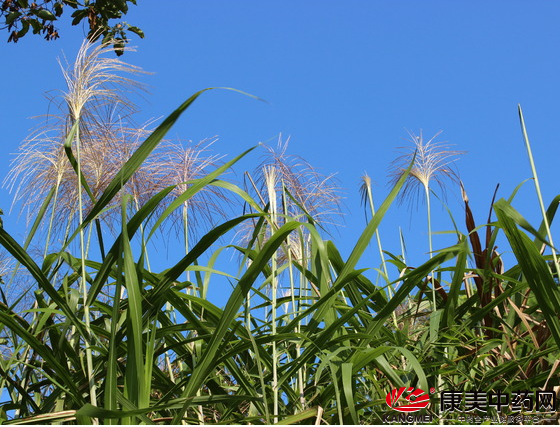
(1) Cultivation techniques
1. Site selection and land preparation
The seedling-raising site should be selected as a plot with flat terrain, convenient irrigation and drainage, convenient transportation, low soil salt content, no weeds and no pathogenic bacteria. Deep plow, prepare the land and make beds, and build walkway ditches between beds to facilitate irrigation and management. Apply 15 tons/ha of organic fertilizer and mix it fully with the soil, then rake level.
2. Planting methods
2.1. Seed collection and seed treatment
Dry the reed panicles collected the previous year in the sun and cut them into pieces.
2.2. Sowing method
In early to mid-May, when the temperature reaches above 10°C, begin sowing at a sowing rate of 75 kg/ha. Before sowing, irrigate the seedling field to soak the field, drain it after 2 days, and when the soil is in a moist state, sow evenly and pat the seeds into the soil.
2.3. Transplanting
When local conditions are relatively good, field transplanting can be carried out after reed tillering appears in July to August, or it can be carried out in the spring of the following year when the temperature reaches above 5°C. When transplanting, irrigate the transplanting field to keep the soil moist, lift the reed seedlings (before germination) from the seedling field, and plant them at a spacing of 1 m × 1 m, with 3 to 5 plants per hole. When the seedlings reach 30 cm in height, strengthen irrigation, keep the water layer at 5 cm, and deepen the water layer as they grow, with the deepest not exceeding 50 cm. In the same year, the height can reach 1.5 to 2.0 m.
3. Field management
3.1. Seedling-stage management
After reed emerges, strengthen irrigation management. The irrigation depth must not submerge the reed seedlings. When the seedlings reach 5 cm in height, thin them so the spacing between seedlings is 2 cm. As the seedlings grow, thin and weed in time, and strengthen irrigation and fertilization. When the seedling height reaches 20 cm, the spacing between seedlings should reach 6 cm.
3.2. Field management
3.2.1. Water conservancy engineering construction
According to the growth characteristics of reed, build supporting water conservancy engineering facilities in the field, including a water-lifting station, irrigation, drainage, bridges, culverts and other supporting systems. According to the field topography, landforms and other conditions, the project control area should be between 33.3 and 66.7 ha, so as to achieve rapid irrigation and drainage.
3.2.2. Water management
Reed is an emergent aquatic plant and needs a relatively large water supply throughout its life. Research results show that during its lifetime, the physiological water requirement of reed is about 700 m3. In reed irrigation, an irrigation system of "shallow in spring, deep in summer, and dry in autumn" has been developed, that is, before reed germinates in spring, irrigate with shallow water to accelerate soil thawing, raise soil temperature and promote reed germination. After the soil thaws, drain the water and keep the soil moist. After reed germinates and grows, irrigate with shallow water of 5 cm. After mid-May, reed enters the vigorous growth period, growth speed accelerates and water demand increases, so deep-water irrigation should be adopted, with the water layer kept at 30 to 50 cm. After mid-August, reed enters the reproductive growth period and water demand decreases. Drain the soil and keep it moist to promote reed maturity and the development of autumn buds.
3.2.3. Rational fertilization
Reed is an economic plant mainly produced for its stems and needs a relatively large nutrient supply throughout its life. Rational fertilization and maintaining comprehensive soil nutrient balance are important factors for reed growth and increasing yield. Therefore, fertilization is carried out in mid-to-late May when reed enters the vigorous growth period. The fertilizer variety is mainly nitrogen fertilizer, combined with phosphorus and potassium fertilizer, and the fertilization rate is generally 300 to 375 kg/hm2. The following matters should be noted during fertilization: First, fertilization should focus on medium- and low-yield reed fields, because medium- and low-yield reed fields have great yield-increasing potential and fertilizer is likely to play a role; second, fertilization of reed fields is very different from fertilization of farmland, so the nature of the reed field must be considered, and good engineering facilities and the best irrigation system must be provided so that water and fertilizer are integrated and then absorbed by reed; third, for plots with heavy soil salinity and alkalinity and many grass pests, soil salt content should first be reduced and grass pests prevented and removed to avoid fertilizer loss; fourth, before fertilization, the soil of the fertilization plot should be analyzed, and soil testing and fertilizer recommendation should be adopted to reduce fertilizer waste.
(2) Pest and disease control
1. Grass pests
Weeds such as Shi cattail, narrow-leaf cattail, and sedge
Control method: Scientific control should be carried out according to different grass species and their biological characteristics. First, a combination of biological control and chemical control can be adopted. For cattail, 2,4-D butyl ester can be sprayed in spring, combined with irrigation, to achieve the effect of elimination. Second, investigate the occurrence of grass pests, and carry out spot and patch control in key occurrence plots. Third, when spraying pesticides, care should be taken to prevent phytotoxicity to surrounding plants and reed.
This plant has strong resistance and seldom suffers from diseases. If diseases occur, the control methods are the same as for rice.
2. Insect pests
Aphids: The season of generally severe occurrence is between June and July. Their mode of damage is mainly piercing and sucking the juice of reed leaves, reducing plant nutrition, and excreting honeydew on the leaves, affecting photosynthesis and causing leaves to wither. According to investigation, in a year of major aphid outbreak, reed yield can be reduced by 10 to 15%. Reed damaged by aphids turns black at harvest time, and the fiber content and quality of the stems decrease significantly, directly affecting pulping rate and quality.