Chinese olive is both medicinal and edible, and can also be pressed for oil; how should it be planted
The Chinese olive is the dried mature fruit of the Burseraceae plant Chinese olive Canarzum album Raeusch., harvested in autumn when the fruit ripens, and dried. The Chinese olive is sweet and sour in nature, neutral; it enters the Lung and Stomach meridians. It has the effects of clearing heat and detoxifying, soothing the throat, and promoting fluid production, and is mainly used for sore and swollen throat, cough with sticky phlegm, restlessness, heat and thirst, fish and crab poisoning, and other conditions. It is a medicinal and edible dual-use herb.
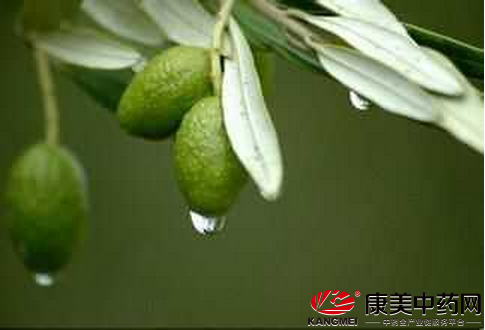
The Chinese olive is native to China and can be eaten fresh or processed; it is a famous subtropical specialty fruit tree. The Chinese olive is a specialty of Fuzhou and was listed as a tribute item as early as the Tang Dynasty. When first eaten, the Fuzhou Chinese olive is bitter and astringent, but after the aftertaste it feels fragrant and sweet. The production areas of Fuzhou Chinese olive are mainly distributed along both banks of the lower reaches of the Min River, with the largest output in Minhou and Minqing counties. Fujian Province is the province with the most Chinese olive distribution in China, and it is also cultivated in Guangdong, Guangxi, Taiwan, China, Sichuan, Zhejiang and other provinces. The Chinese olive tree is a very good windbreak species and street tree. The wood can be used to build ships, make sleepers, furniture, farm tools and building materials, etc. The fruit can be eaten raw or pickled; medicinally it treats laryngitis, coughing blood, excessive thirst, enteritis and diarrhea. The pit is used for carving and also medicinally to treat fish bones stuck in the throat. The seed kernel is edible and can also be pressed for oil, which is used to make soap or as lubricating oil. So, how is the Chinese olive, which can be used as both medicine and food and also for oil pressing, planted? The introduction is as follows.
(1) Growth habits of the Chinese olive
The Chinese olive prefers warmth and fears cold and frost. It can be planted in areas with an annual average temperature above 19.6°C, an annual effective accumulated temperature of ≥10°C above 6450°C, and where the daily extreme temperature of -3°C lasts no more than 3h and the number of consecutive days does not exceed 3 days. From alluvial soil along riverbanks to red-yellow soil in hilly and mountainous areas, as long as the soil layer is deep, a pH value of 5.0-6.5 is suitable for the growth of the Chinese olive tree, but moist, heavy, saline-alkali soil is not suitable for planting. The Chinese olive has a well-developed main root and strong drought resistance, but it fears waterlogging and avoids standing water. It can grow in areas with annual rainfall above 1200mm.
(2) Cultivation techniques
1. Site selection and land preparation
The Chinese olive tree can be planted on red-yellow soil hillsides and alluvial land along riverbanks, and is even better planted in sandy soil with a relatively deep soil layer and fertile texture. The annual average temperature is about 20°C, the lowest temperature is not lower than -2°C, and the altitude is below 200m. Avoid building orchards in places where typhoons and hail frequently occur. Build orchards far away from places with serious discharge of “wastewater, waste gas, and waste residue”, generally at least 3km away. In plain areas, avoid low-lying land; in hilly areas, it is advisable to choose gentle slopes facing south or southeast with a slope below 25°; avoid west-facing mountain land with strong sunlight (prone to drought and sunscald), wind gaps, and closed mountain pockets where frost easily forms. For flatland orchards, dig 1m3 large holes 2 months before planting, fill in 50kg of rice straw, 50kg of organic fertilizer, 1.5kg of lime, 0.5kg of superphosphate and topsoil, pile the soil into a mound about 0.5m high, and plant after the hole soil has settled. For hilly orchards with gentler slopes, build contour terraces with a terrace width of 3-5m, a slope not exceeding 5°, an inward-sloping slope surface, and a drainage ditch 20-30cm deep and 30-40cm wide dug inside. For steeper slopes and complex terrain, dig fish-scale pits or blast holes.
2. Planting methods
2.1. Seed collection and seed treatment
The Chinese olive is propagated by sowing, or transplanted with a soil ball. There are two planting methods: large seedlings and small seedlings in nutrient bags. Large seedlings cultivated for 3-4 years or even 6-7 years, with a diameter of 4-5cm, are planted around the Beginning of Summer. One week before lifting the seedlings, cut the trunk at 1-1.5m above the ground; after the wound heals, lift the seedlings. When lifting, keep as much soil as possible, wrap with straw rope, retain lateral and fibrous roots as much as possible, keep the main root 40-50cm, char the wound with a pine torch flame (bake) (do not directly burn the roots with an open flame), and wrap the entire trunk more than 10cm above the ground with straw rope to prevent water loss after planting.
2.2. Planting method
There are two planting times for the Chinese olive tree: spring planting in March-April and autumn planting in mid-to-late October. The planting density is 5-6m×5-6m, with 15-25 plants per 667m2; flatter land should be sparser and hilly land denser, and dwarfed Chinese olives can be appropriately denser. When planting with large seedlings, place the main root vertically into the hole, spread the lateral and fibrous roots in their natural directions, fill with fine topsoil, firm layer by layer, then cover with 3-5cm of fine soil or weeds, and water thoroughly to set the roots. For planting small seedlings in nutrient bags, place the small seedling vertically into the hole, peel off the plastic bag, remove 1/3-1/2 of the leaves, pile soil layer by layer and firm it, water thoroughly to set the roots, and cover the tree disk with weeds. The planting depth should be such that the green-yellow junction is 6-8cm into the soil.
2.3. Seedling management
After the Chinese olive tree is planted, water frequently on sunny days to keep the soil moist until it survives; when seedlings die, replant promptly. According to experiments, using 20mg·kg-1 naphthaleneacetic acid or 50-100mg·kg-1 ABT No. 3 rooting powder at 200ml per plant can significantly increase the survival rate of planting.
2.4. Planting and management
2.4.1. Soil management
Hole expansion and soil improvement: ordinary planting can only meet the growth needs of the Chinese olive root system for 3 years. After 3 years, the holes must be expanded and the soil improved, first between plants, then throughout the whole orchard. For hole expansion between plants, dig expansion belts 1m deep and 2m wide; after the excavated soil has been exposed to sun and rain for 1-2 months, backfill it in 2-3 layers with reeds, weeds, organic fertilizer, superphosphate, lime, cake fertilizer, etc. Hole expansion and soil improvement require high investment; to reduce costs, blasting soil improvement is worth promoting: use a mining drill to make vertical holes 1.2m deep at a density of 4m×1.5m, place 300g of explosive, then place 500-700g of compound fertilizer on top, cover with soil, and detonate.
Deep plowing and soil improvement: generally once a year, carried out in winter, with a depth of 25-30cm, turning the original soil surface downward and the subsoil upward, without breaking the soil clods, and some lime can be scattered. It can be done throughout the orchard or in alternate rows.
Mulching: in hot and dry seasons, cover with 20cm-thick weeds or rice straw to cool down, retain moisture and suppress weeds; in winter, the mulch can be pressed and buried into the soil.
Intertillage and weeding: generally from June to August each year, combined with weeding, shallow plow the whole orchard by turning soil clods 10-15cm, with the soil surface downward and the subsoil upward. Weeding at other times mainly uses herbicides such as glyphosate.
Sod culture method: this means artificially sowing grass seed and letting the whole orchard grow grass, which can prevent soil erosion and washing, improve soil aggregate structure, cool down in summer and keep warm in winter. The main grass species include Indian cowpea, pinto peanut, sicklepod, and roundleaf cassia, etc.