High-yield and efficient fig cultivation techniques and methods
The fig is the fruit of Ficus carica L., a plant of the genus Ficus in the mulberry family (Moraceae). It mainly grows in tropical and temperate regions, and is a subtropical deciduous small tree or shrub bearing berries. The fruit has a thin skin and soft flesh, with a delicate fragrance and sweet taste, and is rich in nutrients such as sugars, amino acids, vitamins and minerals. Scientists have also extracted anti-cancer substances such as benzaldehyde and bergapten from figs. Besides being eaten fresh and used medicinally, figs can also be processed into dried fruit, preserved fruit, jam, juice, fruit tea, fruit wine, beverages, canned goods, etc. Fig trees bear fruit in the very year they are planted, with high yields and good economic returns, and the trees are drought-tolerant and salt-tolerant and rarely suffer from pests and diseases, so fig cultivation is attracting more and more attention.
I. Main cultivated varieties
Figs are divided into four types according to their pollination relationships and flower types; all figs cultivated in China are of the common type. Here we focus on recommending two excellent varieties: Qingpi and Brunswijck. These two varieties have the characteristics of high yield, excellent quality and relatively strong cold resistance; their fruit quality is excellent and much favoured by people around the world, and they are exported to Japan and other countries and regions, with Qingpi figs having a particularly large export volume. The varietal characteristics of Qingpi and Brunswijck are briefly introduced below:
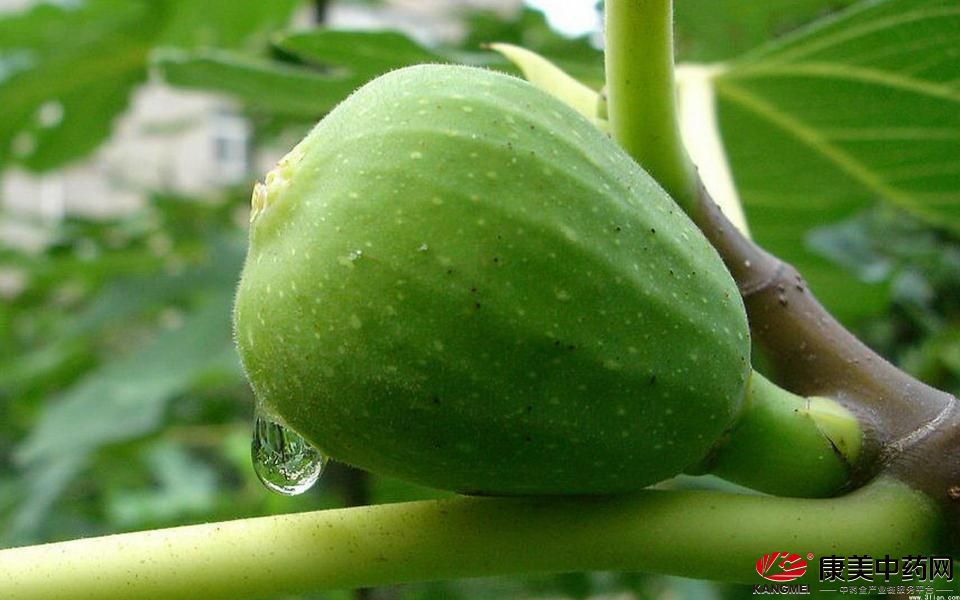
1. Qingpi: The tree is vigorous with an obvious trunk. The leaves are palmate with 3-5 shallow lobes. The fruit is flat and obconical. The fruit is green before ripening and yellow-green after ripening, with purple-red flesh; the ostiole is small and open. The summer crop fruit averages 80-100 grams per fruit, and the autumn crop fruit averages 40-50 grams per fruit. The fruit surface is smooth and does not crack, and the skin is fairly tough; the ripe fruit has a sugar content of about 20%, with excellent quality. It is high-yielding and relatively cold-resistant, and is a late-maturing variety.
2. Brunswijck: The tree is moderate in vigour with an inconspicuous trunk and tends to be multi-stemmed; the leaves are palmate with 5-7 deep lobes, and the lobes are narrow and strip-shaped. The fruit is yellow-green before ripening and yellow-brown after ripening, with flesh ranging from amber to light pink. The fruit shape is irregular, long ovoid and slanting to one side; the ostiole is open, and the skin is thin and does not crack. The summer crop fruit averages 100-120 grams per fruit but is very few in number, while the autumn crop fruit weighs 30-40 grams per fruit and is extremely high-yielding. The ripe fruit has a sugar content of 18-20%, with excellent quality. It is a mid-to-late-maturing variety.
II. Cultivation techniques
1. Propagation and planting
Fig branches root very easily, and root suckers also form readily; when propagating nursery stock, methods such as cuttings, layering and division can all be used. In production, cuttings are used for large-scale propagation of nursery stock, with an extremely high survival rate. In the Yangtze River basin, hardwood cuttings are taken in mid-to-late March. Any branch with short internodes and a thickness of 1 cm-1.5 cm can be used as a cutting, each cutting bearing 2-3 buds. For specific operational techniques, refer to grapes. Continuous cropping should be avoided at the cutting site to prevent the spread and damage of nematodes. If nutrient-bag seedling raising is carried out in plastic greenhouses in winter, seedlings can be produced earlier.
When establishing an orchard, suitable varieties should be selected according to different requirements and site conditions. For example, yellow varieties should be chosen for canning and processing; cold-resistant varieties should be chosen in places with low winter temperatures (around minus 15 degrees); salt-tolerant varieties should be chosen for tidal flat land; and large-fruited varieties should be chosen for fresh fruit marketed to the market. Continuous cropping should be avoided in the orchard.
The planting spacing is generally 3 m-4 m; in areas with good soil or a warm climate, where the tree canopy is large, the spacing between plants and rows can be expanded to 5 m-7 m.
2. Training and pruning, and fertiliser and water management
Under normal circumstances, the branches within a fig tree canopy are not dense, so it is suitable to train a tree form with a central leader and no distinct tiers, or a natural open-centre form with multiple main branches; a bushy shrub-like canopy formed by branches directly from the ground is also possible. When training, the young tree is headed at a height of 40 cm-50 cm, after which 4-6 main branches are retained on the whole tree, with or without a central leader. A certain spacing is maintained between the main branches; each main branch is pruned back to leave 40 cm-60 cm each year, and 2-3 secondary main branches are then arranged on it at appropriate intervals to expand the fruiting surface.
Once the tree form is established, each year only useless water sprouts, overcrowded branches, drooping branches and dead branches are thinned out, and as many vigorous branches as possible are retained for fruiting. For varieties grown mainly for the autumn crop, since the fruiting sites are mostly on the middle and lower parts of new shoots of the current year, the branches can be moderately shortened. In summer-crop varieties, the flower buds are mostly borne at the tips of the branches, so vigorous branches should not be shortened in winter, to avoid affecting the yield. For fig trees with few branches or whose fruiting sites gradually move outward year by year, heavier shortening can be done in winter to promote new branch growth. Some branches can be cut back to leave 2-3 leaf buds at the base.
Fig branches have loose tissue and heal slowly at the cut, so after winter pruning the section of branch below the cut often dries up, affecting the growth of the bud at the cut. Therefore, all large pruning and saw cuts should be coated with grafting wax or other protective agents, while for small branches the cutting point can be raised appropriately.
Base fertiliser for figs is applied around leaf fall in combination with winter ploughing. Topdressing is best applied in stages before the rapid growth of new shoots and during the period of rapid swelling of the receptacle fruit. Figs are not demanding regarding water; waterlogging should be drained in the rainy season, and in coastal areas it is best to set up supports between the plants for protection during the typhoon season.
3. Winter protection
Figs like a warm, slightly dry climate and have low cold resistance; when cultivated in temperate regions, the branches and trunk are often liable to freeze, especially young trees under 5 years old, which risk dying entirely when winter temperatures drop to minus 16 degrees to minus 18 degrees. In the Huaibei region, soil should be banked up around the base of the trunk for winter protection, to a height of about 35 cm, and the banked soil removed after the thaw in spring. Large branches and trunks can be wrapped in straw for winter protection. As the tree ages, its winter hardiness gradually increases. Once a plant is frozen, the frozen branches should be pruned out in good time, and after sprouting, care should be taken to select new branches to replace them. Sometimes, even if the entire above-ground part is frozen to death, strong branches can still sprout the following spring from the soil-banked root crown, forming a new canopy.
III. Main pests and diseases and their control
Figs have relatively few pests and diseases. Among those commonly causing greater damage are the mulberry longhorn beetle, root-knot nematodes and fruit anthracnose. For the control of the mulberry longhorn beetle, refer to the section on apples and use toxic plugs to block the holes. At present, the control of root-knot nematodes mainly consists of avoiding continuous cropping in old orchards and carrying out quarantine and disinfection of nursery stock; when conditions permit, the soil can also be disinfected. For fruit anthracnose, a 200-fold lime double-strength Bordeaux mixture or a 75% chlorothalonil 600-800 fold solution should be sprayed early before the fruit becomes affected in summer and autumn; for the latter, the pre-harvest interval (the number of days between the last application and harvest) is 7-14 days.