Detailed Guide to Artificial Cultivation Methods of Epimedium, with Great Development Potential
Epimedium, also known as Xianlingpi, Sanzhi Jiuye Cao, Yanghuo Ye, Tiedachu, etc., is the dried leaf of plants in the Berberidaceae family: EpimediumEpimedium brevicornu Maxim., Epimedium sagittatumEpimedium sagittatum(Sieb.et Zucc.)Maxim., Epimedium pubescensEpimedium pubescens.Maxim., or Epimedium koreanumEpimedium koreanum Nakai. It grows under forests, in thickets by ditch sides, or in shady, damp places on hillsides. It is cultivated in Shaanxi, Gansu, Shanxi, Henan, Qinghai, Hubei, Sichuan and other regions of China, and the whole plant is used for medicinal purposes.
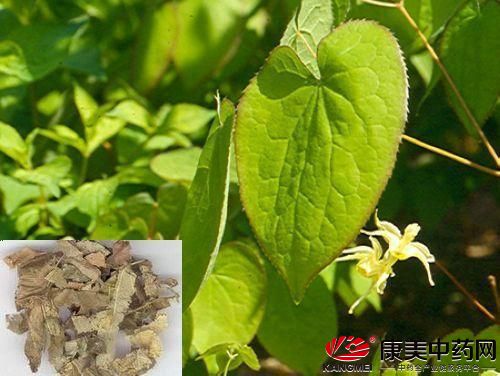
Epimedium is one of the medicinal herbs with the longest history of use, first recorded in the Shennong Bencao Jing; Epimedium is also one of the most widely applied medicinal herbs, attracting widespread attention both domestically and abroad. In addition to its traditional uses of tonifying the kidney, strengthening yang, and dispelling wind-dampness, clinically Epimedium is also commonly used for treating osteoporosis, menopausal syndrome, breast lumps, high blood pressure, coronary heart disease, enhancing immunity, anti-aging, anti-tumor, anti-AIDS and other effects, and has enormous research and development potential. For more than the past decade, the medicinal herb market has remained consistently in demand with rising prices, causing wild variety resources to be over-harvested year after year and severely damaged. They can now far from meet production needs. Therefore, the prospect of artificial cultivation production is imminent. Below, let us take a look at what technical points are needed for artificially cultivating Epimedium?
I. Growth Habits
It prefers shade and moisture. Soil moisture of 25-30% and relative air humidity of 70-80% are suitable. It is relatively sensitive to light, avoids direct scorching sun, and requires about 80% shading. It has relatively strict soil requirements, preferring neutral acidic or slightly alkaline, loose, humus-containing, organic-rich soil such as loamy sand. It is suitable for growth in thickets, under sparse forests, or in semi-shaded environments at forest edges in low and mid-altitude mountains at elevations of 450-1200 m.
II. Cultivation Techniques
(1). Site Selection and Land Preparation
Choose natural conditions of shady slopes or semi-shady and semi-sunny slopes, with a slope of less than 35 degrees, and soil that is slightly acidic leaf humus soil, black loam soil, or black sandy loam soil. It can be cultivated under broadleaf forests, mixed coniferous-broadleaf forests, or fruit tree economic forests. Remove the turf from the forest floor, build strip beds along the slope with a width of 120-140 cm and a height of 12-15 cm, and plant seedlings in horizontal strip trenches with a trench depth of 6-10 cm.
(2). Planting Methods
Vegetative Propagation and Transplanting
1. Dormant period transplanting: Before sprouting in spring from April to May, or when aboveground stems and leaves wither in autumn from September to October, dig out the underground rhizomes, take stem segments with buds, cut them into 8-10 cm small segments, keeping 1-2 buds per segment, treat them with gibberellin and rooting powder agents, then plant them in strip beds with a plant-row spacing of 15 cm × 20 cm, cover with 5 cm of fine soil, tread firmly, and then cover with 3-5 cm of wet leaves.
2. Growing period transplanting: Cultivate under forests during the high-temperature and rainy summer from June to August. Transplant vigorous wild plants together with soil, digging and planting within 24 hours, preferably on cloudy days or after rainy days. Plant-row spacing of 20 cm × 25 cm, cover with 3-5 cm of soil,
tread firmly, and cover with 3-5 cm of leaves. This cultivation method does not require seedling recovery, and the survival rate is as high as over 85%. Moreover, rhizome tiller buds grow quickly, with many branches and high yield in the second spring.
(3). Field Management
1. Replanting: After seedlings emerge in February-March of the following spring, promptly remove dead seedlings, weak seedlings, and diseased seedlings, and replant on cloudy days to ensure the basic number of seedlings.
2. Intertillage and weeding: Weed in conjunction with intertillage, aiming for few weeds on the bed surface. During the peak growing season, weed once every 10 days; in autumn and winter, weed about once every 30 days.
3. Irrigation and moisture conservation: Epimedium prefers a moist soil environment; drought will cause growth stagnation or seedling death. If there are 5-6 consecutive sunny days in summer, artificial watering must be carried out in the morning and evening.
4. Reasonable fertilization: In October-November of the first year, apply base fertilizer in conjunction with land preparation and bed opening, generally applying 1000-3000 kg/mu. From late March to June of the following year, apply topdressing once or twice. Under normal circumstances, the application amount of inorganic nitrogen fertilizer should not exceed 5 kg/mu, and organic compound fertilizer 10-30 kg/mu; apply bud-promoting fertilizer once in October-November of the following year, applying farmyard manure 1000 kg/mu, or organic fertilizer 10-20 kg/mu; after each harvest, promptly supplement soil fertilizer, generally applying farmyard manure 1000-2000 kg/mu, or organic compound fertilizer 20-30 kg/mu. For base fertilizer, after opening the bed and before planting, evenly spread the fertilizer on the bed surface, then turn it into the soil, rake finely and mix evenly. Also after opening the bed and before planting, when digging planting “holes” or “strips”, evenly place the fertilizer into the “holes” or “strips” and mix the fertilizer evenly with the surrounding soil. Topdressing mainly adopts “hole” application. When topdressing, never apply fertilizer onto newly emerged branches and leaves. It should be applied near the base of the plant clump, and soil should be covered or not covered depending on the fertilizer type.
III. Pest and Disease Control
1. Leaf brown spot blight
[Symptoms]Leaf brown spot blight damages leaves. On diseased leaves, the spots are initially brown spots surrounded by yellow halos. After expansion, the spots become irregular, with red-brown to brown edges and gray-brown centers. In the later stage, the spots are gray-brown, shrunken, and black granular objects appear, which are the pathogen's pycnidia. The pathogen occurs during both the seedling stage and adult plant stage of Epimedium, with more occurrences and severe damage during the seedling stage.
[Control]① Promptly remove and destroy diseased residues to reduce sources of infection. ② In the early stage of disease, pesticide control can be applied. Commonly used agents include 50% zineb wettable powder 600 times, 50% tuijunte wettable powder 800 times solution, 1:1:160 Bordeaux mixture, 30% copper oxychloride 600-800 times solution, 50% carbendazim wettable powder 500-600 times solution, 70% thiophanate-methyl wettable powder 800-1000 times solution, 75% chlorothalonil wettable powder 500-600 times solution. The above agents should be used alternately to avoid developing resistance.
2. Wrinkle virus disease