Detailed Explanation of the Cultivation Method for Converting Cat's Claw Grass from Wild to Domesticated
Cat's claw grass is the dried tuberous root of Ranunculus ternatus Thunb., a plant in the Ranunculaceae family. Its nature and flavor are sweet and pungent, warm. It enters the Liver and Lung meridians. It has the functions of detoxification and dissipating nodules, and is mainly used to treat scrofula, pulmonary tuberculosis, tuberculosis of lymph nodes, pharyngitis, malaria, and other conditions. The original plant is a perennial herb. It is divided into domesticated and wild types; at present, the domesticated resource production areas are mainly concentrated in Huaibin, Xinyang, Henan; Fuyang, Anhui; and Xuancheng. Modern pharmacological and clinical studies show that cat's claw grass and its preparations have certain therapeutic effects on pulmonary tuberculosis, lymphatic tuberculosis, and various cancers and lymphomas. Because of its broad therapeutic effects, large demand, and relatively high market price, wild resources in the original production areas have been over-harvested, causing wild resources to be on the verge of exhaustion; it has now become one of the scarce medicinal materials prioritized for development in China. Therefore, carrying out imitation-wild cultivation of cat's claw grass can both protect this rare medicinal material species and obtain relatively high income. The high-benefit imitation-wild cultivation techniques for cat's claw grass are introduced as follows:
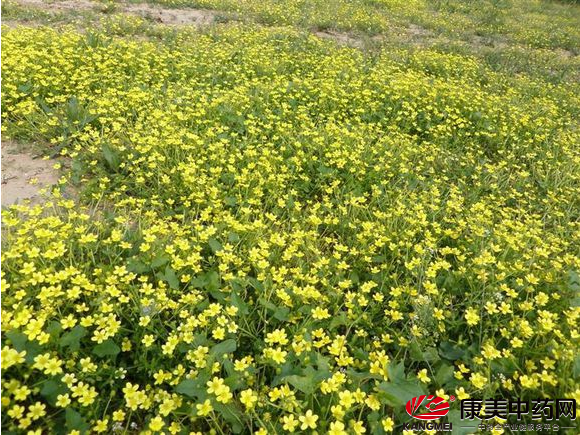
(1) Growth Characteristics
Cat's claw grass is an annual or perennial herb, with a plant height of up to 5-8 cm. The tuberous roots are fleshy and clustered, nearly spindle-shaped, brown or nearly black, and shaped like cat's claws, hence the name cat's claw grass. It prefers a moist, semi-shaded environment, is cold-tolerant and barren-tolerant, has low soil requirements, and has strong adaptability; it can be planted in both northern and southern China.
(2) Planting Techniques
1. Land Selection and Land Preparation
After selecting land according to its growth habits, plow 20 cm deep. Along with plowing, apply 2000 kg of farmyard manure per mu, mixed with 25 kg of superphosphate and 25 kg of cake fertilizer, then harrow finely and level evenly. Before planting, carry out another shallow plowing and make high beds about 1.5 m wide, with a bed spacing of about 30 cm.
2. Propagation Methods In production, division propagation is the main method, using the seedling transplanting method; seed propagation can also be used.
(1) Division Propagation Before raising seedlings, prepare a seedbed. Generally, a courtyard, field edge, or basket/pot can be used, depending on the number of seedlings. The seedbed soil must be fertile and loose. Break off the daughter plants from each plant one by one and arrange them neatly on the seedbed at a plant-row spacing of 1 cm × 3 cm. Cover with 0.5 cm of manure soil, then slightly cover with weeds, water to maintain moisture, and seedlings can emerge after 15 days. After emergence, remove the covering. During the freezing period, they can be moved indoors or covered with plastic film. After the seedlings have fully emerged, pay attention to hardening them off.
Transplanting: When the seedlings grow 2-3 true leaves, choose a cloudy day for transplanting. Dig holes at a plant-row spacing of 25-30 cm × 10 cm and transplant, with 1 plant per hole. Water after planting, and plant about 20,000 plants per mu.
(2) Seed Propagation The fruits mature in batches from April to May. At this time, harvest the fruits in batches and shake out the seeds, then sow them immediately into the seedbed. They can germinate and emerge in the winter of that same year. During this period, the soil must not be too dry. After the seedling plants have been cultivated for one year, they can be transplanted to the field.
3. Field Management
(1) Drainage and Irrigation During the growth period of cat's claw grass, the soil only needs to be slightly moist. Water during drought, and pay attention to drainage during the rainy season.
(2) Topdressing In early spring, apply 1500 kg of human and livestock manure per mu. Before flowering in March, spray phosphorus fertilizer once on the roots externally, using 5 kg per mu diluted with water before spraying.
(3) Intercropping and Relay Cropping Cat's claw grass has a fairly long dormancy period in summer. From early May to the end of September, short-growing crops, melons, fruits, vegetables, etc. can be intercropped or relay-cropped.
(3) Pest and Disease Control
During the growth period, in March-April, if there is rainy weather, damping-off disease is likely to occur. Control method: promptly drain accumulated water; before the rainy season, spray the plants with 50% Tuzet at 500 times dilution, once a week, for 2-3 consecutive sprays.
(4) Harvesting and Processing
Cat's claw grass can be dug for harvest after about 1 year of planting, and its cultivation and harvest time are basically the same as that of rapeseed. The harvesting period is in late autumn or early spring. After digging out the tuberous roots, remove the stems, leaves, and fibrous roots, wash off the soil, and dry in the sun or by heat; this is the finished product and can be sold. If the selected plot is suitable and management is proper, about 100 kg of dry product can be harvested per 667 sq m.