Detailed Explanation of Plantain Cultivation Methods and Analysis of Development Prospects
I. Characteristics of Plantain and Its Requirements for Environmental Conditions
(1) Variety Origin and Plant Morphology
The plantain variety was bred by the Vegetable Station of Malipo County, Yunnan Province, from wild varieties in the summer of 2008. After 4 consecutive years of experimental and demonstration planting, the results show that this variety has the characteristics of strong growth vigor, tall plants, huge leaves, a long flowering period and high yield. The plant height is 30-70 cm, the spike length is 60-70 cm, the rhizome is short and thick, with fibrous roots. The basal leaves are erect, the leaf blade is ovate or broadly ovate, the apex is rounded and blunt, the margin is wavy or irregularly serrate; the petiole is 14-18 cm long, the leaf blade is 18-20 cm long and 9.5-14.0 cm wide. The flowering stem is erect, 50-90 cm high (occasionally reaching 120 cm), and the spike accounts for 1/2-2/3 of the flowering stem; the flowers are densely arranged, the bracts are ovate and shorter than the calyx lobes, both have green keel-like protrusions; the calyx is sessile, the lobes are elliptical; the corolla lobes are elliptical or ovate. The capsule is elliptical, with 8-15 seeds, a few reaching 18 seeds, brown or brownish-brown. The flowering period is April-September, and the fruiting period is May-November.
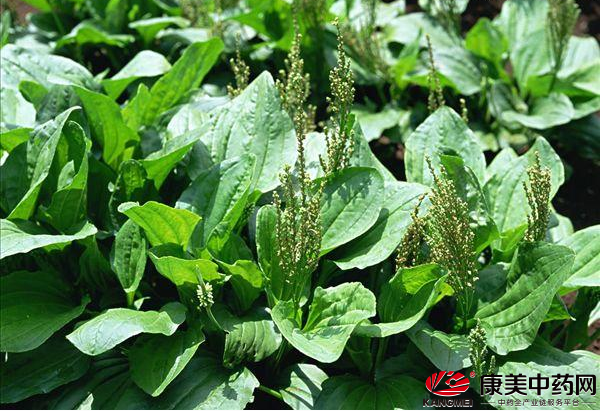
(2) Requirements of Greater Plantain for Environmental Conditions
1. Temperature. Plantain prefers warm and cool conditions and is relatively cold-tolerant, but not tolerant of high temperatures. It can normally head, flower and set seed under conditions of 10-25°C. The stems and leaves can grow normally within the range of 5-28°C, and at 28-32°C the plant stops growing and gradually withers and dies. Seeds germinate relatively quickly at 20-24°C, and cannot germinate at 32°C.
2. Water. Plantain likes a moist environment during the seedling stage and is tolerant of waterlogging and drought. However, it is not tolerant of waterlogging after entering the heading stage, and the flower spikes are prone to withering and dying after being submerged.
3. Light. Plantain is not very strict about light requirements and likes light while also being shade-tolerant. With sufficient light, the leaves are thick and the veins are coarse, growth is fast, and the plants are sturdy. With little light, the leaves are relatively thin and the plants are tender.
II. Utilization Value and Development Prospects of Plantain
(1) Nutritional Value
Every 100 grams of tender plantain leaves contains 10 grams of carbohydrates, 4 grams of protein, 1 gram of fat, 3.3 grams of crude fiber, 309 mg of calcium, 175 mg of phosphorus, 0.09 mg of vitamin B1, 0.25 mg of vitamin B2, 25.3 mg of iron, 5.85 mg of carotene, 23 mg of vitamin C and other minerals and vitamins.
(2) Medicinal Value
The whole plant and seeds can be used as medicine. They are sweet in taste and cold in nature, and have the effects of clearing heat and detoxifying, promoting diuresis and treating stranguria, eliminating uric acid, clearing the liver and improving eyesight, and reducing inflammation and relieving cough. They are used to treat symptoms such as difficult urination, edema, urinary tract infection, summer-heat diarrhea, cough with excessive phlegm, mild gout, and heat-toxin carbuncles and swelling.
(3) Development Prospects
With the continuous improvement of people's living standards and increasing attention to health, the use of Chinese herbal medicines for medical treatment and health care is becoming more and more favored. Moreover, the broad antitumor activity and low toxic side effects of plantain make its application prospects even broader.
III. Artificial Cultivation Techniques for Plantain
(1) Sowing Season
In Malipo County, Yunnan Province, plantain can be sown and cultivated all year round. In subtropical river valley areas below 1000 m in altitude, sowing in autumn, winter and spring is suitable; in temperate mountainous areas at 1000-1600 m in altitude, sowing in spring, summer and autumn is suitable.
(2) Cultivation Methods
The cultivation methods of plantain include direct seeding cultivation and seedling transplanting.
1. Direct seeding cultivation.
Before sowing, prepare the land and apply fertilizer. Apply 2000 kg of decomposed farmyard manure per mu, plow and rake level, open furrows at 1.5 m to make beds, with a bed surface width of 120 cm, a path between furrows of 30 cm, and a furrow depth of 15-20 cm. The sowing rate is 300 g per mu. To sow evenly, the seeds can be mixed with 20 times their amount of sieved fine soil and fine sand, mixed evenly and then sown. Open sowing furrows on the bed surface at a row spacing of 25 cm, sow the seeds into the furrows, and cover with 1 cm of fine soil after sowing. If the soil moisture is good, slightly compact the covering soil the next day; if the soil moisture is poor, water promptly after covering to keep the soil moist. Thin the seedlings when they have 2-3 leaves, with a plant spacing of about 10 cm, and finalize the seedlings at the 4-5 leaf stage, with a plant spacing of 20-25 cm. Weed in conjunction with thinning and finalizing the seedlings.
2. Seedling transplanting.
① Raising seedlings.
a. Selection of seedbed site and sowing. Greater plantain is not strict about soil and can grow in various soils. It is best to choose a sandy loam with shelter from the wind, sunny exposure, fertile, loose and slightly acidic soil as the seedbed. Generally, for every 1 mu planted, 30 sq m of seedbed needs to be prepared. Before sowing, apply 10 kg of decomposed high-quality finely crushed farmyard manure per sq m of seedbed and 100 g of nitrogen, phosphorus and potassium compound fertilizer (15-15-15) as base fertilizer, plow, rake finely and level, and make a seedbed with a bed surface width of 100 cm, a height of 15 cm, and a path between furrows of 35 cm. The seed rate is 60 g per mu (that is, calculated on the basis of 30 sq m of seedbed needed per mu of field, sowing 2 g per sq m of seedbed). Because greater plantain seeds are small, before sowing the seeds can be mixed with 6-10 kg of fine sand and plant ash, fully mixed, and then evenly broadcast on the bed surface. After sowing, cover with 0.5-1.0 cm of sieved fine soil and plant ash, to the extent that the seeds are not visible on the soil surface.
b. Seedbed management. After sowing and covering with soil, spray water immediately, cover with rice straw and film, and keep moist to facilitate germination. Uncover the film and spray water once every evening to keep the bed soil moist. Seedlings can emerge in 6-7 days. After emergence, immediately remove the rice straw and film to increase light and prevent the growth of leggy seedlings. Plantain seeds are small, and after emergence growth is slow, so they are easily suppressed by weeds. Therefore, weeds should be removed promptly during the seedling stage. Generally, weed 2-3 times during the seedling stage, and transplant when the seedlings have grown 4-5 leaves.
② Field planting.
a. Site selection, land preparation and fertilization. Choose flat terrain, convenient drainage and irrigation, and loose sandy loam as the planting field for higher yield. Apply 1500-2000 kg of decomposed farmyard manure per mu and 40 kg of 25% compound fertilizer (13-5-7) as base fertilizer, plow, rake finely and level to make beds, with a bed surface width of 120 cm, a height of 15-20 cm, and 30 cm between furrows, to facilitate drainage and irrigation.
b. Transplanting. Open furrows on the bed surface for transplanting, planting 4 rows per bed, with a row spacing of 30 cm and a hole spacing of 25 cm, planting 1 plant per hole. After planting, water immediately to settle the roots, watering 2-3 times consecutively to promote survival.