How do you grow Chinese medicinal herbs well? Five questions give you the answers
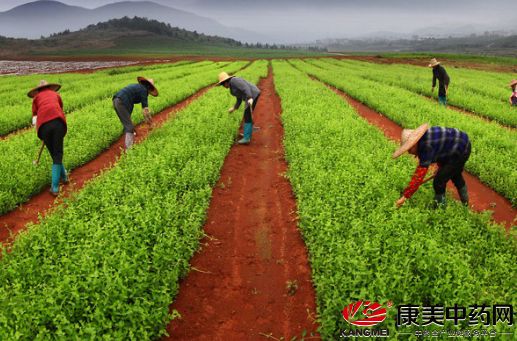
Nowadays, with the deepening of industrial restructuring, a wave of herb-growing has risen in rural areas. Facing the complex and ever-changing Chinese medicinal herb market, growing techniques are particularly important for achieving ideal economic benefits. For herb growers, this means not only carefully studying the market and gathering information from many sources, but also having a sense of risk and being mentally prepared for both success and failure. Therefore, to grow Chinese medicinal herbs well and achieve high economic benefits, attention should be paid to the following five issues.
1. Choose easy varieties over difficult ones
Many herb growers are eager to get rich and often choose high-priced medicinal herbs as their project. In fact, these herbs each have their own unique growing environment, and they are very difficult to grow where conditions do not suit them. Their cultivation techniques are also quite demanding, and the probability of success for an ordinary person is very small. If you are not a research institution or a large planting base, but are only trying to grow them personally, then when conditions are not available, it is best not to introduce such varieties, so as to avoid more loss than gain. If you are still only making a first attempt at growing medicinal herbs, you should choose those varieties that suit local cultivation, have strong vitality, and are relatively easy to grow and manage. Although such herbs are low in price, they are easy to succeed with and generate benefits.
2. Decide the planting area according to your means
The size of the planting area must take into account your own manpower, material resources and financial resources. This is because growing medicinal herbs brings large returns but also carries risks. If you are jointly contracting land with several people to grow herbs, have sufficient manpower and financial resources, have your own experience in herb growing, or have professional guidance, then the larger the planting area and the greater the quantity of herbs, the greater the attraction to pharmacy buyers and herb dealers. They can use dedicated vehicles to directly purchase and transport from the production area, so the herbs sell quickly, promotion costs can be reduced, and the returns are relatively greater. If your funds are limited, you should start with a small area and sell the products nearby to medicinal herb purchasing departments or specialized markets. After gaining growing experience, then expand the planting scale.
3. Do not chase prices; circle around the market
Most herb growers have this mindset: “Plant when prices rise, not when they fall,” meaning they plant whatever medicinal herb has risen in price, and are unwilling to plant herbs whose prices have fallen. However, medicinal herb prices are not unchanging. When prices rise, everyone goes to plant, and by the time the new crop arrives, high prices often turn into low prices, causing a phenomenon of profit one year and loss the next. When the price of a medicinal herb falls, nobody plants it, so its price is bound to rise. If you can examine the trend of price changes in the medicinal herb market, understand the rise-and-fall cycle of herb prices, and plant those herbs that few people grow and whose prices are temporarily low, then when the time comes you will obtain an unexpectedly good harvest.
4. Grow local “special” and “superior” medicinal herbs
Because the natural environment differs from place to place, the quality of the medicinal herbs produced also differs, prices vary, and usage amounts vary. Generally speaking, local specialty and superior products are most likely to be favored by pharmacies and herb traders, fetch good prices, and sell quickly. Therefore, you should first make clear which are the local specialty and superior varieties, and then choose to plant them. In this way you will not worry about sales channels and can also sell them at a good price.
5. Seize the opportunity to sell products
Herb growers generally rush to find sales channels after the new crop of medicinal herbs arrives, worrying that the products cannot be sold. In fact, medicinal herbs, like commodities, tend to see prices decline when the new crop arrives because large quantities of products flood the market. Selling at this time will certainly not bring a good price. If you can carry out preliminary processing of the medicinal herbs at the production area and store them well, then sell them at the appropriate time after prices rise, you can obtain higher profits.