Detailed Explanation of Why Orchid Diseases Are Hard to Treat and How to Prevent and Control Them
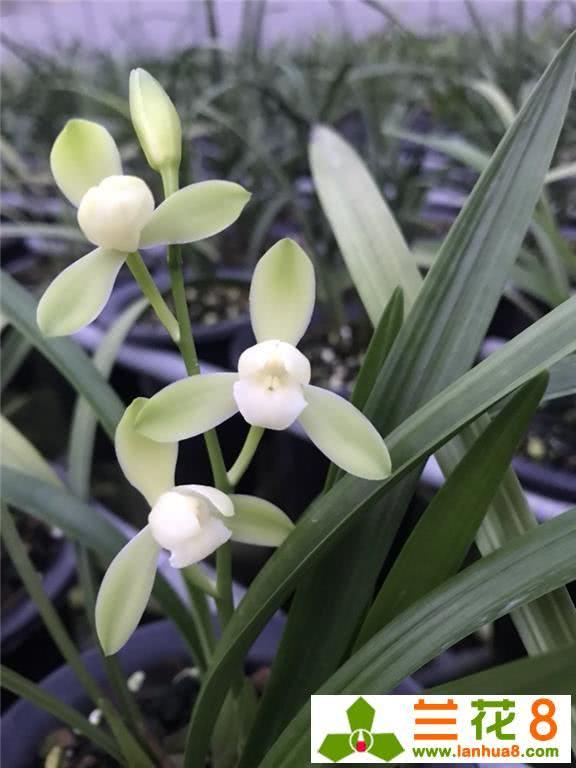
In the process of growing orchids, we often encounter all kinds of diseases. When diseases strike, experienced veterans can mostly handle them with ease, but for the vast number of us novice orchid enthusiasts, it is a complete fog, and we are at a loss, not knowing how to respond. We often use medicine and fertilizer randomly, and the result is the opposite of what we want: not only is there no improvement in the disease, but the death of the orchid is accelerated. This is what we do not want to see. Therefore, we need to master some basic knowledge about orchid diseases to scientifically guide our disease prevention and control work.
First, let's talk about several reasons why orchid diseases cannot be cured:
1) When an orchid becomes ill, the judgment of the orchid's disease is inaccurate, and the treatment method is single.
The most common method most people use when an orchid gets sick is to send photos of the diseased orchid to their friends and various websites for extensive inquiries. These friends and the orchid enthusiasts on those websites generally judge the symptoms from the photos and then tell you how to treat it, and most people will follow those methods. In fact, this is wrong, because judging diseases through pictures is not scientific; it requires observation and comparison with the actual plant. Some diseases also need time for observation and summary before an accurate judgment can be made about what exactly the problem is. They cannot be lumped together. Our correct approach should be to combine the views of friends and websites with our own views and opinions, and find more information online for comparison. This way, the accuracy will be much higher, and the chance that the orchid disease can be cured will also be much higher.
2) Another issue is that after we carry out the first treatment for the orchid's symptoms, we fail to continue with corresponding second and third treatments based on the symptoms. We merely follow the methods on websites, rely on this type of medication for treatment, and after using the medicine once, that is the end of it. If it gets better, great; if it does not, it is the orchid's and the medicine's fault. We never look for the cause in ourselves, and we do not reflect on whether our method was inappropriate. This method is also wrong. When we discover a disease, while identifying the problem accurately, we must also persist in using medication until the disease is completely eradicated before stopping. If we find the orchid's condition worsening, we must consider whether the medicine was used incorrectly or the method was wrong.
3) Once disease occurs, repot the orchid, hoping to cure the disease by changing the pot
Especially in the hot and humid summer, orchid diseases occur frequently in this season. Even healthy orchids are very prone to illness in this season. The most common ones are anthracnose, southern blight, soft rot, and stem rot. Some people believe that as long as an orchid gets sick, all you need to do is take the orchid out, change to new pots and potting medium, and replant it, and there will be no problem. This view is also wrong, because some pathogens invade the interior of the orchid, and even changing the pot and potting medium will be useless.
4) Caused by environmental problems
Most beginners use garden soil to plant orchids, water them randomly, fertilize them randomly, and place them wherever they feel like. Orchids need to grow in a good environment; this premise cannot be abandoned. Otherwise, no matter how great your abilities are, the orchid will ultimately die, and all medicines and prevention methods will be futile!
So, how should we improve the probability of treating orchid diseases?
First, we must first understand the principle of pathogen infection. Most reasons orchid diseases cannot be cured are because the cause has not been found. There are many causes of orchid disease, but some things that look like disease are not disease; they are normal physiological phenomena. Orchid disease first involves plant tissues (roots, pseudobulbs, leaves) being damaged (this situation cannot be counted as disease; it can only be said that the orchid has been injured), and then various pathogens invade the injured tissues. At this time, if the invading pathogen is a mold (fungal) pathogen, it will produce a fungal disease. If the invading pathogen is a bacterial pathogen, it will produce a bacterial disease. This shows that the disease has already begun, and only then do we need to take corresponding measures for treatment. We need to figure out what disease it is and use targeted medication to cure it; otherwise, it is wasted effort and blind messing around.
Second, after finding the cause, for infectious diseases, you must isolate the diseased orchid to prevent infecting other orchids, then treat and observe it, use medication promptly, and use targeted medication. Remember not to delay, because diseases develop very quickly and can completely destroy an orchid plant in a few days!
Third, the problem of drug resistance. If an orchid uses one pesticide for a long time, it will develop tolerance. To treat diseases in the same pathogen series, use this medicine this time, another medicine next time, and yet another medicine after that. Only by alternating them in this way can good treatment results be achieved without producing tolerance. For example, for fungicides such as carbendazim, orchids easily develop resistance to it, so it should be used alternately with chlorothalonil. In addition, pesticides can only exert their best effect when diluted according to the specified ratio. If you use the original liquid without understanding the concentration ratio, the orchid may wither and die, so you must pay close attention.
Fourth, when we find diseases such as soft rot and stem rot, during treatment we can expose only the pseudobulb, then use sharp scissors to cut off the diseased pseudobulb, then apply medicine and cover it again and replant it properly. This will allow faster rejuvenation, because newly planted orchids and orchids in new pots are easily affected by both "root growth" and disease resistance. Therefore, it is better to continue using the original orchid pot, as the probability of recovery may be higher.
Fifth, watering management during the recovery period after treatment of a diseased orchid is also very important. Most orchid tissue injuries are caused by excessive moisture in the pot, poor ventilation, and high temperatures. After soaking and disinfecting with pesticides, water less and keep it slightly dry, and manage it in a cool, well-ventilated place. This way, the diseased orchid will recover faster!
Sixth, after a diseased orchid has been treated and recovered, we should often observe these orchids that have been sick to see whether they continue to be infected by diseases, because an orchid that has been sick once has a higher chance of getting sick than a healthy orchid. Therefore, we should pay attention to this type of orchid. Author: Mei Fei. I publish orchid knowledge and pictures every day, taking you to understand orchids in depth and teaching you to grow orchids easily. If you have questions about orchids, you can ask me anytime or leave a message below. If you like it, you can click the bookmark in the upper right corner or forward it to help others!