Turmeric Cultivation Prospects Are Bright, Market Potential Is Promising
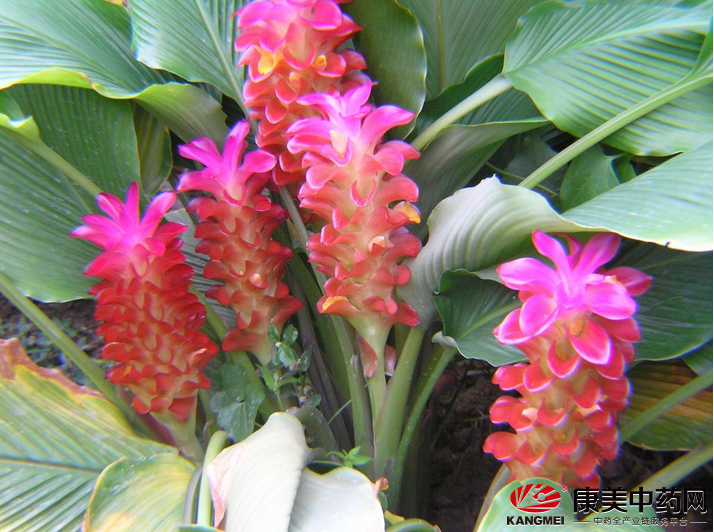
Turmeric (Curcuma) is the tuberous root of the dicotyledonous medicinal plant of the ginger family, namely Curcuma longa (common turmeric), Curcuma aromatica (wild turmeric) or Curcuma zedoaria (zedoary). It has the effects of promoting the flow of qi and dispelling blood stasis, clearing the heart and relieving depression, and promoting bile secretion and reducing jaundice. It is distributed in Jiangsu, Zhejiang, Fujian, Guangdong, Guangxi, Jiangxi, Sichuan, Yunnan and other places. In the past two years, the market prospects have been extremely good, and the cultivation techniques are not complicated. As long as technical management is strictly followed, at least a substantial income can be achieved from one mu of turmeric. So, how is turmeric cultivated?
I.Site Selection and Land Preparation
Turmeric prefers a sunny, moist and warm environment. Therefore, a site with ample sunlight, abundant rainfall, and deep, fertile, neutral or slightly acidic sandy soil should be selected, with a loose upper layer and a compact lower layer to facilitate water and fertilizer retention. Before planting, plow the land 30 cm deep, break up the soil finely and rake it level. Since turmeric is mostly intercropped with corn when planted before the Summer Solstice, it must be rotated once every year of planting and cannot be continuously cropped.
II.Propagation Methods
Turmeric can be propagated both asexually and sexually. To save production time, asexual propagation is usually adopted in production.
The asexual propagation method for turmeric is as follows: when harvesting turmeric in winter, select rhizomes free of pests and diseases and of plump, high quality to keep as seed, and store them in a pile indoors in a ventilated and dry place. In February and March of spring, take out the rhizomes, remove the fibrous roots, shake off the soil, and cut them lengthwise into 2—4 pieces, each retaining 1—2 strong buds. Plant at a row spacing of 30 cm and a plant spacing of 30 cm, placing 1 piece of seed ginger per hole, using 125—150 kg of seed ginger per mu.
III.Key Planting Points
When planting, separate the mother seed of the turmeric seed (the larger central tuber) from the daughter seeds; the daughter seeds should be planted earlier than the mother seeds. When planting, cut the large turmeric seed into several small pieces, each with 1—2 buds, ready for planting. Since the tuberous roots of turmeric spread widely in the soil, the plant and row spacing should be wide, generally 34—40 cm is more appropriate. If turmeric is intercropped with corn, within 7 days around the Summer Solstice, when the corn has just flowered, dig holes between the rows, about 3 cm deep, with a wide mouth and flat bottom, and place the cut small pieces of turmeric seed, 5 per hole, 1 in the center and 1 at each of the 4 corners, with the buds facing upward, then cover with 1.5 cm of soil after planting. Rapeseed cake can be used as a base fertilizer. Generally, seedlings emerge after 20 days, and 125—200 kg of turmeric seed is needed per mu.
IV. Pest and Disease Control
Diseases include black spot disease, which damages the leaves. In the early stage of the disease, promptly remove the diseased leaves, and spray with a 500-fold solution of 50% thiophanate or a 400-800-fold solution of 65% zineb wettable powder. Pests include cutworms and white grubs, which bite the fibrous roots during the seedling stage, preventing the formation of tuberous roots; they can be caught manually or poisoned with bait. There are also pests such as ginger skipper and corn borer.