Planting Methods and Technical Key Points for the Chinese Medicinal Herb Shegan (Blackberry Lily)
Shegan, a Chinese medicinal herb, is the dried rhizome of the Iris family plant Shegan (blackberry lily, Iris domestica), a perennial herb. It prefers a warm, dry climate and is cold-tolerant and drought-tolerant. It often grows on hillsides, grasslands, open fields and at the edges of mixed woods. It is distributed throughout China, with Hebei and Hunan as the main producing provinces. So how is the Chinese medicinal herb Shegan grown?
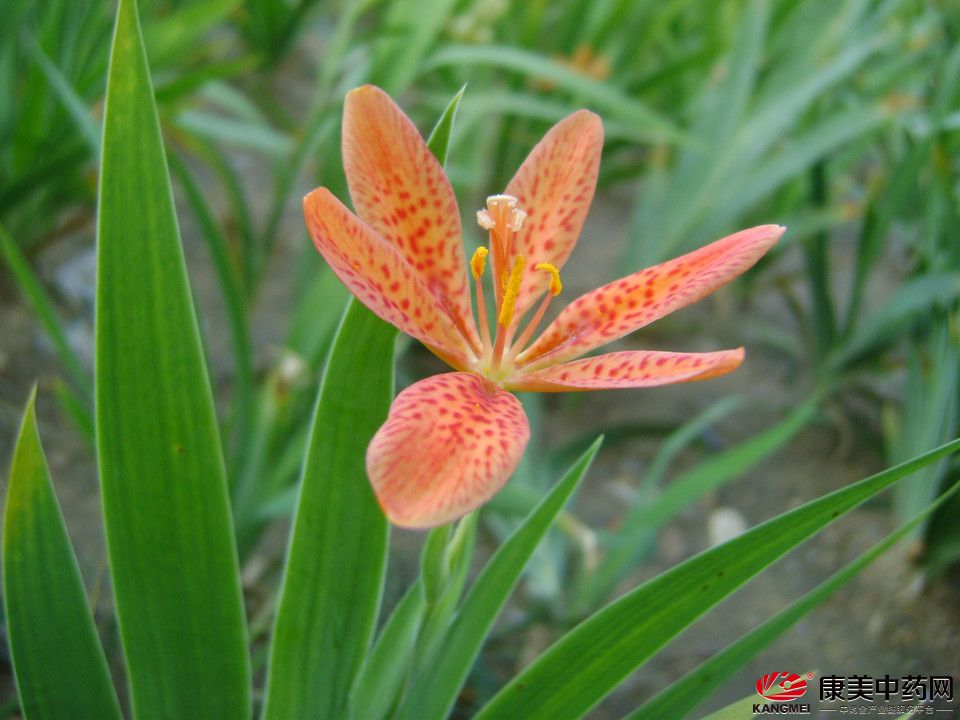
Shegan, also called Cungan, Wushan and Golden Butterfly, belongs to the Iris family. Its rhizome is used as medicine, and it has the functions of clearing heat, detoxifying, resolving phlegm and soothing the throat. Its rhizome contains components such as irigenin and sheganone, which have anti-inflammatory and detoxifying, antiviral and diuretic effects and can inhibit cervical cancer cells.
Shegan prefers warmth. When the temperature is 20°C to 25°C and the soil humidity is 50%, the seeds begin to germinate; when the temperature is 25°C to 35°C, the sunshine duration is long, the soil temperature is high and the rainfall is sufficient, Shegan grows vigorously; Shegan is drought-tolerant and cold-tolerant and can overwinter naturally in areas with a temperature of -17°C; Shegan has no strict requirements for soil and can grow in sandy land and sloping land, but plants grow well in fertile, loose, well-drained sandy loam at higher elevations. Neutral and slightly alkaline soil is preferable, and rhizomes rot easily in low-lying, waterlogged land.
1. Site selection.Choose sandy loam, flat land or gentle slopes with higher elevation, a sunny aspect, deep soil and good drainage. If planting on barren hillside land, it is advisable to plow the land in the autumn or winter of the previous year so that it undergoes a period of weathering and maturation, then plow once more in the following spring to remove tree roots, weeds and stones. For planting on cultivated land, plow once before planting and apply 100 kg of superphosphate or 50 kg of compound fertilizer per mu.
2. Planting at the right time.If direct seeding is used, it can be sown in spring or autumn. Spring sowing is from early March to mid-April, and autumn sowing is from September to October. Sow on the prepared beds at a row spacing of 30 cm and a depth of 1.5 to 2 cm. Strengthen management after sowing and keep the bed soil moist to facilitate seed germination, emergence and seedling growth. After the seedlings emerge, cultivate and weed promptly, and thin the seedlings when they are 6 to 10 cm tall, spacing them out adequately; if bolting occurs, cut it off to favor root growth. For direct seeding, the seeding rate is about 5 to 6 kg per mu. For raising seedlings, the seeding rate is 5 to 6 kg per mu. Autumn-sown seeds emerge in the spring of the second year, while spring-sown seeds emerge in 30 days. After one year of growth, transplant in autumn or spring; seedlings raised on 1 mu can be transplanted to 6 to 7 mu.
3. Cultivation and weeding.After Shegan emerges or survives transplanting, cultivate and weed frequently, usually 3 to 4 times a year. In the first year of spring sowing, do it once each in May, July and November; in the second year, do it once each in March, June and November.
4. Timely topdressing.Shegan is a fertilizer-loving plant. In addition to applying sufficient base fertilizer, topdress once each in spring, summer and autumn of the second year. For spring and summer topdressing, apply 25 to 30 kg of urea per mu; for autumn topdressing, apply 25 kg of compound fertilizer per mu. The first two topdressings can promote the growth of stems and leaves above ground, while the last topdressing can promote rhizome growth and increase yield.
5. Drainage and irrigation.Shegan is afraid of waterlogging, so after heavy rain, ditches should be cleared promptly to drain water and prevent rhizome rot. Although Shegan is drought-tolerant, the bed soil should be kept moist during the seedling stage and after transplanting to facilitate seedling growth. If drought occurs during the seedling stage, water or irrigate appropriately. After the seedlings are 10 cm tall, water less or not at all.
6. Removing flower buds in time.When rhizomes are used for planting, the plants can flower in the same year; when seedlings are raised from seed and then transplanted, or when direct seeding is used, few flowers appear in the same year, and more flowers appear only the following year. Moreover, its flowering period is long, and it produces many flowers and fruits, which consumes a large amount of nutrients and affects rhizome growth. Except for land reserved for seed production, the flower buds should be removed when the plants bolt, choosing a sunny morning after the dew has dried, and removed completely in stages and batches. If seeds are to be harvested, flower buds need not be removed.
7. Harvesting and processing.Shegan is harvested after 2 to 3 years of growth or after many years, and generally the vast majority is harvested after two years of growth. Harvest in autumn. Its rhizomes are about 6 to 8 cm deep. Dig out the rhizomes in late autumn, remove the fibrous roots and dry them in the sun to obtain the medicinal material. The general yield is 250 to 300 kg of dry goods per mu. At present, the market price of dry goods is about 30 yuan per kg, giving a benefit of 7,500 to 9,000 yuan per mu.
The above is relevant content on the planting methods for the Chinese medicinal herb Shegan. At the beginning of this article, we mentioned that the Chinese medicinal herb Shegan is distributed throughout China and is not very regional. As a kind of medicinal plant, should Shegan be planted? How much should be planted? This still requires close attention to its price trend. To learn more about the Shegan price index and market trends, you can check on the Kangmei Chinese Medicine Network.