A detailed guide to high-efficiency ginkgo cultivation, just right for autumn
Ginkgo, also known as white fruit and the "gongsun tree", belongs to the gymnosperms and is a "living fossil" plant found only in China. Both ginkgo leaves and ginkgo nuts have now become medicinal materials that people study and develop in depth, and they have already been widely used in medicines and health products. As a "living fossil"-level tree, how should ginkgo be cultivated?
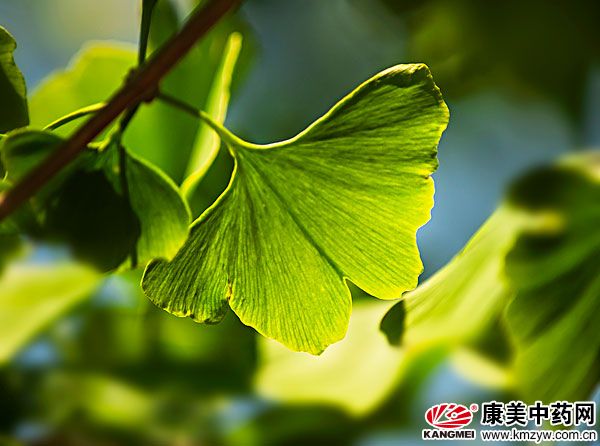
Planting ginkgo trees in autumn can effectively bring forward a long seedling-establishment process by several months; especially for transplanting large ginkgo saplings, it can completely shorten the seedling-establishment period by one year. The high-efficiency autumn cultivation techniques are introduced as follows:
1. Plot selection and fertilization.Choose loam or sandy loam with a soil layer more than 60 cm deep, a pH value between 5.5-7.5, good drainage and fairly high fertility. Apply 9000 kg of base fertilizer per 667 sq m, deep-plow 40 cm, and before sowing apply 5 kg of phoxim and 13 kg of ferrous sulfate per 667 sq m, level the ground, and make beds running east-west, 1.0-1.2 m wide and about 10 m long.
2. Timely planting.From early October to early November is more suitable for planting ginkgo trees. This is because: the reason ginkgo trees have a long seedling-establishment period is that, apart from their physiological characteristics, an important reason is that damage to their roots is relatively difficult to heal; at this time the leaves have already fallen, the sap no longer flows, the tree body stops growing, and of course it no longer consumes large amounts of nutrients, so the workload of the tree roots is greatly reduced. Under such conditions, the tree roots injured during lifting, after a period of rest and recovery, will heal their wounds quickly, normally absorb and accumulate nutrients, and enter the second growth peak of the year, making full preparations for the tree body's sprouting and growth after the following spring.
3. Planting grafted seedlings.Grafted seedlings need only 5-6 years after planting to enter the full fruit-bearing period. The characteristics of grafted seedlings are: there is a wedge-shaped callus junction at the grafted site; the seedling extends obliquely outward from the graft, forming a certain angle with the ground; the branches are grayish-black, and the leaf notches are deeper and dark green. When propagating grafted seedlings yourself, sow in place to raise 2-3 year old rootstock, requiring the rootstock seedlings to be at least 80 cm tall with a root-collar diameter of about 1.5 cm. Graft at a height of 20-50 cm from the ground on the rootstock, and the scion must be selected directly from superior fruiting trees, using 1-2 year old robust branches with plump buds.
4. Selecting and planting strong seedlings. For 1-year-old seedlings, those more than 15 cm tall with a ground diameter greater than 1.2 cm are preferable. For 3-year-old seedlings, those 1.6-2.2 m tall with a ground diameter greater than 3 cm are preferable. Ensure the root system is complete with no serious damage. Try as much as possible to shorten the time for transporting and holding the seedlings, and lift, transport and plant them promptly.
5. Planting with spread roots.Ginkgo has fleshy roots and a relatively well-developed root system, so when planting, the root system must be spread out, otherwise a "root balling" phenomenon will occur and affect growth. The fertile soil filled into the hole should preferably be dry; when firming the soil, do not let it become compacted, so as to avoid adverse effects on the ginkgo root system. When covering with soil, it must be compacted layer by layer so that the ginkgo root system closely combines with the soil, but only tread with the feet, do not tamp, to prevent root injury. After planting, water thoroughly so that the soil in the hole and the seedling root system closely combine and can fully absorb water. After watering, the ground naturally settles; ensuring the root collar is level with the ground or 1-2 cm above it is best.
6. Arranging pollinizer trees.Ginkgo is a cross-pollinated plant, and male and female flowers are on different trees; it mainly relies on wind for pollination, and is often affected by climatic factors such as wind force, wind direction, low temperature, foggy days or rainfall, which affect pollination and fertilization and reduce yield. Therefore, during cultivation, male trees must be arranged at 20:1 as pollinizer trees, and they must be planted evenly to facilitate pollination. If the arrangement of ginkgo pollinizer trees is improper, or there are many rainy days during the flowering period, artificial pollination should be carried out promptly to ensure yield.
7. Mulching with plastic film.The most notable effect of promptly covering with plastic film after planting is that it can delay the drop in ground temperature, resist drought and retain moisture, raise temperature and prevent cold, and can also cause a large number of new roots to form in young trees planted in autumn before winter and before sprouting the following spring. Usually after watering, the soil should be loosened promptly by cultivation and raked level and fine. Then make a shallow dish shape around the ginkgo seedling that is low inside and high outside, and cover with 1.2 m square plastic film.
8. Watering with freeze-sealing water.From the end of November to the beginning of December, in combination with mounding soil for cold protection, water once more with freeze-sealing water; it should not be too late. Because watering too late means low winter temperatures and slow recovery of ground temperature, which is not conducive to promoting new roots in young tree root systems, and even less conducive to safe overwintering, making freezing injury likely.
9. Smoking to drive away cold.If there is a severe freeze or cold wave, within a short time, according to the size of the ginkgo orchard and the wind direction, set up fires to produce smoke. Smoking can drive away the cold and raise the temperature by 1-3°C, achieving a freeze-prevention effect.
10. Mounding soil and wrapping seedlings.To help seedlings overwinter safely, after autumn planting, cover the seedlings with soil for cold protection before the Start of Winter. For 1-year-old small seedlings, the soil-covering thickness should be 5 cm above the original soil mark; for 3-year-old large seedlings, 8-10 cm above the original soil mark is preferable. After the soil thaws in spring of the following year, in late March to early April, uncover the seedlings, straighten them, and repair the tree basins. To prevent wild rabbits from gnawing the bark and to prevent freezing injury, wheat straw, straw rope, or plastic film 0.008 cm thick cut into strips 6 cm wide can be used to wrap the seedling trunk tightly from bottom to top, generally two layers being preferable.