Suitable Growing Regions and Key Growing Points for the Chinese Medicinal Herb Wu Zhuyu (Evodia)
Wu Zhuyu is the dried, nearly ripe fruit of Evodia rutaecarpa, a plant in the Rutaceae family. It has the effects of dispersing cold and relieving pain, and lowering adverse qi and stopping vomiting, and is used to treat conditions such as headache or stomach duct pain caused by deficiency cold of the liver and stomach with upward rebellion of yin turbidity. So what are the growth habits of Wu Zhuyu? Where is Wu Zhuyu suitable for planting? What needs attention when growing Wu Zhuyu?
Where is Wu Zhuyu suitable for planting?
Wu Zhuyu is also known as Wu Yu, Cha La, Wu La, Qu Yao Zi, Fu La Zi, Cha La, Chou Pao Zi, Zuo Li Chun You Zi, Qi La Zi, Mi La Zi, and so on.
Wu Zhuyu is suited to growing on hillside gullies below 1000 m in altitude, in warm and humid mountain areas, under open forests or in open forest-edge clearings. It is rarely found wild and is mostly seen under cultivation. Artificial cultivation is carried out on low mountains and hills, and in flat dam areas on sunny, relatively warm sites. In areas that are windy and severely cold, or excessively dry and drought-prone, it should not be cultivated. Wu Zhuyu can be cultivated in soils that are deep, fertile, and well-drained.
Wu Zhuyu is now mainly supplied to the market through home cultivation. After planting, Wu Zhuyu generally takes three years to reach full fruit-bearing stage. Its current distribution areas include Guizhou, Guangxi, Hunan, Yunnan, Sichuan, Zhejiang, Jiangxi, Hubei, Anhui, Shaanxi, and other places.
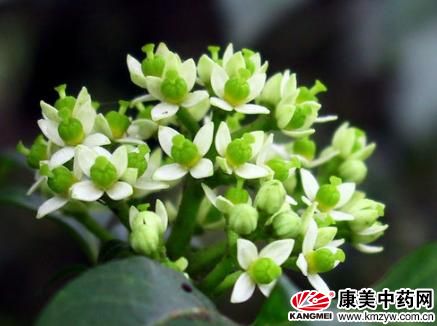
Wu Zhuyu cultivation techniques:
1. Propagation methods
(1) Rhizome propagation
Use a robust 4-6 year old tree as the mother plant. In February, dig away the soil around the trunk, cut off some lateral roots as thick as a penholder (do not take too many, otherwise the growth of the mother plant will be affected), and divide them into several segments, each 13-20 cm long, to be used as cuttings for raising seedlings. Choose a fertile, well-drained site and make beds 100-130 cm wide. Open furrows at a row spacing of 16 cm, with a plant spacing of 10-13 cm, insert the cuttings 10-13 cm into the furrows, cover with fine soil, and rake level to prevent root rot from water accumulation. Pour a small amount of clear manure water, cover with grass to keep warm and maintain humidity, which helps sprouting. After one month, new shoots grow; apply one application of clear manure water, then topdress again according to seedling condition, and weed in time. After one month, transplant in spring; they flower and bear fruit in 2-3 years.
(2) Stem cutting propagation
Around February, before Wu Yu sprouts, select 1-2 year old branches and cut them into 16-20 cm long segments, each with 2-3 buds, with both ends cut at a slant. Insert them obliquely into the soil at a row spacing of 26-30 cm and a plant spacing of 13-16 cm (do not insert upside down). After inserting, cover with soil and press firm, water and shade, and keep the soil moist. A small amount of dilute human manure and urine may also be applied. Transplant after one year.
(3) Transplanting
Transplant in winter and spring; winter transplanting is better (around December). In spring (March-April), dig holes at a plant and row spacing of 330-400 cm, with a diameter of 50-60 cm. The depth of the holes depends on the length of the roots. First apply decomposed stable manure or river mud as base fertilizer, then plant the seedlings, cover with soil, and press firm. When the seedlings are small at first, they can be intercropped or relay-cropped with peanuts, beans, sweet potato, and so on.
2. Field management
Carry out timely intertillage and weeding, and keep the soil moist. Apply one application of decomposed human manure and urine before spring sprouting; the amount applied depends on tree age. For three-year-old trees, apply 10-25 kg of human manure and urine per plant, placed in a shallow ring-shaped furrow about 48 cm from the plant, then cover with soil. Before flowering and fruiting in July, apply one application of phosphorus and potassium fertilizer. In winter, apply one topdressing of compost (or river mud, human manure and urine), plant ash, and so on, and earth up to prevent freezing. Prune when the tree is 100 cm tall, and pinch off the growing tips in spring and autumn to form a certain crown shape, which benefits growth and fruiting.
3. Pest and disease control
(1) Sooty mold
Also called sooty blotch, it is caused by aphids and scale insects damaging Wu Zhuyu, inducing irregular dark brown soot-like spots. In the later stage, the leaves and branches are covered with a thick layer of soot, and diseased trees bloom and bear little fruit.
Control method: During the occurrence period of aphids and scale insects, spray 40% dimethoate emulsifiable concentrate diluted 2000-3000 times, or 25% phosmet 800-1000 times solution, once every 7 days, for 2-3 consecutive applications. During the disease period, spray Bordeaux mixture at 1:0.5:150-200, once every 10-14 days, for 2-3 consecutive applications.
(2) Rust disease
This disease mainly harms the leaves of Wu Zhuyu. In the early stage of the disease, nearly round, inconspicuous yellow-green small spots and orange-yellow small blister spots form on the leaves, causing the leaves to wither and die.
Control method: Spray 0.3 degree Baume lime sulfur mixture or 65% zineb wettable powder 500 times solution, once every 7-10 days.
(3) Longhorn beetle larvae
The larvae bore and feed inside the trunk, causing the stem to become hollow and die. From July to October, on the main trunk below 30 cm above the ground, there appear unshaped gummy secretions, wood shavings, and insect frass.
Control method: Use a small knife to scrape off egg masses and newly hatched insects. If the larvae have bored into the wood, pour wettable benzene hexachloride powder 50 times solution into the bore hole, or plug the bore hole with cotton soaked in 80% dichlorvos stock solution and seal the opening to kill the larvae.
(4) Harvesting and processing
After field planting, they flower and bear fruit in 3 years. The fruit matures from August to September, and is harvested when the fruit turns red-orange. Pick the fruit clusters and sun-dry them thoroughly, then remove the fruit stalks and impurities, put them in bamboo baskets or wooden boxes, and place them in a dry, ventilated place (a 3-year-old tree yields 1-1.5 kg of dried fruit, and a 6-7 year old tree yields 3.5-5 kg). They generally bear fruit for 20-30 years.